TL;DR
A project by YouTube creator Woodworking Skill turns two pallets into short picket fence sections supported by planter boxes on a concrete porch. The design reuses pallet lumber, but pallet condition and treatment vary, so the wood should be checked before it is used.
YouTube creator Woodworking Skill has turned two roughly four-foot-wide wood pallets into short picket fence sections attached to planter boxes, creating a decorative border for a concrete front porch without conventional fence posts. The project shows one way to reuse pallet lumber, though the finished sections are suited to a ground-level porch rather than a yard fence or elevated deck railing.

Get business pricing on tools and workshop supplies
- Business-only prices and quantity discounts
- Tax-exempt purchasing
- Multiple users, one account, clear invoices
Woodworking Skill’s pallets were made from blemish-free fir or pine, with boards nailed to stringers. The creator cut each pallet down the middle with a circular saw, producing two fence sections with pickets about two feet long. He trimmed the boards at the bottom and cut triangular points into the tops. The reported dimensions and appearance describe the pallets used in this project, not a guarantee about other discarded pallets.
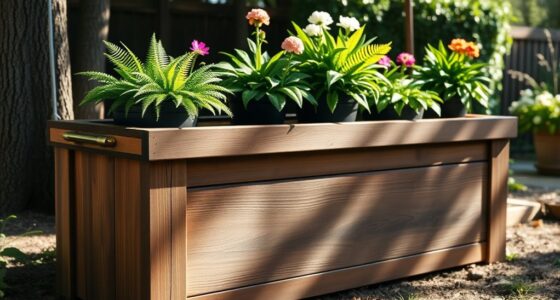
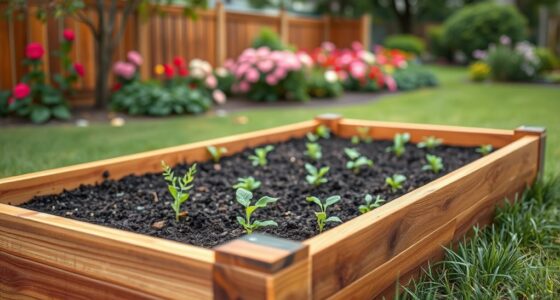
For the supports, the creator cut pallet offcuts into uniform pieces about six to eight inches long and nailed them to four-foot corner sections to form the sides of rectangular planter boxes. He assembled the four sections for each box with a nail gun, then added 1-by-2 lumber as trim around the top and bottom. Wooden holders screwed to opposite sides of each planter hold the fence sections in place.
A clear spray finish was applied to the wood. A liner can also be added inside the boxes before planting. In this setup, the planter boxes sit on the concrete and support the fence; the project does not rely on posts driven into the ground. The finished arrangement adds planting space as well as a low decorative boundary.
Pallets become a porch fence with built-in planters
Woodworking Skill turns reused pallet boards into a low decorative boundary. Planter boxes support the fence sections on a concrete porch and add space for plants.
How the design works
The planter boxes serve as supports, so the concrete-porch version uses no separate fence posts.
Each roughly four-foot-wide pallet is cut down the middle to make short fence sections.
Pallet offcuts form rectangular boxes, finished with 1-by-2 trim.
Wooden holders screwed to the boxes hold the fence sections in place.
Where it fits
The project is designed as a low, ground-level porch feature.
- Decorative boundary on a concrete porch
- Planting space built into the supports
- Potential border beside a patio or walkway
- Yard fencing
- Raised porch or deck railings
- Fall protection or a safety barrier
Check the pallet wood
The example used blemish-free fir or pine, but that does not establish the condition or treatment of other pallets.
- Check the wood’s condition and markings.
- Consider its previous use; some pallets may have been treated with pesticides.
- A liner can be added inside the boxes before planting.
- The video uses a clear spray finish, but outdoor durability is not reported.
A Fence Built Around Planters
The project combines two functions: the planter boxes support the fence sections and provide space for plants. That arrangement can suit a concrete porch where posts cannot readily be set into soil, and it may also work as a border beside a patio or garden walkway, as long as the height and stability fit the location.
Reuse is another part of the appeal. Pallets can provide boards for a small outdoor build, but the project depends on finding lumber in suitable condition. The creator’s clean fir or pine pallets are not representative of every pallet. The general figure cited for U.S. production is about 400 million wooden pallets a year; that annual manufacturing estimate does not indicate how many are safe, available for reuse, or suitable for this particular design.
The modest height also limits the design’s use. At about two feet, the pickets can mark a boundary or add decoration, but they are not presented as a barrier for a yard or railing for a raised porch or deck. Readers considering a different installation should not assume that the porch design provides the strength, height, or fall protection required for those settings.
Products Worth Considering

Roborock Qrevo S Pro Robot Vacuum and Mop with Multifunctional Dock

DREAME D30 Ultra CE Robot Vacuum and Mop, 25,000Pa Suction

Ring Alarm 5-Piece Home Security Kit
As an affiliate, we earn on qualifying purchases.
How the Porch Design Works
The fence is built from cut-down pallets rather than individual purchased pickets. In the creator’s example, each pallet was about four feet wide, and cutting it down the middle left boards that formed short fence sections. The planter boxes were assembled separately, then fitted with holders to receive those sections. This method avoids separate posts for the concrete-slab installation shown.
The design could require changes if used along a lawn or garden edge. The project description says posts would need to be buried for that kind of installation and notes that 4-by-4 material from heavy-duty pallets could be used. That is a suggestion for adapting the build, not a tested set of instructions for ground conditions, structural loads, or local requirements.
Pallet quality varies: pallets may be made from softwood or hardwood, and some may have been treated with pesticides. The pallets used by Woodworking Skill were described as regular, blemish-free fir or pine. The project account does not provide a treatment stamp or test results for that wood, so its condition should not be generalized to pallets collected elsewhere.
Pallet Safety and Build Limits
The project account does not identify the pallets’ treatment markings, where they were obtained, or how their previous use was checked. It also does not provide a load rating, measurements for the planter boxes beyond their approximate four-foot corner sections, or testing of the fence’s stability. Those details matter if someone plans to copy the design or place it where people could lean on it.
Wood treatment and prior use are not established by a pallet’s clean appearance. The material notes that some pallets may have been treated with dangerous pesticides, but does not say that the pallets in this project were. It also does not confirm how the finish performs outdoors over time, whether the boxes have drainage, or which plants were used. The project is presented as a decorative porch feature, not as a code-compliant railing or a substitute for a purpose-built barrier.
Adapting the Build to a Site
No follow-up build, durability test, or additional installation plan is given. For readers considering a similar project, the next step is to check the pallet wood’s condition and markings and decide whether the intended location matches the low, ground-level porch design. A liner may be fitted inside the boxes before planting, while the clear spray finish is the protection used in the video.
Anyone adapting the design to a lawn or garden would need a different support arrangement, including posts set into the ground, according to the project description. The available details do not specify post depth, anchoring, drainage, or local rules. The fence should not be treated as a safety railing; readers needing a barrier for an elevated deck or porch should use an appropriate design for that purpose.
Key Questions
What did Woodworking Skill make from the pallets?
The creator made short picket fence sections and rectangular planter boxes. The boxes hold the fence sections on a concrete porch and also provide space for plants.
How tall are the pickets?
The reported pickets are about two feet long. The project description says they are suitable for a ground-level porch, not a yard fence or a raised-deck railing.
Can every pallet be used for this project?
No. Pallet wood varies in material, condition, and treatment, and some pallets may have been exposed to dangerous pesticides. The pallets in the example were described as blemish-free fir or pine; that does not establish the safety of other pallets.
Do the planter boxes replace fence posts?
In the concrete-porch design, the boxes support the fence sections, so separate posts are not used. For a lawn or garden installation, the project description says posts would need to be buried, but it does not give detailed installation specifications.
Source: hunker.com