
To refresh a dry cutting board without making it greasy, start by thoroughly cleaning it with hot water and mild soap, then dry it completely. Apply a small amount of food-safe mineral oil evenly across all surfaces, letting it soak in for a few hours or overnight. Wipe away any excess oil and buff gently until the surface feels moisturized but not greasy. Regular maintenance will keep your board in great shape—keep exploring to learn more tips.

Get business pricing on tools and workshop supplies
- Business-only prices and quantity discounts
- Tax-exempt purchasing
- Multiple users, one account, clear invoices
Key Takeaways
- Clean the board thoroughly with hot water and mild soap, then dry completely before applying oil.
- Use a light, even coat of food-safe mineral oil to prevent excess greasiness.
- Allow the oil to soak in for several hours or overnight to ensure proper absorption.
- Wipe off any surplus oil after soaking to avoid a greasy surface.
- Regularly condition the board every few months to maintain moisture without buildup.
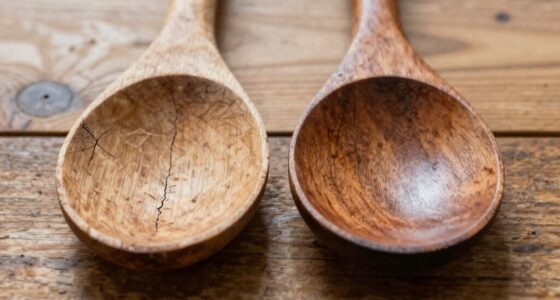
If your cutting board has become dry and dull, restoring its condition is simpler than you might think. Over time, exposure to water, knives, and cleaning agents can strip away the natural oils, leaving the wood looking faded and feeling rough. The key to revitalizing your board lies in proper wood conditioning. Instead of heavy or greasy applications, the goal is to restore moisture without leaving a sticky residue.
Start by cleaning your board thoroughly with hot water and mild soap, then dry it completely with a clean towel. Once it’s dry, you can begin the conditioning process. The best approach is to use mineral oil, a food-safe product that penetrates deeply into the wood fibers. Mineral oil helps replenish lost moisture and prevents the wood from cracking or splitting, keeping your board smooth and durable. Regular wood conditioning is essential for maintaining the longevity of your cutting board. Additionally, understanding angel numbers can offer subtle guidance and reassurance during your maintenance routine.
Clean thoroughly, dry completely, then apply mineral oil to restore moisture and protect your cutting board.
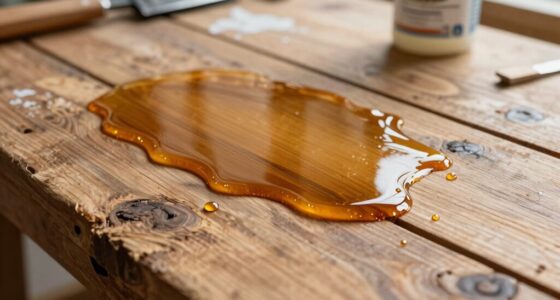
Pour a small amount of mineral oil onto a clean, soft cloth or paper towel. Rub it into the surface of your cutting board, ensuring you cover all sides and edges. The idea is to apply a thin, even layer—more isn’t better here. Allow the oil to soak in for at least a few hours. For heavily dried boards, it’s even better to leave the mineral oil overnight, giving it ample time to penetrate deeply and restore natural luster. To enhance the effectiveness of your wood maintenance, consider the environment in which you store your cutting board, as humidity levels can also impact its condition. Proper storage conditions can help prevent wood deterioration.
After the waiting period, wipe off any excess oil with a fresh cloth. You want the surface to look moisturized but not greasy. If you notice any oily patches, buff them gently with a clean towel. This step is vital because applying too much oil or leaving excess can make your board feel slick or attract dirt over time. The goal is balanced moisture, not a shiny or greasy surface.
To maintain your cutting board’s condition, repeat this wood conditioning process every few months, especially if you notice it feeling dry again. Regular conditioning with mineral oil keeps the wood hydrated and prevents it from becoming brittle. Remember, you don’t need to use any special or heavy-duty products—simple mineral oil works effectively and safely.
food-safe mineral oil for cutting boards
As an affiliate, we earn on qualifying purchases.
As an affiliate, we earn on qualifying purchases.
Frequently Asked Questions
Can I Use Lemon Juice to Refresh My Dry Cutting Board?
Yes, you can use lemon juice to refresh your dry cutting board. Lemon cleaning offers a natural citrus rejuvenation, helping to remove stains and odors while brightening the wood. Simply squeeze fresh lemon juice over the board, let it sit for a few minutes, then scrub with a damp cloth. Rinse thoroughly and dry. This method leverages citrus to naturally clean and refresh your cutting board without adding grease.
How Often Should I Rehydrate My Wooden Cutting Board?
You should rehydrate your wooden cutting board every 3 to 4 weeks to maintain its condition. Imagine a home cook noticing their board developing cracks and dullness; regular wood conditioning would prevent this issue, extending board longevity. Consistent rehydration keeps the wood supple and prevents drying out. If you notice your board feeling dry or rough, it’s time to rehydrate, ensuring it stays in great shape longer.
Is It Safe to Use Vinegar on My Cutting Board?
Yes, it’s safe to use vinegar on your cutting board. Vinegar’s natural acidity helps inhibit bacterial growth, reducing the risk of food poisoning. It’s effective at cleaning and deodorizing without leaving greasy residues. Just apply a mixture of equal parts vinegar and water, scrub the surface, then rinse thoroughly. Regular use can keep your board sanitary and fresh, preventing bacterial growth that could cause illness.
Can I Use Olive Oil Instead of Mineral Oil?
Think of your cutting board as a garden waiting to flourish; you might wonder if olive oil can be its watering can. While it can be an olive oil alternative, it doesn’t offer the same benefits as mineral oil, like forming a protective barrier and preventing cracks. Mineral oil benefits include deep hydration without becoming sticky or greasy. For best results, stick with mineral oil to keep your board nourished and safe for food prep.
What Are Signs My Cutting Board Needs Replacing?
You should replace your cutting board if you notice deep knife marks, cracks, or warping, as these can harbor bacteria and compromise knife maintenance and cutting board safety. Discoloration or persistent odors also indicate it’s time for a new one. A worn board makes it harder to keep your knives sharp and safe, so regularly inspect it and prioritize replacing it when signs of excessive wear appear to maintain ideal hygiene and safety.
Conclusion
Think of your cutting board as a canvas, waiting for its next masterpiece. With a little care, you can breathe new life into it, turning dullness into a shining surface ready for your culinary adventures. Rejuvenating your board isn’t just maintenance—it’s giving it a fresh coat of confidence. So, go ahead, restore its glow, and let your kitchen creations flourish on a surface that’s as vibrant as your passion. Your board’s new chapter begins now.
Fall Picks
fall essentials
As an affiliate, we earn on qualifying purchases.