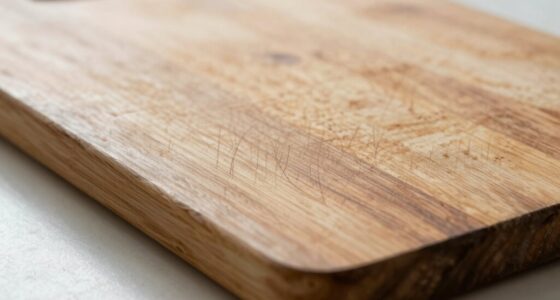
End-grain cutting boards are more durable and knife-friendly compared to edge-grain ones. Their fibers are self-healing and resist deep grooves, meaning they stay smooth and last longer even with frequent use. Edge-grain boards wear out faster, showing scratches and cuts more quickly. Although end-grain boards cost more initially, their longevity makes them a smarter choice if you want a surface that withstands heavy use and keeps its quality. Want to learn how to choose the best?
Key Takeaways
- End-grain boards are more durable, resistant to knife marks, and self-healing, making them longer-lasting with less surface damage.
- Edge-grain boards are less durable, prone to grooves and scratches, and wear down faster over time.
- End-grain surfaces maintain smoothness longer due to fiber self-healing properties, while edge-grain surfaces show visible wear sooner.
- End-grain boards typically cost more and require careful maintenance, whereas edge-grain boards are cheaper and easier to produce.
- For maximum durability and longevity, end-grain boards are superior despite higher initial investment.
When choosing a cutting board, understanding the differences between end-grain and edge-grain designs can help you make a better decision. These two styles influence durability, maintenance, and how gentle or harsh they are on your knives. One of the key aspects to contemplate is how the wood grain is oriented, which directly affects how well the board withstands daily use. With end-grain boards, the knife edge interacts with the wood in a different way compared to edge-grain boards. Instead of slicing through the surface, your knife cuts between the tightly packed wood fibers, which makes a significant difference in the board’s longevity.
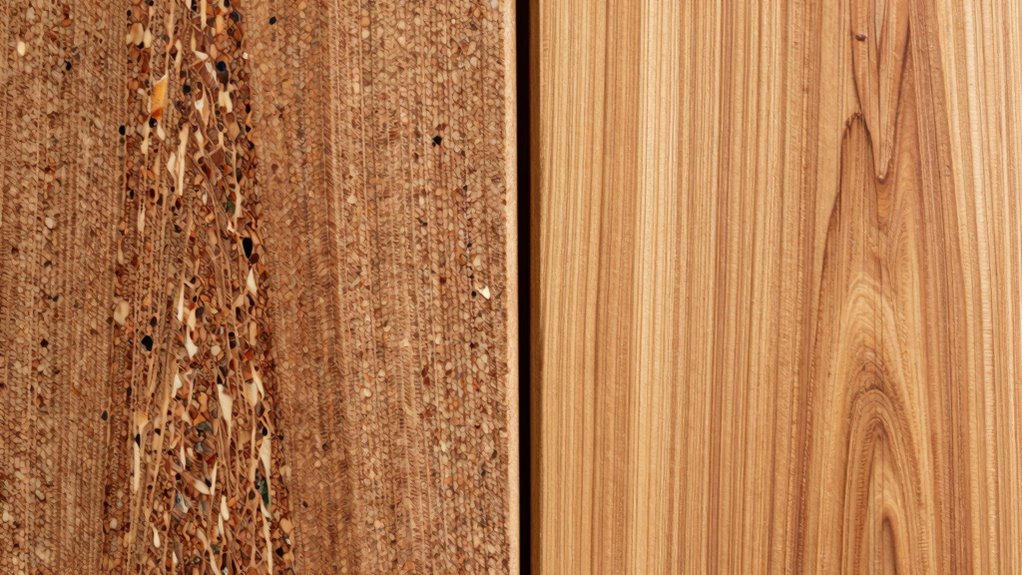
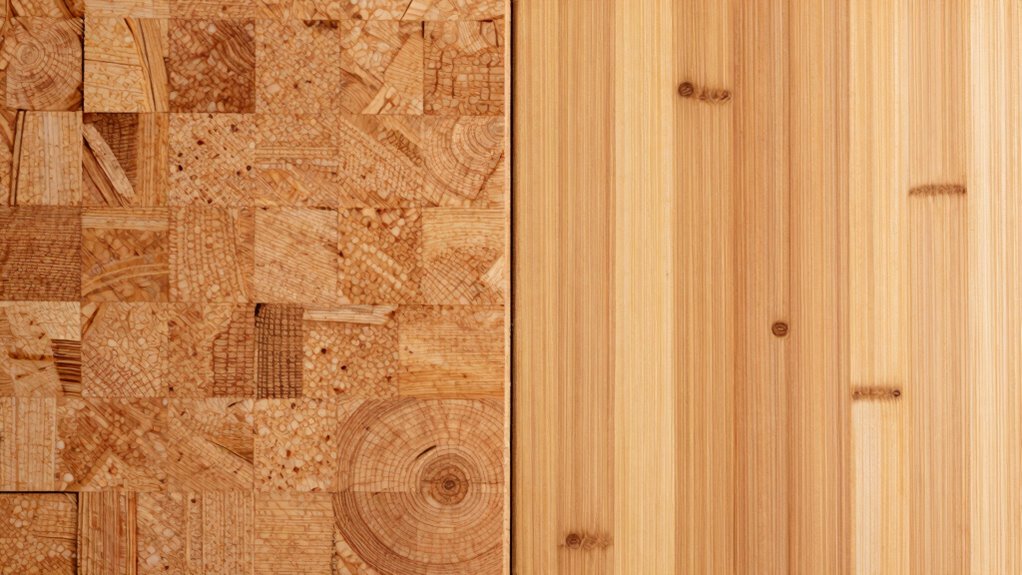
In an end-grain cutting board, the wood is cut so that the grain runs vertically, exposing the ends of the wood fibers. When you cut on this type of surface, your knife edge gently slices between the fibers rather than slicing through them. This design helps to preserve your knife’s sharpness, as the fibers are more forgiving and self-healing over time. Because the wood fibers are tightly packed and oriented vertically, end-grain boards tend to be more durable and resistant to knife marks. They can withstand repeated cutting without developing deep grooves, which makes them ideal for frequent or heavy use. The wood grain orientation also means that, if scratches do form, they tend to close up, maintaining a smoother surface longer.
Conversely, edge-grain boards are made by gluing long strips of wood with the wood grain running parallel to the surface. When you cut on an edge-grain board, your knife edge slices through the wood fibers aligned horizontally. This exposes more of the wood’s surface, which can lead to quicker dulling of your knives. The wood grain in these boards isn’t as forgiving; cuts tend to leave visible grooves and scratches, and the surface may wear down faster over time. Edge-grain boards are generally more affordable and easier to produce, but they don’t offer the same longevity or knife-friendliness as end-grain options.

THETCHRY Walnut Wood Cutting Boards for Kitchen, Large Chopping Board Double Sided, End Grain Cutting Board with Handle, Charcuterie Butcher Block for Meal Prep & Serving with Gift Box, 17"×13"×1"
Still looking for a cutting board that is both beautiful and practical? THETCHRY end grain walnut cutting board…
As an affiliate, we earn on qualifying purchases.
As an affiliate, we earn on qualifying purchases.
Frequently Asked Questions
Which Type of Board Is More Affordable Overall?
You’ll find edge-grain boards are generally more affordable overall due to lower manufacturing costs. Their simpler construction requires less time and materials, which keeps the price comparison favorable. End-grain boards tend to be pricier because they involve more intricate craftsmanship. If you’re on a budget, choosing an edge-grain board makes sense, as it offers good durability at a lower price point.
How Do Maintenance Routines Differ Between End-Grain and Edge-Grain?
Think of maintaining your cutting board like tending a garden. With end-grain boards, you’ll focus on gentle cleaning techniques and regular oiling to preserve their intricate surface, much like nurturing delicate flowers. For edge-grain boards, you may need to be more vigilant about knife maintenance, avoiding sharp cuts that can mar the surface. Regular cleaning, avoiding soaking, and oiling are essential for both, but their routines differ slightly to keep them in peak condition.
Are There Specific Knives That Work Better With One Type?
You’ll find that different knives work better with specific cutting techniques on end-grain and edge-grain boards. For precise, delicate cuts, a sharp, flexible boning or paring knife is ideal on end-grain boards, thanks to their durability. For tougher tasks, a sturdy chef’s knife performs well on edge-grain boards. Always consider knife compatibility with your cutting technique to guarantee safety, efficiency, and longevity of both your knives and boards.
Can Either Board Be Safely Used for Meat Preparation?
Yes, you can safely use either board for meat preparation, but food safety is key. End-grain boards are better at resisting bacterial retention because their surface self-heals when cut, reducing bacteria buildup. Edge-grain boards are also safe if you thoroughly clean and sanitize them after each use. Always wash with hot, soapy water, disinfect, and avoid cross-contamination to keep your kitchen safe and hygienic.
How Does Environmental Impact Compare Between the Two?
You’ll find that end-grain boards often have a lower environmental impact because they typically use sustainable sourcing and produce less waste during manufacturing. Recyclability considerations also favor end-grain boards, as they can sometimes be repurposed or recycled more easily. Edge-grain boards may involve more material waste, but both options can be environmentally friendly if sourced responsibly. Ultimately, choosing sustainably sourced, recyclable materials benefits the environment regardless of board type.
THETCHRY Walnut Wood Cutting Boards for Kitchen, Large Chopping Board Double Sided, End Grain Cutting Board with Handle, Charcuterie Butcher Block for Meal Prep & Serving with Gift Box, 17"×13"×1"
Still looking for a cutting board that is both beautiful and practical? THETCHRY end grain walnut cutting board…
As an affiliate, we earn on qualifying purchases.
As an affiliate, we earn on qualifying purchases.
Conclusion
In the battle of end-grain versus edge-grain, think of end-grain as the rugged fortress, absorbing every cut and scrape like a seasoned warrior. Edge-grain, meanwhile, is your trusty steed—faster, but more prone to wear over time. Choose your champion wisely, knowing that each board tells a story of resilience and craftsmanship. Whichever you pick, treat it well, and your kitchen will always be a canvas of culinary artistry.

Keechee Bamboo Cutting Board, Durable Wood Cutting Boards for Kitchen with Deep Juice Grooves & Built-in Handles, Ideal Charcuterie & Chopping for Meat, Vegetables and Fruits Ideal Kitchen Gifts
BAMBOO CUTTING BOARD of 3 – Keechee bamboo cutting boards for kitchen include 3 practical sizes: 15×10 in,…
As an affiliate, we earn on qualifying purchases.
As an affiliate, we earn on qualifying purchases.

GORILLA GRIP BPA-Free Reversible Kitchen Cutting Board Set of 3, US Designed, Nonporous, Juice Grooves Catch Liquid, Slip Resistant Border, Dishwasher Safe, Durable Large Food Chopping Boards, Black
ULTRA DURABLE STRENGTH: 3rd Party Tested for durability, thick cutting boards have a nonporous surface that won’t splinter…
As an affiliate, we earn on qualifying purchases.
As an affiliate, we earn on qualifying purchases.