
To quiet slamming doors, start by adjusting or replacing your door stoppers to make certain gentle contact and prevent forceful closures. Lubricate hinges with a quality lubricant to reduce stiffness and squeaks, and consider upgrading to soft-close hinges or dampers designed for quiet, smooth operation. Proper alignment and maintenance are key to preventing loud slams, and small adjustments can make a big difference. Keep exploring to discover even more ways to achieve silent door closures.

Get business pricing on tools and workshop supplies
- Business-only prices and quantity discounts
- Tax-exempt purchasing
- Multiple users, one account, clear invoices
Key Takeaways
- Lubricate hinges regularly with a quality lubricant to reduce stiffness and squeaks, enabling smoother door closure.
- Adjust or add rubber/foam bumpers on door frames to cushion impact and prevent slamming.
- Upgrade to soft-close hinges or dampers for controlled, gentle door closing.
- Properly align and adjust door stoppers to prevent doors from swinging too far or closing forcefully.
- Regular maintenance and minor adjustments extend hardware lifespan and improve overall door quietness.
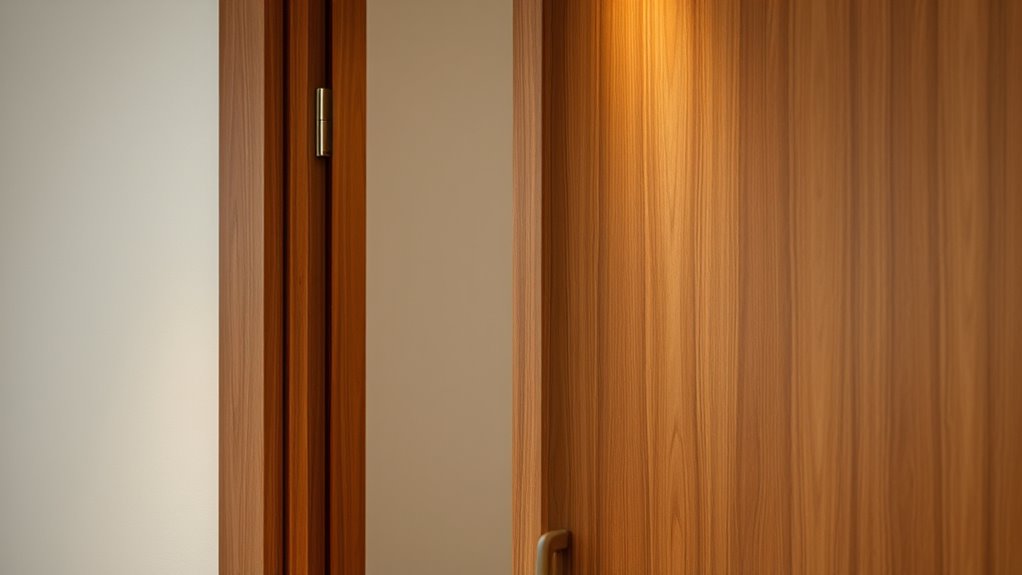
Slamming doors can be loud and disruptive, but you don’t have to accept the noise as inevitable. Often, the solution is simpler than you think. One of the first steps you can take is focusing on hinge lubrication. Over time, hinges can become stiff or squeaky, causing the door to close too quickly and slam shut. Applying a quality lubricant to the hinges reduces friction and allows the door to close smoothly. To do this, remove the hinge pins if possible, and spray or apply lubricant directly into the hinge barrels. Move the hinges back and forth to distribute the lubricant evenly. This simple step can markedly improve how softly your door closes without the need for major repairs. Proper hinge maintenance can also extend the lifespan of your door hardware and prevent further issues.
Another common cause of slamming is your door stopper. If the stopper isn’t properly adjusted, the door might swing too far or close with excessive force. Adjusting the door stopper is straightforward. Locate the stopper—usually a rubber or metal bumper on the door frame or wall—and turn its screw or reposition it so that the door hits it gently, not forcefully. Sometimes, you might need to add a small rubber or foam bumper if none are present, which cushions the impact and helps regulate the door’s closing speed. Proper adjustment prevents the door from slamming into the frame and minimizes noise, providing a softer, more controlled closure.
If these simple adjustments don’t fully resolve the problem, consider upgrading your door hardware. Installing soft-close hinges or dampers can make a dramatic difference. These hinges feature built-in mechanisms that control the closing action, gently bringing the door to a close instead of letting it slam shut. When installing or replacing hinges, ensure they are properly lubricated during the process to keep everything functioning smoothly over time. If you’re comfortable with DIY projects, these upgrades are accessible and cost-effective, offering a long-term solution to noise issues. Additionally, selecting hinges with home theater quality damping can enhance the overall quietness and smooth operation of your doors.
As an affiliate, we earn on qualifying purchases.
Frequently Asked Questions
Can Soft-Close Hinges Be Installed on Any Door?
Soft-close hinges can be installed on many doors, but you need to check door compatibility first. Not all hinge types suit soft-close mechanisms, so verify your door’s hinge style supports this feature. You might need to replace existing hinges with compatible soft-close hinges, especially on heavier or specialized doors. Measure your door and hinge type carefully, and if unsure, consult a professional to confirm that soft-close hinges will work for your specific setup.
How Long Does a Soft-Close Mechanism Typically Last?
A soft-close mechanism typically lasts around 10 to 15 years, depending on door usage and hinge durability. You can expect your soft-close hinges to maintain their door lifespan effectively if you regularly clean and lubricate them. Heavy or frequent use might shorten their lifespan slightly, but with proper maintenance, they should serve you well for many years, ensuring smooth, quiet door closings throughout their durability.
Are Soft-Close Adjustments Suitable for Heavy or Oversized Doors?
Soft-close adjustments are generally suitable for light to medium doors, but when it comes to heavy or oversized doors, you need to take into account heavy door considerations and oversized door compatibility. These doors put extra strain on the mechanism, so it’s important to check if your soft-close hardware is rated for their weight. If not, you might need specialized heavy-duty hardware to ensure smooth, quiet closing without damaging your doors or hardware.
Do Soft-Close Hinges Require Special Maintenance or Lubrication?
Soft-close hinges generally don’t need much maintenance, but occasional hinge lubrication keeps them functioning smoothly. You should check and lubricate the hinges every six months or so, especially if you notice squeaking or sluggish closing. Regular maintenance helps prevent wear and tear, ensuring your soft-close hinges continue to work effectively. Just use a light lubricant designed for hinges, and avoid over-lubricating to prevent dust buildup.
Can Soft-Close Features Be Added to Existing Doors Easily?
Yes, you can add soft-close features to existing doors, but first check door material compatibility to guarantee the hinges will work. You’ll need hinge installation tools like screwdrivers and possibly a drill to replace or retrofit hinges. Follow the hinge instructions carefully, and if your door material is compatible, installing soft-close hinges is straightforward, providing a quieter, more controlled closing experience without much effort.
Conclusion
By adjusting your soft-close hinges, you can silence those stubborn slamming doors and restore peace to your home. Remember, a stitch in time saves nine—addressing issues early prevents bigger problems down the road. With a little patience and the right tweaks, you’ll enjoy quieter, more serene spaces. Don’t wait for the noise to become a nuisance; take action now and enjoy the calm that comes with a well-adjusted door.
Fall yard work Picks
leaf blowers
As an affiliate, we earn on qualifying purchases.