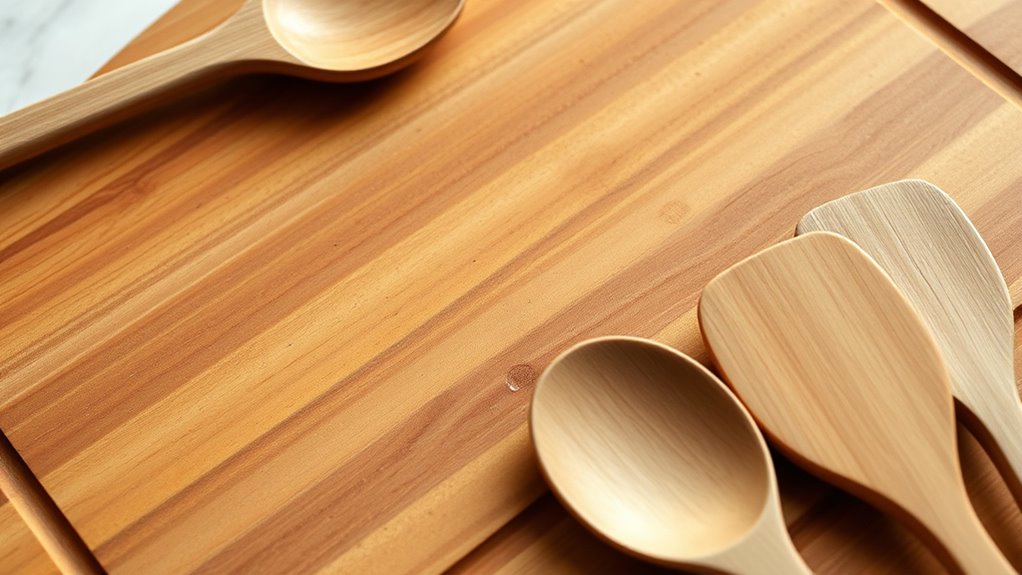
To properly care for your wooden cutting boards and utensils, wash them gently with warm water and mild soap, then dry immediately to prevent moisture buildup. Regularly apply food-safe mineral oil or beeswax to keep the wood conditioned and free of cracks. Avoid soaking, dishwasher use, and abrasive scrubbers. For stubborn stains or odors, lightly sand the surface and reapply oil. Keep your tools clean and well-maintained to guarantee long-lasting performance—there’s more to ensure they stay in great shape over time.
Key Takeaways
- Hand wash with warm water, mild soap, and a soft sponge; avoid dishwashers and harsh chemicals.
- Dry immediately after cleaning to prevent moisture absorption and potential warping.
- Regularly apply food-safe mineral oil or beeswax to maintain wood’s moisture and appearance.
- Sanitize with natural solutions like vinegar-water or salt and lemon, especially after raw meat use.
- Lightly sand with fine-grit sandpaper for stains or odors, then reapply oil to restore smoothness.
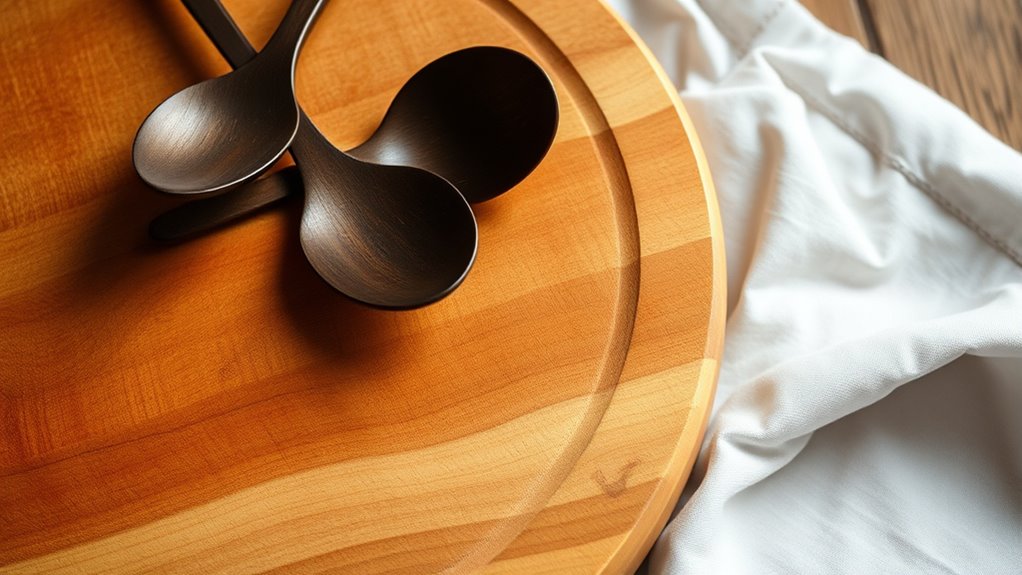
Wooden cutting boards and utensils can last for years if you give them proper care. The key to maintaining their longevity lies in understanding effective wood preservation and adopting the right cleaning techniques. When you focus on these aspects, you guarantee that your tools stay in excellent condition and remain safe for food preparation.
First, wood preservation is essential in preventing cracks, warping, and bacteria buildup. To preserve your wooden utensils, avoid soaking them in water for extended periods, as moisture can seep into the wood fibers and cause damage. Instead, after use, rinse your cutting board or utensils with warm water and wipe them dry immediately. Applying food-safe mineral oil or beeswax periodically creates a protective barrier that seals the wood, reducing moisture absorption and maintaining its natural luster. Repeating this process every few weeks or when the wood looks dry helps keep it resilient and prevents it from drying out or splitting.
To prevent cracks and bacteria, avoid soaking wood; wipe dry and periodically apply mineral oil.
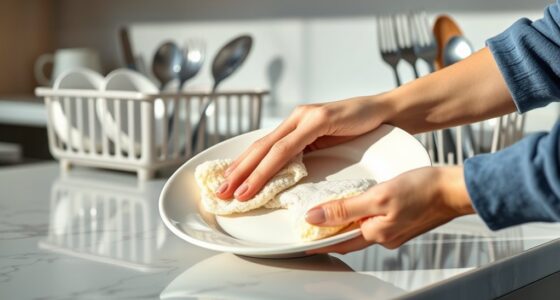
Cleaning techniques play a crucial role in preserving your wooden tools’ integrity. You should steer clear of harsh chemicals or abrasive scrubbers, which can damage the wood’s surface. Instead, use a gentle scrub with a soft sponge or brush combined with hot water and mild dish soap. After cleaning, rinse thoroughly and dry immediately with a clean towel. For deeper sanitization, you can use a mixture of vinegar and water or sprinkle coarse salt on the surface and scrub with a lemon half; these natural methods help eliminate bacteria without harming the wood. Regularly sanitizing your cutting board, especially after cutting raw meat or poultry, is essential for food safety.
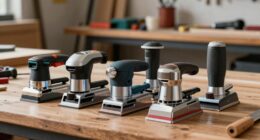
To further maintain your wooden utensils, avoid placing them in the dishwasher, as the high heat and water pressure accelerate deterioration. Instead, hand wash and air dry them in a well-ventilated area. If your wood develops stubborn stains or odors, you can sand the surface lightly with fine-grit sandpaper and reapply oil to restore its appearance and smoothness.
Frequently Asked Questions
How Often Should I Oil My Wooden Cutting Board?
You should oil your wooden cutting board once a month or more often if it starts to look dry or dull. For ideal seasoning frequency, use food-grade mineral oil or beeswax-based products, as they penetrate well and protect the wood. Regularly oiling keeps your board moisturized, prevents cracking, and maintains its durability. Remember, the more often you oil, the longer your cutting board stays in great shape.
Can I Use Vinegar to Clean My Wooden Utensils?
Think of vinegar as the knight in shining armor for wooden hygiene, but it’s not always the safest choice. You can use vinegar to clean your wooden utensils, but be cautious—its acidity may damage the wood over time. To guarantee vinegar safety, dilute it with water and avoid leaving it on the surface too long. For best results, opt for a mild soap and water or a specialized wood cleaner.
What’s the Best Way to Remove Stains From Wood?
To remove stains from wood, start with natural cleaning methods. Make a paste of baking soda and water, then gently scrub the stained area with a soft cloth or sponge. For tougher stains, you can also use a mixture of lemon juice and salt. Let it sit for a few minutes before wiping away. This approach effectively handles wood stain removal while preserving your wooden utensils’ integrity.
Is It Safe to Put Wooden Utensils in the Dishwasher?
Dishing out doubts about dishwasher safety? You shouldn’t put wooden utensils in the dishwasher. Excessive heat and moisture can warp, crack, or ruin your wooden tools. For safe wooden utensil cleaning, hand wash with warm water and mild soap, then dry thoroughly. This gentle approach preserves their integrity, ensuring they last longer. Keep your wooden utensils in top shape by avoiding dishwashers and opting for careful, conscientious cleaning.
How Can I Prevent Cracking or Splitting of Wood?
To prevent cracking or splitting of wood, you should regularly apply a wood sealant to keep moisture in check. Store your utensils in a humidity-controlled environment to avoid drying out or swelling. Avoid soaking them in water or exposing them to extreme temperature changes. These practices help maintain their integrity, ensuring they stay durable and crack-free over time. Regular maintenance is key to preserving your wooden utensils’ quality.
Conclusion
By following these simple care tips, you’ll keep your wooden cutting boards and utensils in great shape for years. Regular cleaning, oiling, and avoiding soaking prevent bacteria buildup and warping. Many believe that natural oils like mineral or beeswax offer the best protection, and science supports that they help preserve wood’s integrity. So, with proper care, you can enjoy your beautiful, durable tools while ensuring safe, hygienic food prep every time.