To dispose of solvent-soaked rags and finishing waste safely, store them immediately in approved, airtight, non-combustible containers labeled as flammable. Keep these containers in a secure, designated area away from heat sources and don’t let waste pile up. Dispose of the waste promptly through licensed hazardous waste services, following local regulations. Avoid burning or incinerating the waste yourself. If you want to learn more, you’ll find helpful tips for maintaining a safe workspace.

Get business pricing on tools and workshop supplies
- Business-only prices and quantity discounts
- Tax-exempt purchasing
- Multiple users, one account, clear invoices
Key Takeaways
- Store solvent-soaked rags in approved, airtight, non-combustible containers labeled as flammable materials.
- Dispose of waste promptly according to local regulations, ideally daily or per shift, using licensed hazardous waste services.
- Avoid storing large quantities or leaving waste in warm, enclosed spaces to prevent spontaneous combustion.
- Never burn or incinerate solvent-soaked rags; use proper disposal methods approved for hazardous waste.
- Train staff regularly on safe handling, storage, and disposal procedures to mitigate fire and health hazards.
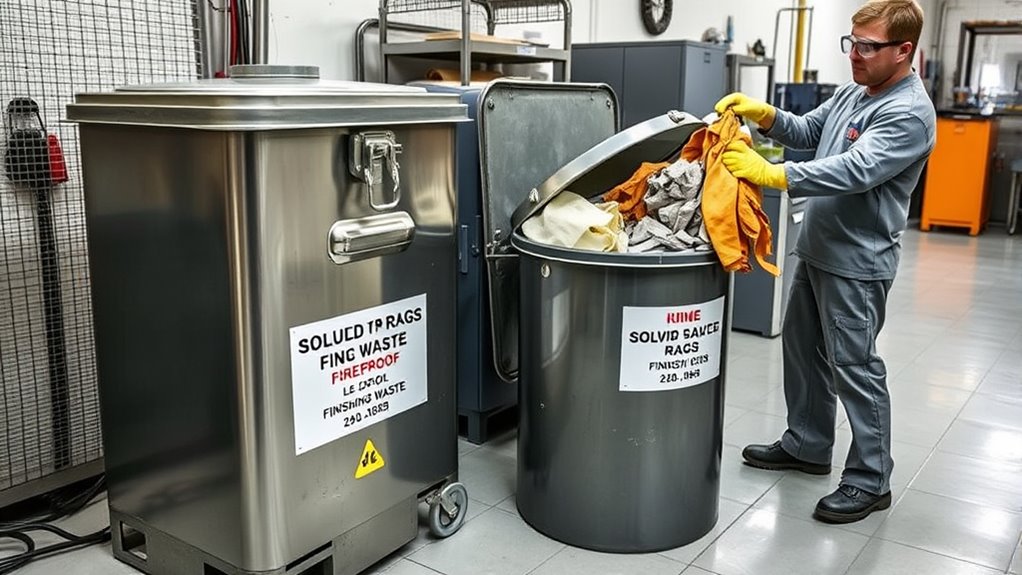
When dealing with solvent-soaked rags and finishing waste, safety should always come first. These materials often contain flammable substances, making proper handling and disposal essential to prevent fires and health hazards. Recognizing that such waste is classified as a flammable material emphasizes the importance of strict waste management protocols. You need to treat these rags and waste as hazardous, ensuring they are stored, handled, and disposed of properly to minimize risks.
The first step in safe disposal is to understand that solvent-soaked rags can spontaneously combust if not managed correctly. The oils and solvents in these rags are highly flammable, especially when they are piled up or left in warm, enclosed spaces. That’s why you should never leave used rags lying around or pile them in large quantities. Instead, place them in approved, airtight containers made specifically for combustible waste. These containers should be clearly labeled as flammable material to alert anyone handling them. Using metal, non-combustible containers with secure lids reduces the risk of accidental ignition and ensures that the waste is stored safely until it can be disposed of properly.
Effective waste management also involves timely disposal. Don’t wait too long before getting rid of solvent-soaked rags. Many workplaces implement daily or shift-based routines to collect and dispose of such waste regularly. This helps to avoid accumulation, which increases fire risk. When it’s time to dispose of the waste, follow local regulations and guidelines. Typically, this means contracting a licensed hazardous waste disposal service or following specific disposal procedures laid out by your safety officer or environmental authority. Never attempt to burn or incinerate solvent-soaked rags on your own, as this can be extremely dangerous and illegal.
Training and awareness are essential components of safe waste management. Make sure you and your staff understand the hazards associated with flammable materials and the proper procedures for handling and storing solvent-soaked rags. Regular safety training sessions should emphasize the importance of using approved containers, avoiding accumulation, and following disposal protocols.
flammable waste disposal containers
As an affiliate, we earn on qualifying purchases.
As an affiliate, we earn on qualifying purchases.
Frequently Asked Questions
Can I Reuse Solvent-Soaked Rags Safely?
You shouldn’t reuse solvent-soaked rags because it can be unsafe and lead to fires or chemical exposure. Instead, focus on proper rag disposal to prevent hazards. If you want to reduce waste, check if your solvent can be reused securely through proper filtering or recycling methods. Always follow safety guidelines, and never store soaked rags in enclosed spaces to guarantee safety and compliance.
What Are the Signs of Spontaneous Combustion Risk?
Did you know that spontaneous combustion causes over 50% of industrial fires? You can spot oxidation hazards by looking for heat buildup, a strong solvent odor, or discolored, charred rags. To prevent fires, store solvent-soaked rags in airtight containers and avoid pile-ups. Always monitor for signs of heat or smoke, and follow proper fire prevention practices to reduce spontaneous combustion risks.
How Long Can Solvent-Soaked Rags Be Stored Safely?
You should store solvent-soaked rags for no more than 24 hours to minimize fire risk. Extended storage increases the danger of spontaneous combustion, so it’s best to dispose of them promptly or keep them in a fireproof container until disposal. Always follow your workplace safety protocols and local regulations to prevent fire hazards, and never leave soaked rags unattended for longer than the recommended storage duration.
Are There Specific Disposal Regulations for Different Solvents?
Think of each solvent as a different island with unique rules for visitors. You must follow specific disposal regulations for each, ensuring regulatory compliance. Some solvents are classified as hazardous waste, requiring special handling and disposal methods. By knowing these classifications, you prevent environmental harm and legal issues. Always check local and federal guidelines to correctly dispose of each solvent, keeping your operations safe and compliant.
What Personal Protective Equipment Is Recommended During Disposal?
You should wear protective gloves and respiratory masks during disposal to protect yourself from harmful fumes and contact with chemicals. Gloves prevent skin irritation or absorption of hazardous substances, while masks shield your lungs from inhaling vapors. Always choose gloves resistant to solvents and a mask rated for chemical vapors. Ensuring proper personal protective equipment minimizes health risks, keeping you safe while handling and disposing of solvent-soaked rags and waste.
Conclusion
By properly disposing of solvent-soaked rags and finishing waste, you’re steering clear of potential fires and environmental harm. Think of these materials as ticking time bombs if ignored — your quick action keeps everyone safe and the planet cleaner. Always follow local regulations and never toss them in regular trash. Your careful disposal is the lighthouse guiding everyone away from danger, illuminating your commitment to safety and responsibility.
Fall Picks
fall essentials
As an affiliate, we earn on qualifying purchases.