
To prevent sag in long shelves, you should reinforce them with sturdy brackets placed no more than 24 inches apart and anchored into wall studs for stability. Adding a lip of at least 1-2 inches can also help distribute weight evenly while keeping stored items secure. Using thicker materials like reinforced wood or laminate boosts support further. Proper support and design are essential for lasting durability. Keep exploring to discover detailed tips to guarantee your shelves stay strong over time.
Key Takeaways
- Install support brackets every 24 inches along the shelf, anchored into wall studs for stability.
- Use heavy-duty brackets capable of handling the weight of long, loaded shelves.
- Incorporate a lip or edge to add rigidity and prevent downward bowing.
- Opt for thicker, reinforced materials like solid wood or laminate for added strength.
- Regularly inspect and tighten brackets to maintain proper support and prevent sagging over time.

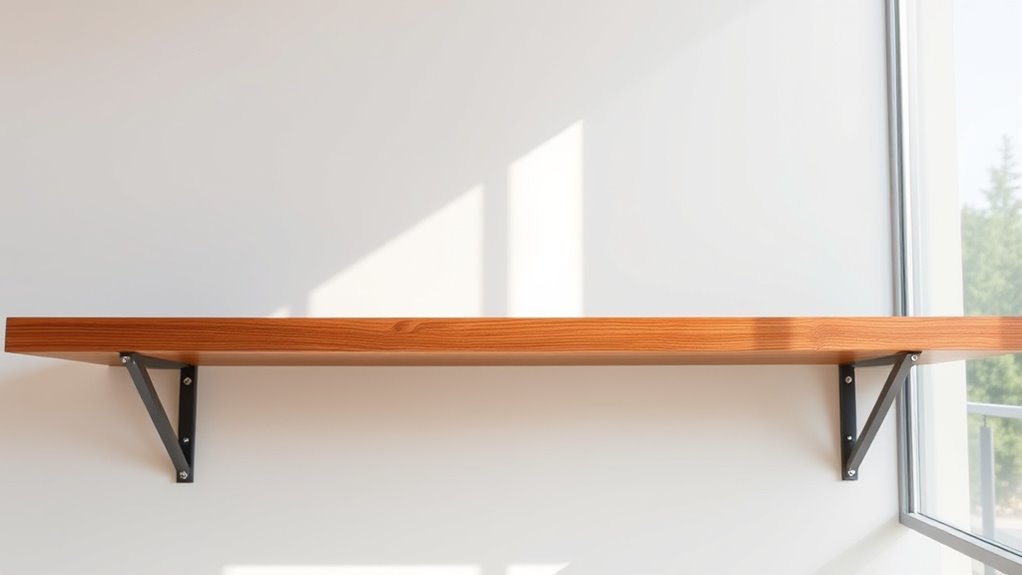
Long shelves can add beauty and functionality to your space, but they’re prone to sagging over time if not properly supported. To prevent this, you need to focus on effective support methods, such as bracket reinforcement and thoughtful shelf lip design. Bracket reinforcement involves adding extra support brackets underneath the shelf, especially at the center and along the edges, to distribute weight evenly. When choosing brackets, opt for sturdy, heavy-duty options that can handle the load you expect. Installing additional brackets or upgrading existing ones helps prevent the shelf from bowing or sagging under heavy items. Make sure brackets are anchored into wall studs whenever possible, rather than drywall alone, to maximize stability. Proper placement of brackets is vital; spacing them no more than 24 inches apart ensures even support and reduces strain on any single point. Bracket reinforcement isn’t just about adding more brackets—it’s about strategically positioning them for ideal weight distribution and durability.
Another key aspect in preventing sag is the shelf lip design. Shelves with a lip, or a small ledge at the front edge, help keep items from falling off and also contribute to the overall stability. When designing or selecting shelves, consider a lip that extends at least 1 to 2 inches. This lip not only secures items but also stiffens the shelf, making it more resistant to bending under weight. A well-designed shelf lip reduces the risk of warping and adds rigidity, especially when combined with proper support. For added strength, you can incorporate a slight downward curve in the lip, which helps direct weight downward rather than outward, further reducing stress on the shelf itself. The shelf lip design should complement the material of your shelf; for instance, thicker wood or reinforced laminate can handle larger lips and heavier loads better than thinner materials. Incorporating proper support techniques can significantly enhance the durability of your long shelves.
Combining bracket reinforcement with an effective shelf lip design creates a sturdy support system that keeps your long shelves straight and secure for years. Always measure carefully before installing, ensuring brackets are aligned and the lip is proportionate to the weight you plan to store. Regularly check the support system and tighten brackets if needed, especially after heavy use or changes in the stored items. By paying close attention to these details, you’ll protect your shelves from sagging, prolong their lifespan, and keep your space looking polished and organized.
Frequently Asked Questions
What Materials Are Best for Preventing Shelf Sag?
You should choose materials with high durability, like solid wood or metal, for preventing shelf sag. Adding shelf reinforcement, such as thicker boards or steel supports, helps distribute weight evenly and resists bending. Avoid flimsy materials like thin particleboard, which can sag over time. By selecting sturdy materials and incorporating reinforcement, you guarantee your shelves stay strong and level, even under heavy loads.
How Often Should I Check for Sag in Long Shelves?
Check your shelves regularly, ideally once a month, to prevent sag and preserve their strength. Keep an eye on load distribution and reinforce shelves if you notice any signs of strain. Consistent checking helps catch issues early, ensuring shelf reinforcement is added promptly. This proactive approach minimizes sag, maintains stability, and prolongs the life of your long shelves, giving you peace of mind and a perfectly organized space.
Can Decorative Brackets Reduce Shelf Sag Effectively?
Decorative brackets can reduce shelf sag effectively by providing additional support, especially for long shelves. They serve as a form of shelf reinforcement, helping distribute weight more evenly across the length of the shelf. When you install sturdy, well-placed decorative brackets, you prevent sag and increase the shelf’s durability. Just make sure to choose brackets that are strong enough for your load and positioned properly for maximum support.
What Weight Limit Should I Set for Long Shelves?
You should set a weight capacity of around 20-30 pounds per foot for your long shelves, depending on the material and support. Make certain of proper load distribution by evenly spreading the weight across the entire shelf, avoiding concentrated loads in one spot. This helps prevent sag and maintains stability. Always check the manufacturer’s recommendations and consider adding reinforcement if you plan to hold heavier items.
Are There Any Maintenance Tips to Prolong Shelf Lifespan?
Imagine a pristine, well-maintained shelf—clean and moisture-free. To prolong its lifespan, regularly clean your shelves to prevent dust buildup and check for signs of wear. Moisture control is vital; avoid excess humidity that can weaken materials. Use gentle cleaners, keep the area dry, and make certain proper ventilation. These simple maintenance tips help keep your shelves sturdy, prevent sagging, and extend their durability over time.
Conclusion
By anchoring your shelves securely, you’re planting a sturdy tree that withstands the storm. Think of each support as a branch, spreading strength and resilience across your space. When you take these simple steps, you’re not just avoiding sag—you’re cultivating a foundation that symbolizes stability and growth. With careful attention, your long shelves will stand tall and proud, echoing the steadfastness of a mighty oak, ready to serve your needs for years to come.