To keep your cutting board safe and in top shape, fully clean it with hot, soapy water after each use, paying close attention to edges and knife contact points. Regularly sanitize plastic boards in the dishwasher or with vinegar solutions, and oil wooden or bamboo ones with food-grade mineral oil to prevent cracks. Check for deep cuts or gouges that trap bacteria and replace when necessary. Continuing with proper care guarantees a hygienic, durable surface for all your food prep needs.

Get business pricing on tools and workshop supplies
- Business-only prices and quantity discounts
- Tax-exempt purchasing
- Multiple users, one account, clear invoices
Key Takeaways
- Wash cutting boards thoroughly with hot, soapy water after each use to remove bacteria and debris.
- Sanitize plastic boards regularly in the dishwasher or with vinegar solutions to prevent bacterial buildup.
- Inspect boards for deep cuts or gouges that can harbor bacteria; replace damaged boards promptly.
- Periodically treat wooden or bamboo boards with food-grade mineral oil to prevent cracking and maintain hygiene.
- Use separate boards for raw meats and other foods to prevent cross-contamination and ensure proper sanitation.
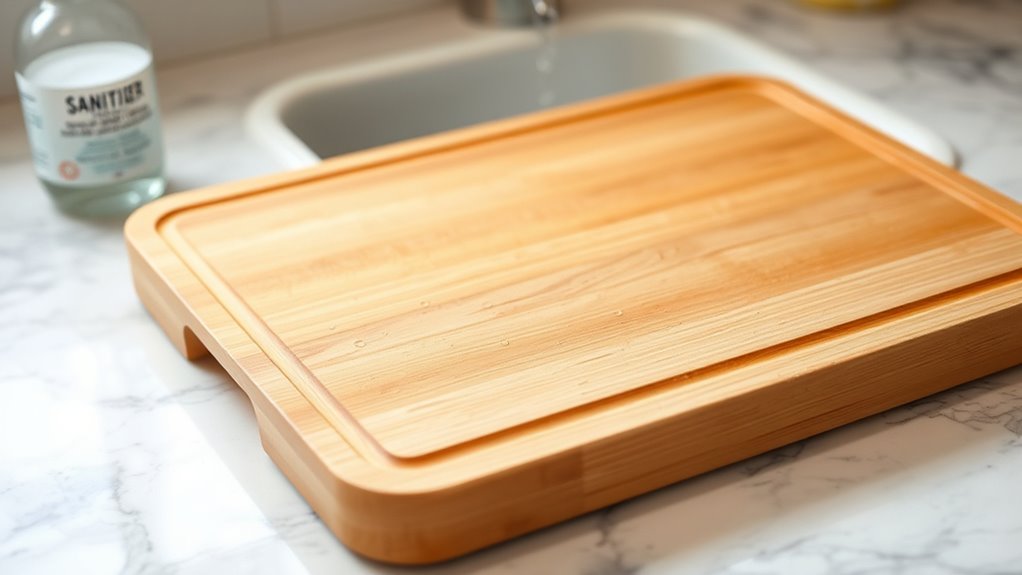
A well-maintained cutting board is crucial for safe and effective food preparation. You rely on your board daily, and keeping it in top shape ensures your meals are both delicious and hygienic. One key aspect of proper care involves understanding the importance of knife maintenance and choosing the right board material. Sharp knives not only make your cutting tasks easier but also reduce the risk of accidents and damage to your board. When your knives are well-maintained, they glide smoothly through ingredients, minimizing tearing and uneven cuts. Dull blades can cause you to apply excessive force, which may gouge or scar your board over time. Regularly honing and sharpening your knives keeps them in prime condition, preserving the integrity of your cutting surface and making sanitation easier.
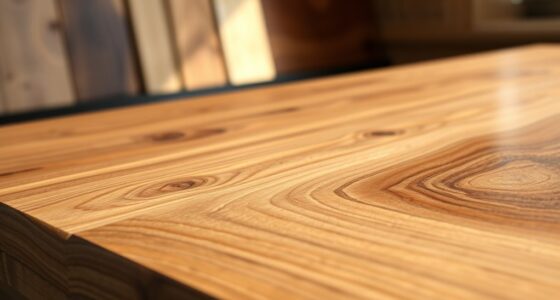
In addition to knife maintenance, selecting the appropriate board material is essential for longevity and sanitation. Wooden boards, for example, are gentle on knives and naturally self-healing, meaning small cuts tend to close up, reducing bacterial harboring. However, they require regular oiling to prevent drying and cracking. Plastic boards are lightweight and dishwasher safe, making them convenient for quick sanitation, but they tend to develop deep grooves over time. These grooves can trap bacteria if not replaced regularly. Bamboo is another eco-friendly option—harder than traditional wood, it resists knife marks better but still needs routine cleaning to prevent bacteria buildup. When choosing your board material, consider your cooking frequency, cleaning preferences, and knife care habits to find the best fit.
Maintaining your cutting board involves more than just choosing the right material. Proper knife maintenance goes hand-in-hand with sanitation practices to keep your workspace safe. After each use, wash your board thoroughly with hot, soapy water, paying close attention to knives and edges where bacteria can hide. For wooden or bamboo boards, periodically treat them with food-grade mineral oil to prevent cracking and moisture absorption. Plastic boards can be sanitized in the dishwasher or soaked in a vinegar solution to kill germs. Regularly inspect your board for deep cuts or gouges; replacing damaged boards prevents bacteria from colonizing in those crevices. Remember, a sharp knife minimizes damage to your board and reduces the potential for bacterial contamination, so invest time in keeping your blades sharp and your board clean. Additionally, understanding the role of contrast ratio in your tools can help you better assess the effectiveness of your cleaning procedures, ensuring your workspace remains hygienic. With attentive knife maintenance and thoughtful board material selection, you’ll prolong the life of your cutting surface and make food prep safer and more efficient.
plastic cutting board dishwasher safe
As an affiliate, we earn on qualifying purchases.
As an affiliate, we earn on qualifying purchases.
Frequently Asked Questions
How Often Should I Replace My Cutting Board?
You should replace your cutting board when it shows deep cuts, cracks, or persistent stains that can harbor bacteria. Typically, the replacing frequency depends on how often you use it and its material, but most boards have a lifespan of about 1 to 3 years. Keep an eye on its condition, and don’t hesitate to replace it sooner if sanitation becomes difficult or if it’s compromised, ensuring safe food preparation.
Can I Use Bleach to Sanitize My Cutting Board?
Sure, you can use bleach to sanitize your cutting board, but only if you enjoy risking bleach safety mishaps. Mix one tablespoon of bleach with a gallon of water, then let your board soak for a few minutes—voila! Alternatively, consider safer sanitizers like vinegar or hydrogen peroxide. Remember, overuse of bleach can damage your board and health, so choose wisely and enjoy your culinary adventures without unintended chemical surprises!
Are Plastic Cutting Boards More Hygienic Than Wood?
Plastic cutting boards tend to be more hygienic than wood because they’re non-porous, making them easier to clean and sanitize thoroughly. Wood boards can harbor bacteria in deep cuts and scratches, posing a higher contamination risk. With proper sanitation, plastic boards often stay cleaner longer, but both require regular cleaning. So, for better hygiene, many prefer plastic, especially if you’re concerned about bacteria buildup in grooves.
How Do I Remove Deep Knife Cuts From My Board?
To remove deep knife cuts from your board, start with sanding methods like using coarse grit sandpaper to grind down the surface. Then, switch to finer grit for a smoother finish. Resurfacing techniques help level the surface and eliminate deep grooves. Be sure to clean and sanitize thoroughly after sanding to maintain hygiene. Regular resurfacing extends your cutting board’s lifespan and keeps it safe for food prep.
Is It Safe to Put My Cutting Board in the Dishwasher?
Putting your cutting board in the dishwasher isn’t always safe, especially if it’s wood, because high heat and water can cause warping or cracking. For dishwasher safety, stick to cleaning methods like scrubbing with hot, soapy water or using a vinegar solution for sanitation. If you want to sanitize thoroughly, you can occasionally run it through a hot cycle, but hand washing remains the best method to preserve your board’s integrity.
Conclusion
Now, imagine your cutting board shining brightly after a thorough cleaning, free of stains and lingering odors. With regular sanitation and proper maintenance, you create a safe, inviting workspace for every meal. Think of it as giving your kitchen a fresh start—each wipe and oiling preserving its beauty and durability. Keep your cutting board in top shape, and it’ll serve you well, cutting through ingredients with ease and confidence for years to come.
Fall yard work Picks
leaf blowers
As an affiliate, we earn on qualifying purchases.