
TL;DR

Get business pricing on tools and workshop supplies
- Business-only prices and quantity discounts
- Tax-exempt purchasing
- Multiple users, one account, clear invoices
A Hunker report describes TikTok user Alyssa Barber’s method for reusing a clean plastic cupcake container to separate and store jewelry. The compartments can keep individual pieces apart, while decorating the container is optional; the report does not provide testing or evidence of how well the method works over time.
A TikTok user named Alyssa Barber has demonstrated reusing a rinsed, six-compartment plastic cupcake holder to store jewelry, an idea featured in a Hunker report. The household reuse tip gives empty food packaging a second use as a divided organizer, with separate spaces for items such as necklaces.
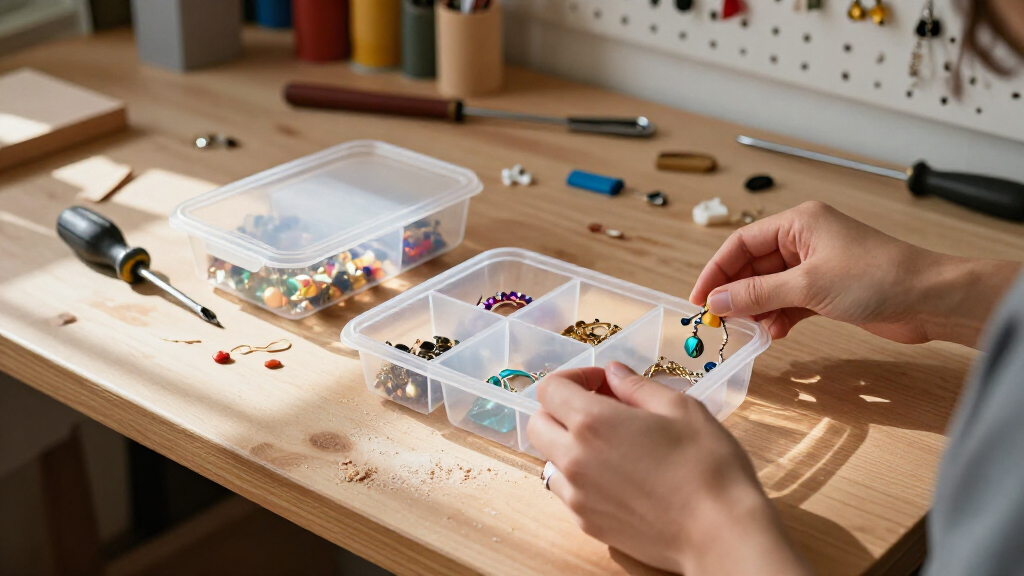
In the demonstration described by Hunker, Barber takes a plastic cupcake container from her recycling bin after the cupcakes are gone and the packaging has been rinsed. She places jewelry in its molded compartments, using the divided spaces to keep pieces apart. Hunker says a long necklace fits in one of the cupcake wells. The source describes a simple, unmodified container rather than a tested or specially manufactured storage product.
The compartments are the main feature behind the idea: they provide separate spots for individual pieces instead of leaving chains and small items together in a drawer or bag. The report presents reduced tangling as a practical reason to separate jewelry, but it does not offer test results or a comparison with commercial organizers. The suggestion is a reuse tip, not a claim that every container will suit every type or amount of jewelry.
Hunker also outlines optional ways to adapt the container. Its suggestions include covering the outside with fabric, using paint intended for plastic, or attaching decorations such as pom-poms. A design can be placed beneath a clear lid and traced onto it, the report says. For a softer place to store jewelry, it suggests adding velvet lining inside. These are optional craft ideas; the basic storage demonstration uses the plain container.
A Second Use for Food Packaging
The idea may appeal to readers who need a small-scale way to sort jewelry without buying a dedicated organizer. A container already on hand can provide individual compartments for pieces that might otherwise become mixed together. Reusing it also extends the packaging’s use before disposal, though the report does not measure any environmental benefit or compare reuse with recycling.
Its usefulness depends on the container and the items being stored. Molded cupcake wells may suit individual pieces or small groups, while larger jewelry or longer chains may not fit comfortably. The report’s example shows one necklace fitting a compartment; it does not establish that all jewelry can be stored safely this way. Adding a soft lining is offered as an option for readers who want a cushioned surface.
The broader appeal is the low-cost, adaptable approach: the organizer can remain plain, be decorated to match a room, or be used for something other than jewelry. That flexibility makes the tip relevant to people looking for ways to reuse packaging, while leaving the choice of materials and final use to the individual.
As an affiliate, we earn on qualifying purchases.
How the Container Becomes Storage
The report frames Barber’s method as “shop your recycling bin” rather than purchasing a new storage product. The container is a grocery-store cupcake holder with six sections, according to the account. After the food is gone, the packaging is washed and repurposed. The source does not identify the exact brand, plastic type, or dimensions.
Hunker says a clean surface helps prepare a container for decorating. It recommends removing labels and suggests vegetable oil for stubborn adhesive. For a painted finish, the report advises choosing paint that adheres to plastic. Other options listed include fabric, decorative pieces, tracing a printed design beneath a clear lid, and adding velvet inside. The source does not provide product-specific instructions, drying times, or guidance on whether each decorating method works with every kind of plastic.
The same approach may be applied to other containers with molded depressions, according to Hunker. Suggested alternate uses include sorting craft beads, storing makeup sponges, keeping small toys or trinkets together, and placing keys near an entryway. These are additional ideas in the report, not uses shown in Barber’s jewelry demonstration.
““Dividing up jewelry so it does not tangle is key in an organizer for your treasured possessions.””
— Hunker
What the Demonstration Does Not Establish
The source does not say when Barber posted the TikTok video, provide a direct link to it, or report how viewers responded. It also does not establish how well the container protects jewelry from scratches, moisture, dust, or damage, or whether the plastic is durable enough for repeated travel use.
There is no testing showing how much the compartments reduce tangling, and the example does not address delicate, bulky, or unusually long pieces. Hunker’s decorating suggestions are general rather than product-specific; compatibility with a particular paint, glue, fabric, or container is not confirmed. The source also makes no quantified claim about waste reduction or cost savings.
Adapting the Organizer at Home
Readers who want to try the idea can start with a clean container with divided wells, check that its compartments fit the jewelry they plan to store, and use it as-is before deciding whether to decorate it. Hunker’s suggestions include fabric, plastic-adhering paint, decorative pieces, or a velvet lining. The report does not describe a formal next step, product launch, or follow-up test; any further development would depend on Barber or Hunker publishing additional information.
Key Questions
How does the cupcake container work as a jewelry organizer?
Its molded wells create separate spaces for jewelry. Hunker’s report says Barber placed a long necklace in one compartment, though it does not show how every jewelry type fits.
Does the container need to be decorated?
No. The demonstration uses the plain container. Hunker lists fabric, paint made for plastic, and decorative items as optional ways to personalize it.
How should the container be prepared?
Hunker says to wash it and remove labels before decorating. For stubborn label glue, the report suggests vegetable oil, but it does not give product-specific cleaning instructions.
Can other containers be used?
According to Hunker, other plastic containers with molded divots may serve a similar purpose. The container’s size and compartments will determine what fits.
Is the organizer proven to prevent jewelry tangles?
No test results are provided. The compartments are intended to keep pieces separate, but the report does not measure how well they prevent tangling or protect jewelry.
Source: rss
Fall Picks
fall essentials
As an affiliate, we earn on qualifying purchases.