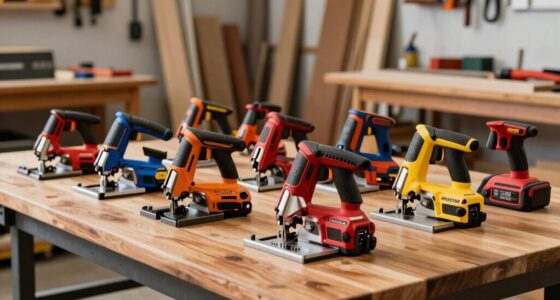
My best overall pick is the Milwaukee M18 FUEL Plunge Track Saw for buyers who want a dedicated cordless saw from a widely used battery platform. The Festool TSC 55 stands out as a premium option, while the Makita XPS01PTJ is a compelling choice for users already invested in Makita’s 18V X2 system. The main tradeoffs are cordless freedom versus corded consistency, bare-tool savings versus the cost of batteries and tracks, and compact portability versus the power reserves needed for repeated deep cuts. Keep reading for a side-by-side breakdown of all 12 options and guidance on choosing a saw that fits your work and existing tools.

Get business pricing on tools and workshop supplies
- Business-only prices and quantity discounts
- Tax-exempt purchasing
- Multiple users, one account, clear invoices
Complete the kit


Key Takeaways
- The cordless models are not all standalone purchases: several listings are bare tools, so battery-platform ownership and kit contents can change the real cost of getting started.
- Battery systems separate the main contenders: Milwaukee’s M18 platform, Makita’s 18V X2 system, and DEWALT’s 20V MAX system make the most sense when they match tools you already own.
- Festool’s cordless TSC 55 is the premium-focused choice, while the corded TS 55 is not a cordless saw despite appearing in a roundup centered on cordless models.
- Makita’s XPS01PTJ kit and XPS01Z bare tool share the same cordless saw family, making the choice between them mainly about whether included batteries and a charger are useful.
- The two WEN listings are different purchase configurations, not separate saw designs: the tool-only option favors existing WEN 20V owners, while the battery-and-charger kit is aimed at buyers starting that platform.


| cordless track saw | Power source | Motor | Voltage | Model |
|---|---|---|---|---|
| Festool TS 55 FEQ-F-Plus-FS Pl | AC/DC | — | 110 volts | — |
| Makita SP6000J 6-1/2-Inch Plun | Corded electric | 12 A | 110 V | — |
| DEWALT 6-1/2-Inch Track Saw Ki | Corded electric | 12 A, 1,300 W | 120 V | — |
| WEN 20V Max Cordless 6.5-Inch | Battery powered | Brushless, variable speed | 20 volts | — |
| Kreg 20V Ionic Drive 6 1/2-Inc | 20V DC | — | — | KPTPS100A |
| WEN 20V Max Cordless 6.5-Inch | Battery powered | Brushless | 20V | — |
| Milwaukee M18 FUEL 6-1/2-Inch | Lithium-ion battery | Brushless | 18V | 2831-20 |
| Makita SP6000J1 6-1/2-Inch Plu | Corded electric | 12 A | — | SP6000J1 |
| DEWALT 20V MAX XR 6-1/2-Inch C | Battery powered | — | 20V maximum; 18V nominal | DCS525B |
| Festool TSC 55 Cordless Plunge | Battery powered | Brushless EC-TEC | — | 577677 |
| Makita XPS01PTJ 18V X2 | — | Brushless | — | XPS01PTJ |
| Makita XPS01Z 36V | — | Brushless | — | XPS01Z |
More Details on Our Top Picks
Festool TS 55 FEQ-F-Plus-FS Plunge-Cut Track Saw with 55-Inch Guide Rail
The Festool TS 55 is the strongest fit here for buyers who put cut quality and control ahead of cordless convenience. Its 55-inch guide rail is included, so it arrives ready for track-guided work, unlike the Makita SP6000J, which requires a separate rail. The two-sided splinter guard helps limit tear-out on either side of the cut, while the riving knife supports control when cutting into existing joints. Its 48-tooth blade and bevel range to 47 degrees add flexibility for finish and sheet work. The tradeoff is substantial: at 22.8 pounds and limited to 110-volt power, it is neither a light nor a truly cordless option. Buyers who need battery-powered mobility should look instead at the WEN or Kreg cordless models.
Pros:- Includes a 55-inch guide rail for track-guided cuts out of the box
- Two-sided splinter guard helps reduce tear-out
- Riving knife supports controlled cutting, including in existing joints
- Bevels from 90 to 47 degrees
Cons:- Corded 110-volt operation limits mobility
- At 22.8 pounds, it is a heavy option to carry and reposition
Best for: Woodworkers and remodelers who want a track and saw together for accurate finish cuts near a reliable power outlet.
Not ideal for: Buyers who need cordless operation, frequently move between job sites, or want a lighter saw to carry and position.
- Power source:AC/DC
- Voltage:110 volts
- Wattage:1200 watts
- Blade teeth:48
- Cutting angle:90° to 47°
- Guide rail:55 inches; included
- Weight:22.8 pounds
- Warranty:3-year manufacturer warranty
Our verdict“Choose the Festool TS 55 if clean, controlled cuts and an included rail matter more than cordless portability.”
Makita SP6000J 6-1/2-Inch Plunge Circular Saw
The Makita SP6000J is a sensible pick for buyers who want a corded plunge saw with more speed adjustment than the DEWALT DWS520K. Its variable speed from 2,000 to 5,200 RPM lets the operator adapt the saw to different materials, while electronic speed regulation helps maintain pace under load. Soft start and an electric brake add control at startup and after a cut. It can bevel to 48 degrees and reaches 2-3/16 inches at 90 degrees, making it useful for sheet goods, trim, and remodeling work. The key catch is that the guide rail is optional; unlike the Festool TS 55 bundle, this listing does not provide a ready-to-use track setup. Its cord also rules it out for buyers who need cordless freedom.
Pros:- Variable speed supports adjustments for different materials and cut conditions
- Electronic speed regulation helps maintain cutting speed under load
- Soft start and electric brake support controlled operation
- Bevel capacity reaches 48 degrees
Cons:- Guide rail is not included
- Corded operation limits movement around a job site
Best for: Remodelers and finish carpenters who want variable-speed control for different materials and already own, or plan to buy, a compatible guide rail.
Not ideal for: Buyers seeking a complete saw-and-track kit or cordless mobility; the rail is optional and the saw needs a corded power source.
- Power source:Corded electric
- Motor:12 A
- Voltage:110 V
- Variable speed:2,000–5,200 RPM
- Maximum cutting depth at 90°:2-3/16 inches
- Maximum cutting depth at 45°:1-9/16 inches
- Bevel capacity:-1° to 48°
- Weight:4.4 kg
Our verdict“Pick the Makita SP6000J for adjustable, controlled corded cutting if you are prepared to source a guide rail separately.”
DEWALT 6-1/2-Inch Track Saw Kit (DWS520K)
The DEWALT DWS520K earns its place for buyers who value a guided cut with added control features. Its zero-clearance track system and dual anti-splinter edges are aimed at keeping cuts straight and limiting tear-out, while the anti-kickback mechanism and riving knife address control during the cut. A vacuum can connect for dust collection, a useful advantage for indoor finish work. Against the Makita SP6000J, the DWS520K puts more emphasis on its track system and safety features, while the Makita offers a stated variable-speed range. This kit includes a finishing blade and kit box, but track compatibility is still required for track-guided cutting. Like the Makita and Festool TS 55, it is corded, so it cannot match the job-site flexibility of the WEN or Kreg cordless saws.
Pros:- Zero-clearance track system supports straight, accurate cuts
- Dual anti-splinter edges help reduce tear-out
- Anti-kickback mechanism and riving knife support control
- Vacuum attachment supports dust collection
Cons:- Corded design limits mobility
- A compatible track is required for track-guided cutting
Best for: Carpenters and remodelers who prioritize track-guided accuracy, kickback control, and the option to connect a vacuum.
Not ideal for: Buyers who need cordless operation or expect a track to be included; this saw is corded and requires a compatible track for guided cuts.
- Power source:Corded electric
- Motor:12 A, 1,300 W
- Voltage:120 V
- Speed:4,000 rpm
- Cutting depth at 90°:2-1/8 inches
- Cutting depth at 45°:1-5/8 inches
- Blade:6-1/2 inches, 48 teeth
- Included components:Track saw, finishing blade, blade wrench, kit box
Our verdict“Choose the DWS520K if track control, anti-splinter features, and vacuum hookup matter more than cordless portability.”
WEN 20V Max Cordless 6.5-Inch Brushless Track Saw (Tool Only)
The WEN is the clearest match in this group for buyers who want cordless track-saw operation without stepping into a different battery system—provided they already own compatible WEN 20V Max batteries. Its brushless variable-speed motor runs from 2,000 to 5,500 RPM, and the saw cuts up to 2.25 inches deep with bevels to 47 degrees. That depth slightly exceeds the DEWALT DWS520K’s stated 90-degree capacity, while the DEWALT brings a more explicit set of anti-kickback and dust-collection features. The WEN’s main limitation is its setup cost in batteries and rail: it needs two batteries to operate, and neither batteries nor track are included. The cordless format offers freedom from outlets, but buyers without WEN batteries should compare the complete cordless kits elsewhere in the roundup.
Pros:- Cordless operation supports work away from outlets
- Brushless motor offers variable speed from 2,000 to 5,500 RPM
- Maximum cut depth is 2.25 inches
- Includes a carbide-tipped blade and dust port adapter
Cons:- Requires two WEN 20V Max batteries, sold separately
- Track is not included
- Compatibility depends on the specified WEN battery and track systems
Best for: DIYers and tradespeople who already own two WEN 20V Max batteries and compatible WEN tracks and want to cut away from an outlet.
Not ideal for: Buyers starting from scratch or seeking a ready-to-cut kit; two batteries and a compatible track must be sourced separately.
- Power source:Battery powered
- Voltage:20 volts
- Motor:Brushless, variable speed
- Speed:2,000–5,500 RPM
- Blade diameter:6.5 inches
- Maximum cut depth:2.25 inches
- Bevel range:-1° to 47°
- Battery requirement:Two WEN 20V Max batteries; sold separately
Our verdict“Choose the WEN if you already own its batteries and tracks and want cordless cutting without buying into another platform.”
Kreg 20V Ionic Drive 6 1/2-Inch Plunge-Cut Track Saw (Tool Only)
The Kreg stands apart from the WEN through its blade-left layout, which is designed to give right-handed users a clearer view of the cut line. Its cordless 20V format adds job-site flexibility, while anti-kickback protection and an electronic blade brake provide useful control features. The saw bevels from -1 to 47 degrees and works with Kreg’s 62-inch guide track, giving buyers a longer rail option than the 55-inch rail supplied with the Festool TS 55. That comparison has a catch: the Kreg track, battery, and charger are all separate purchases, and this listing is a bare tool. The supplied data does not state a cut depth or variable-speed range, so buyers who need those figures before choosing may prefer a model with those specifications clearly provided.
Pros:- Blade-left design offers right-handed users a view of the cut line
- Cordless 20V operation supports work away from outlets
- Anti-kickback protection and electronic blade brake are included
- Compatible with Kreg’s 62-inch guide track
Cons:- Battery and charger are not included
- Guide track is sold separately
- Provided product data does not state maximum cut depth or speed range
Best for: Right-handed woodworkers who want a cordless plunge saw with a blade-left view and plan to use Kreg’s 62-inch guide track.
Not ideal for: Buyers who need a complete kit or published cut-depth and speed figures before purchase; the battery, charger, and track are separate.
- Model:KPTPS100A
- Power source:20V DC
- Blade diameter:6-1/2 inches
- Bevel range:-1° to 47°
- Safety features:Anti-kickback protection, electronic blade brake
- Battery:One lithium-ion battery required; not included
- Guide track compatibility:Kreg 62-inch Guide Track; sold separately
- Recommended surface:Wood
Our verdict“Choose the Kreg if a visible cut line for right-handed use and compatibility with a 62-inch Kreg rail outweigh the separate-tool setup.”
WEN 20V Max Cordless 6.5-Inch Brushless Track Saw with Two 4.0Ah Batteries and Charger (20691)
The WEN 20691 makes cordless entry easier by including two 4.0Ah batteries and a charger, unlike the bare-tool Milwaukee M18 FUEL and DEWALT DCS525B. Its variable-speed brushless motor ranges from 2,000 to 5,500 RPM, giving buyers room to adapt cutting speed, while the 48-tooth blade and plunge capability suit accurate sheet-goods work. The package also includes a track-alignment cam, but the track is sold separately, so the included batteries do not make it a ready-to-cut track system. Its 2.25-inch maximum depth is useful for thicker stock, though the heavier 6.92 kg body is less appealing for frequent overhead or all-day handling. I’d choose it over the tool-only WEN when a buyer needs batteries from the outset; skip it if a track and dust extractor must come in the box.
Pros:- Two 4.0Ah batteries and charger are included
- Brushless motor has a broad 2,000–5,500 RPM speed range
- Supports plunge and bevel cuts, with up to 2.25 inches of cutting depth
- Includes a track-alignment cam and dust port adapter
Cons:- Compatible track is sold separately
- Dust collection system is not included
- At 6.92 kg, it is relatively heavy for extended handling
Best for: Buyers starting a WEN cordless setup who want two batteries and a charger included for repeated track-saw work.
Not ideal for: Shoppers who need a complete track-ready package or included dust extraction, since the rail and dust collection system are separate.
- Power source:Battery powered
- Voltage:20V
- Motor:Brushless
- Speed range:2,000–5,500 RPM
- Blade diameter:6.5 inches
- Maximum cutting depth:2.25 inches
- Bevel range:-1° to 47°
- Batteries included:Two 4.0Ah lithium-ion batteries
- Weight:6.92 kg
Our verdict“Choose the WEN 20691 if you want a cordless saw with batteries and charger included, and can source the track and dust extractor separately.”
Milwaukee M18 FUEL 6-1/2-Inch Plunge Track Saw (Bare Tool)
For buyers already invested in Milwaukee’s M18 battery platform, this saw offers 6,300 RPM brushless performance and a smooth plunge action without adding another battery system. Its riving knife helps limit pinching and kickback, while dust collection rated above 90% can reduce cleanup when paired with suitable collection. Compared with the battery-and-charger-equipped WEN 20691, this listing is a much leaner purchase: it is a bare tool, and a compatible track is also required. The 11.7-pound weight is lighter than the WEN’s listed 6.92 kg, making it the more manageable choice on paper, though it still needs a battery and rail before use. I’d favor it over the DEWALT DCS525B for existing M18 users who value a riving knife; newcomers should account for the missing power and track pieces.
Pros:- Brushless motor reaches up to 6,300 RPM
- Smooth plunge action and variable speed support controlled cutting
- Riving knife helps reduce material pinching and kickback
- Dust collection is rated at over 90% efficiency
Cons:- Bare-tool listing does not include a battery
- Track is required and may need to be purchased separately
- Limited warranty details are less specific than the WEN’s stated two-year coverage
Best for: M18 owners who want a high-speed cordless plunge saw with a riving knife and already have compatible batteries and track access.
Not ideal for: New cordless-tool buyers who need a battery, charger, and track included in the purchase.
- Model:2831-20
- Power source:Lithium-ion battery
- Voltage:18V
- Motor:Brushless
- No-load speed:6,300 RPM
- Blade diameter:6-1/2 inches
- Weight:11.7 pounds
- Dust collection:Over 90% efficiency
- Included components:Bare tool
Our verdict“This is a strong fit for Milwaukee M18 users who already own the batteries and track, but a less convenient starting point than the bundled WEN.”
Makita SP6000J1 6-1/2-Inch Plunge Circular Saw Kit with 55-Inch Guide Rail
This Makita is the outlier in a cordless roundup: it trades battery mobility for steady corded power and arrives with a 55-inch guide rail. Its 12-amp motor, electronic speed control, and 2,000–5,200 RPM range are aimed at clean, consistent cuts through sheet goods and finish materials. That included rail gives it a practical advantage over the WEN 20691, Milwaukee M18 FUEL, and DEWALT DCS525B, whose tracks are not included in the supplied product details. The cost of that convenience is a power cord and a 16.5-pound kit, so it is less suited to remote jobsites or frequent repositioning. I’d pick it over the cordless options for a stationary shop where uninterrupted operation and a ready-made rail setup matter more than portability.
Pros:- Includes a 55-inch guide rail
- Electronic speed control helps maintain performance under load
- Variable speed and bevel capacity support varied cuts
- Soft start, electric brake, and torque limiter aid controlled operation
Cons:- Corded power limits mobility compared with every cordless saw in this selection
- The 16.5-pound kit is relatively heavy to carry and reposition
- A 55-inch rail may not suit buyers who routinely cut wider panels
Best for: Shop-based woodworkers who prioritize a guide rail and consistent corded operation over battery mobility.
Not ideal for: Contractors cutting at remote sites or moving frequently between rooms, where a cord and heavier kit reduce convenience.
- Model:SP6000J1
- Power source:Corded electric
- Motor:12 A
- Variable speed:2,000–5,200 RPM
- Cutting capacity at 90°:2-3/16 inches
- Cutting capacity at 45°:1-9/16 inches
- Bevel capability:-1° to 48°
- Included guide rail:55 inches
- Item weight:16.5 pounds
Our verdict“Choose this Makita when a rail-included, corded setup suits your shop better than the battery freedom offered by the other picks.”
DEWALT 20V MAX XR 6-1/2-Inch Cordless Plunge Track Saw (DCS525B)
The DEWALT DCS525B puts control at the center of its design, pairing a kickback brake with a stated cutting accuracy within 1/32 inch. Its 2,500–5,400 RPM variable-speed range and included 48-tooth fine-finish blade suit buyers moving between materials and aiming for repeatable results. Dust capture is specified at up to 94%, but that depends on connecting a separately purchased vacuum; the saw itself does not include one. Compared with the Milwaukee M18 FUEL, the DEWALT offers a higher stated dust-capture figure and explicit accuracy specification, while Milwaukee includes a riving knife and lists a higher maximum speed. Like Milwaukee, this DEWALT is a bare tool; the battery, charger, track, and track connecting rod are all separate. It makes most sense for existing 20V MAX users who value its control features.
Pros:- Kickback brake responds to detected pinch, stall, or bind conditions
- Variable speed ranges from 2,500 to 5,400 RPM
- Specified cutting accuracy is within 1/32 inch
- Dust collection is rated to capture up to 94% when connected to extraction
Cons:- Battery and charger are sold separately
- Track and track connecting rod are sold separately
- Vacuum for dust extraction is not included
Best for: DEWALT 20V MAX users making repeatable hardwood or sheet-material cuts who can supply a battery, track, and dust extractor.
Not ideal for: Buyers seeking an out-of-the-box track-saw kit, or those without a compatible battery and vacuum for dust collection.
- Model:DCS525B
- Power source:Battery powered
- Voltage:20V maximum; 18V nominal
- No-load speed:2,500–5,400 RPM
- Blade diameter:6-1/2 inches
- Maximum cutting depth:2-1/8 inches in solid hardwood
- Cutting accuracy:Within 1/32 inch
- Dust collection:Captures up to 94%
- Battery and charger:Sold separately
Our verdict“Pick the DCS525B if you already own DEWALT 20V MAX batteries and want its stated accuracy and kickback control, while accepting separate track and extraction purchases.”
Festool TSC 55 Cordless Plunge-Cut Track Saw with 55-Inch Guide Rail
The Festool TSC 55 is the most complete cordless package here: it includes a 55-inch guide rail, two 18V 5.0Ah batteries, and a rapid charger, plus a chip bag, splinter guard, and storage case. That sharply contrasts with the Milwaukee M18 FUEL and DEWALT DCS525B bare tools, which require buyers to source key components separately. Its brushless EC-TEC motor and kickback stop make it suited to mobile precision work, with a dust bag or extractor offering cleaner cutting options. The broad kit does not make it the right pick for everyone: operation still depends on charged batteries, and the kickback stop may be deactivated for some cuts. Buyers focused on a bundled rail-and-power setup will find more included here than with the WEN, while those who already own a platform may prefer a bare tool.
Pros:- Includes a 55-inch guide rail, two 5.0Ah batteries, and rapid charger
- Brushless EC-TEC motor supports cordless cutting in wood and plastic
- Kickback stop helps reduce injury risk
- Chip bag, splinter guard, sight window, and Systainer are included
Cons:- Cutting time depends on keeping batteries charged
- Kickback stop may be deactivated for some cuts
- The included 55-inch rail may be limiting for buyers who regularly need longer cuts
Best for: Mobile finish carpenters and woodworkers who want a premium cordless saw kit with rail, batteries, charger, and accessories together.
Not ideal for: Buyers who already own compatible batteries and rails, or who prefer a corded saw for uninterrupted shop work.
- Model:577677
- Power source:Battery powered
- Motor:Brushless EC-TEC
- Batteries:Two 18V 5.0Ah lithium-ion packs
- Guide rail length:55 inches (1,400 mm)
- Number of teeth:36
- Cutting angle:45°
- Included components:Track saw, guide rail, batteries, rapid charger, chip collection bag, blade, sight window, splinter guard, Systainer SYS3
- Warranty:3 years
Our verdict“Choose the TSC 55 when you want the most complete mobile kit in this group, rather than a bare tool or a corded rail saw.”
Makita XPS01PTJ 18V X2 (36V) Brushless Cordless 6-1/2-Inch Plunge Circular Saw Kit
The Makita XPS01PTJ is the more ready-to-work choice between these two Makita cordless saws: it comes with two 5.0Ah batteries and a rapid charger, while the XPS01Z is tool-only. Its dual-battery 36V setup and brushless motor pair with variable speed from 2,500 to 6,300 RPM, giving buyers room to adjust for different cutting tasks. The 2-3/16-inch cut capacity and -1° to 48° bevel range also suit sheet goods and angled work. Compared with the included-rail package of the Makita SP6000J1, this kit remains less complete for track-guided cutting because its guide rail is sold separately. The two-battery requirement also means more pack weight and a need to keep both batteries charged. I’d choose it over the bare XPS01Z when a matched battery-and-charger set is useful.
Pros:- Includes two 18V 5.0Ah batteries and a rapid charger
- Brushless motor with variable speed from 2,500 to 6,300 RPM
- Automatic speed adjustment helps maintain cutting performance across changing loads
- Soft start and an electric brake support controlled starts and stops
Cons:- Guide rail is sold separately, so track-guided cutting requires another purchase
- Requires two batteries for 36V operation
- Listed item weight of 27.6 pounds may be a drawback for buyers prioritizing a light setup
Best for: Makita LXT users who need a cordless plunge saw and do not already have two compatible batteries and a charger.
Not ideal for: Buyers who need a complete track-saw setup immediately, since the guide rail is separate, or who prefer a saw powered by one battery.
- Model:XPS01PTJ
- Power:36V from two 18V LXT batteries
- Motor:Brushless
- Blade diameter:6-1/2 inches
- No-load speed:2,500–6,300 RPM
- Cutting capacity at 90°:2-3/16 inches
- Bevel range:-1° to 48°
- Included batteries and charger:Two 18V 5.0Ah batteries and a rapid charger
- Guide rail:Sold separately
Our verdict“Choose this kit over the XPS01Z if you need batteries and a charger, but budget for a separate guide rail.”
Makita XPS01Z 36V (18V X2) LXT Brushless 6-1/2-Inch Plunge Circular Saw, Tool Only
For buyers who already own two compatible Makita 18V LXT batteries and a charger, the XPS01Z avoids duplicating kit components. Its cutting platform closely matches the XPS01PTJ: both use a brushless 36V dual-battery system, offer 2,500–6,300 RPM, and cut up to 2-3/16 inches at 90 degrees. The tool-only format is the key distinction, not a different level of cutting capacity. It includes a 55-tooth blade and hex wrench, but batteries, charger, and guide rail are all separate, leaving more of the setup to the buyer than with the XPS01PTJ. The -1° to 48° bevel range supports work beyond square cuts, while automatic speed adjustment helps respond to cutting load. I’d skip this version if you need a complete cordless package; the kit is the simpler route for new Makita users.
Pros:- Uses Makita’s 18V X2 battery platform for 36V operation
- Brushless motor with variable speed from 2,500 to 6,300 RPM
- Automatic speed adjustment supports cutting across different materials
- Includes a 6-1/2-inch, 55-tooth blade and hex wrench
Cons:- Batteries and charger are not included
- Guide rail is sold separately
- Requires two batteries for operation at 36V
Best for: Makita LXT owners with two compatible batteries and a charger who want to add a plunge saw without buying another power kit.
Not ideal for: First-time Makita cordless-saw buyers or anyone seeking a ready-to-use track setup, since batteries, charger, and guide rail are separate.
- Model:XPS01Z
- Power:36V from two 18V LXT batteries
- Motor:Brushless
- Blade diameter and teeth:6-1/2 inches; 55 teeth
- No-load speed:2,500–6,300 RPM
- Cutting capacity at 90°:2-3/16 inches
- Bevel range:-1° to 48°
- Included components:6-1/2-inch 55-tooth blade and hex wrench
- Batteries, charger, and guide rail:Sold separately
Our verdict“Pick the XPS01Z if your Makita batteries and charger are already on hand; otherwise, the XPS01PTJ is the more complete starting point.”
How We Picked
I ranked these saws around the decisions that shape a cordless track-saw purchase: cutting performance, control on guided cuts, battery platform, kit completeness, build quality, and flexibility for different shop setups. A saw that fits a buyer’s existing batteries can be a better value than a more elaborate kit, while a first-time cordless buyer may benefit from included batteries, a charger, and a guide rail. Track availability and compatibility also matter, since accurate cuts depend on the complete saw-and-rail setup rather than the saw alone.
The ranking gives preference to dedicated cordless track-saw designs with a clear use case and practical platform support. Premium build and system integration help distinguish Festool’s TSC 55, while Milwaukee, Makita, and DEWALT options compete on the usefulness of their cordless ecosystems. I list corded models separately as reference choices, not as cordless recommendations: the Festool TS 55 and both Makita SP6000J listings need a power outlet, so they should not be confused with the battery-powered picks. The WEN tool-only and full-kit listings, and the Makita XPS01 kit and bare-tool versions, are treated as different buying configurations rather than different saw designs.
Factors to Consider When Choosing Cordless Track Saws
A cordless track saw is a system purchase: the saw, battery platform, rail, blade, and dust collection all affect how well it fits your work. I would start with the cuts you make most often and the tools you already own, then compare what each listing actually includes. These factors help prevent a common mistake: choosing by the saw name alone and discovering that the batteries, rail, or accessories needed for your workflow are separate.
Match the Saw to Your Battery Platform
Battery compatibility can matter more than a small difference in saw features if you already own several cordless tools. Check the exact platform rather than assuming that similar voltage labels mean batteries are interchangeable. Makita’s XPS01 models use two 18V batteries together, which can suit a user with a collection of compatible packs but may be inconvenient for someone with only one battery. A bare tool can be a sensible purchase when your existing batteries are in good condition and you have enough capacity for the job. If you are starting from scratch, compare the full kit cost and included charger rather than the tool-only listing. Also think about whether adding another battery platform will complicate your shop or job-site setup.
Check What the Listing Actually Includes
Product names can make a kit and a bare tool sound almost identical, even though one may include the pieces needed to start cutting and the other may not. Look for the saw, guide rail, batteries, charger, clamps, and storage case in the exact listing details. A rail bundled with a saw can save setup effort, but only if its length suits the panel sizes you handle. If you already own compatible rails, confirm the saw works with your rail system before buying another. Do not assume that a “kit” includes every accessory you need for repeatable cuts. Comparing the complete setup helps avoid paying twice for equipment already in your shop.
Choose for Your Cut Schedule, Not Just Portability
Cordless convenience is most valuable when the work moves between rooms, sites, or outdoor locations, or when cords would interfere with long guided cuts. For repeated, demanding cuts, battery capacity and the chance to rotate charged packs become part of the workflow. Consider how often you cut thick stock and how many long cuts you make before a charging break. A lighter setup may be easier to carry and position, while a larger battery arrangement can add weight even when it supports longer work periods. If most cutting happens at a fixed bench near an outlet, a corded saw may be a more straightforward choice. Decide based on the job pattern, not the assumption that cordless is always better.
Treat the Rail as Part of the Cutting Tool
A track saw’s accuracy depends on a stable, straight rail and a reliable fit between the saw and track. Rail length should match the panels and sheet goods you cut most often; a short rail may require repositioning, while a long one can be awkward to transport and store. Check compatibility before mixing rails from different systems, and confirm whether connectors are needed to join tracks for longer cuts. For furniture work, repeatable alignment and a clean splinter guard can matter more than buying the longest rail available. Clamps are useful when the panel is narrow, slippery, or difficult to support securely. Budget for the rail setup as part of the saw purchase.
Plan for Dust, Blades, and Cut Quality
Clean cuts depend on more than motor power: blade condition, tooth geometry, material support, and dust extraction all play a role. A blade suited to rough construction cuts may not leave the edge you want on cabinet panels, so match blade choice to the material and finish. Dust collection can improve visibility along the cut line and reduce cleanup, particularly when working indoors, but it adds a hose or extractor to the setup. Check which blade size and arbor the saw takes before buying specialty blades. A dull blade can make a capable saw feel underpowered and can worsen cut quality. Keep the workpiece supported on both sides of the cut to reduce pinching and edge damage.
Decide When a Corded Saw Is the Better Buy
This roundup includes the corded Festool TS 55 and Makita SP6000J variants because they are closely related options, but they do not meet a strict cordless requirement. A corded model may suit a permanent shop where uninterrupted power matters more than mobility. It can also be a sensible choice if you already have a reliable outlet and do not want to buy into another battery system. The cordless alternatives make more sense when carrying a cord, finding power, or moving around a site slows the work. Avoid choosing a corded listing by mistake simply because its product family name resembles a cordless model. Confirm the power source in the exact model details before ordering.
Frequently Asked Questions
Which cordless track saw is the best choice if I already own batteries?
Start with the battery platform you own and check the exact compatibility of the saw, since voltage labels alone do not confirm a match. Milwaukee users can shortlist the M18 FUEL saw, while Makita users can compare the XPS01 bare tool with its kit version. DEWALT owners should check the DCS525B listing and its 20V MAX platform details. Buying a bare tool can avoid duplicate batteries and chargers, but it only makes sense if your packs have enough capacity and you can keep a charged spare available. If the saw requires a paired-battery setup, confirm that you have two compatible packs.
Should I buy a bare tool or a kit with batteries and a charger?
A bare tool is usually the cleaner choice when you already own compatible batteries, a charger, and any required track accessories. A kit can simplify the first purchase and make it easier to start work without piecing together a platform over time. Compare the contents of the exact listing rather than relying on “kit” in the title, since rails and other accessories may vary. For high-volume cutting, having spare batteries can matter more than receiving a single included pack. The best configuration is the one that completes your setup without duplicating equipment you already have.
Can I use the corded saws in this roundup where cordless power is required?
No. The Festool TS 55 and Makita SP6000J listings are corded models, so they need a power outlet and do not offer battery-powered operation. They may be appropriate for a fixed workshop, but they do not meet a job-site requirement for cordless mobility. The Festool TSC 55 and Makita XPS01 family are the cordless alternatives among those product lines listed here. Check the full model number and power source in the product details before ordering. Similar names do not mean the corded and cordless versions have the same setup.
Do I need to buy a guide rail separately?
It depends on the exact product configuration. Some listings explicitly include a 55-inch rail, while tool-only or bare-tool listings may not include one. Check the included-items list and confirm that any rail you own is compatible with the saw before relying on it. Rail length should suit the panels you cut, and joining tracks can add parts and alignment work. A saw without the right rail may be unusable for the guided cuts that define this tool category.
Is a cordless track saw a good replacement for a table saw?
A track saw handles long, straight cuts in sheet goods well, especially when moving a full panel to a stationary saw would be awkward. It does not replace every table-saw task: repeated narrow ripping, some small-part work, and production setups can favor a table saw. A track saw also depends on a suitable rail, secure panel support, and careful setup for repeatable results. Many shops use both tools for different jobs rather than treating one as a universal substitute. Choose based on the cuts you make most often and the space available in your work area.
Conclusion
For the best overall cordless pick, I would start with the Milwaukee M18 FUEL if its battery platform fits your shop. The best premium choice is the Festool TSC 55 for buyers prioritizing a high-end cordless system, while Makita’s XPS01PTJ kit is a strong value path for someone who needs the saw and batteries together; existing Makita users can compare it with the XPS01Z bare tool. For beginners, I would favor a complete kit with a compatible rail and batteries rather than a bare tool that leaves key setup pieces to source. The WEN 20691 is another approachable bundled configuration, while the tool-only WEN suits owners of its 20V platform. If you need a saw for a fixed workshop and cordless operation is not a requirement, consider the corded Makita SP6000J1 or Festool TS 55 instead—but do not mistake them for cordless models.
Fall yard work Picks
leaf blowers
As an affiliate, we earn on qualifying purchases.