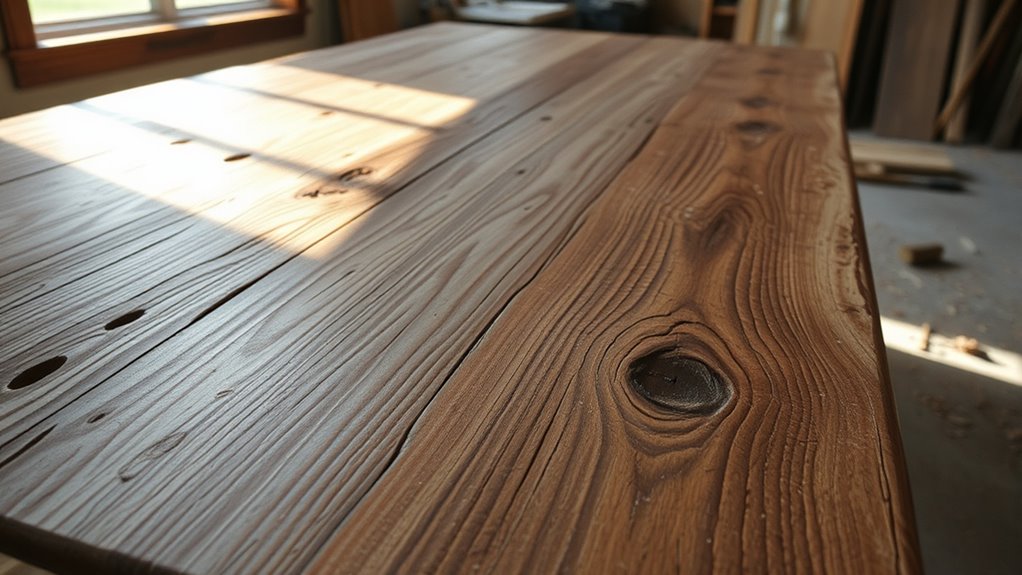

To construct a farmhouse dining table from reclaimed wood, start by carefully selecting stable, weathered pieces with interesting grain and marks of history. Plan your design around the natural variations, then cut and join the wood using sturdy techniques like dowels or mortise and tenon joints. Finish with sanding, natural oils, and protective sealants to enhance the wood’s character while ensuring durability. Keep exploring for detailed steps to create a beautiful, sustainable centerpiece.

Get business pricing on tools and workshop supplies
- Business-only prices and quantity discounts
- Tax-exempt purchasing
- Multiple users, one account, clear invoices
Key Takeaways
- Carefully select and prepare reclaimed wood, inspecting for stability, grain patterns, and signs of history.
- Plan your design to accommodate natural wood variations, ensuring precise cuts and stable joints.
- Use sturdy joinery techniques like dowels or mortise and tenon for strong, durable connections.
- Finish with careful sanding and natural oils or sealants to enhance texture, protect, and highlight the wood’s character.
- Incorporate proper sealing to preserve the rustic look while ensuring the table withstands daily use.

Building a farmhouse dining table from reclaimed wood is a rewarding project that combines sustainability with rustic charm. When you choose reclaimed wood, you’re making an eco-friendly decision, as it involves sustainable sourcing that reduces demand for new lumber and minimizes waste. This approach not only benefits the environment but also guarantees your table has a unique character, with imperfections and weathered textures that add authenticity to your finished piece. Before you start, gather your reclaimed wood carefully, inspecting each piece for stability and suitability. Look for logs or planks that have aged naturally, with interesting grain patterns and signs of history, such as nail holes or faded paint, which will give your table a distinctive, storied appearance.
Once you’ve selected your wood, plan your design meticulously. The beauty of working with reclaimed materials is that each board may have different widths and thicknesses, so you’ll want to account for these variations during assembly. Cut your pieces precisely, considering the overall dimensions you desire for your farmhouse table. When it comes to joining the parts, use sturdy techniques like dowels, biscuits, or even traditional mortise and tenon joints, which will ensure durability. Because reclaimed wood can sometimes be prone to warping or splitting, reinforce connections with appropriate fasteners and glue, taking care to keep the surface smooth and even.
Carefully plan and precisely cut reclaimed wood to ensure durable, rustic farmhouse table assembly.
Finishing techniques play a vital role in highlighting the character of reclaimed wood while protecting your table for years to come. Start by sanding the surface carefully, removing splinters and rough patches without erasing the rustic charm. Use a medium-grit sandpaper first, then finish with a finer grit to achieve a smooth surface that still preserves the wood’s natural textures. When it’s time to finish, opt for natural oils like tung or linseed oil, which penetrate deeply, enhancing the wood’s grain and providing a protective barrier against moisture and stains. Applying multiple coats, with light sanding in between, will deepen the finish and bring out the wood’s rich hues.
If you prefer a more polished look, consider using a matte or satin polyurethane, but be mindful not to over-apply, as this can obscure the wood’s character. Remember, the goal is to accentuate the beauty of reclaimed wood while guaranteeing your table withstands daily use. With patience and attention to detail in your finishing techniques, your handcrafted farmhouse dining table will become a treasured centerpiece that embodies both sustainability and rustic elegance. Incorporating proper sealing techniques will help preserve the wood’s texture and prolong the life of your table.
reclaimed wood dining table kits
As an affiliate, we earn on qualifying purchases.
As an affiliate, we earn on qualifying purchases.
Frequently Asked Questions
How Do I Choose the Best Reclaimed Wood for My Project?
You should look for reclaimed wood with interesting grain patterns that add character to your farmhouse table. Check sourcing locations to guarantee quality and sustainability—locally sourced wood often has fewer defects and is easier to verify. Inspect the wood for cracks, warping, or signs of pests. Choose pieces that match your desired thickness and color, and prioritize those with unique grain patterns for a distinctive, durable finish.
What Safety Precautions Are Necessary When Working With Reclaimed Wood?
When working with reclaimed wood, you should wear personal protective equipment like gloves, goggles, and a dust mask to protect your skin, eyes, and lungs. Make certain proper ventilation in your workspace to avoid inhaling dust, mold, or chemicals. Keep your tools in good condition, and handle nails or staples carefully. Taking these precautions keeps you safe while transforming reclaimed wood into your beautiful farmhouse dining table.
How Can I Ensure the Table’s Stability and Durability?
Think of your table as a sturdy tree, standing tall and resilient. To guarantee its stability and durability, focus on joint reinforcement, like adding metal brackets or dowels at critical points. Proper weight distribution is key—spread the load evenly across the surface and legs. By strengthening joints and balancing weight, you create a table that endures years of family gatherings and lively conversations.
What Tools Are Essential for Constructing a Farmhouse Dining Table?
You’ll need vital power tools like a circular saw, drill, and sander for cutting, drilling, and finishing your reclaimed wood. Measuring techniques are essential, so keep a tape measure and square handy to guarantee precise cuts and joints. Using these tools confidently will help you craft a sturdy, well-assembled farmhouse dining table that stands the test of time. Always prioritize safety and double-check measurements before making cuts.
How Do I Finish and Protect the Reclaimed Wood Surface?
You should start by cleaning and sanding the reclaimed wood thoroughly. Then, apply finishing techniques like tung oil, beeswax, or a polyurethane finish to enhance durability and beauty. Protective coatings such as clear sealers or varnishes create a barrier against moisture, stains, and scratches. Make sure to apply multiple coats, allowing each to dry completely, for a long-lasting, beautiful surface that showcases the rustic charm of your farmhouse dining table.
Conclusion
Building your farmhouse dining table from reclaimed wood isn’t just a project—it’s a journey of creating something truly timeless. As you sand, stain, and assemble, you’ll craft a piece that’s more than furniture; it’s a legacy that could outlast generations. Every knot and grain tells a story, making your table a masterpiece of history and craftsmanship. So, enjoy every moment—you’re not just making a table, you’re creating a piece of art that’ll last forever!
Fall yard work Picks
leaf blowers
As an affiliate, we earn on qualifying purchases.