To achieve sharp paint lines, use high-quality painter’s tape and apply it carefully along the edges, pressing it down firmly to prevent bleeding. Work with a steady hand using a fine, angled brush, loading just enough paint to avoid drips or smudges. Remove the tape slowly at a 45-degree angle once the paint is just dry. Mastering these techniques will help you create crisp, professional-looking edges—continue to explore the tips that pros swear by for perfect results.
Key Takeaways
- Choose high-quality painter’s tape suited for your surface to ensure clean removal and prevent paint bleed.
- Apply tape along edges meticulously, pressing firmly to create a tight barrier against paint seepage.
- Use a high-quality angled brush to carefully feather the paint along the tape line, minimizing brush strokes.
- Wait until the paint is just dry to the touch before slowly removing tape at a 45-degree angle for crisp lines.
- Maintain consistent brush pressure and avoid overloads to prevent paint bleeding and achieve sharp, professional edges.
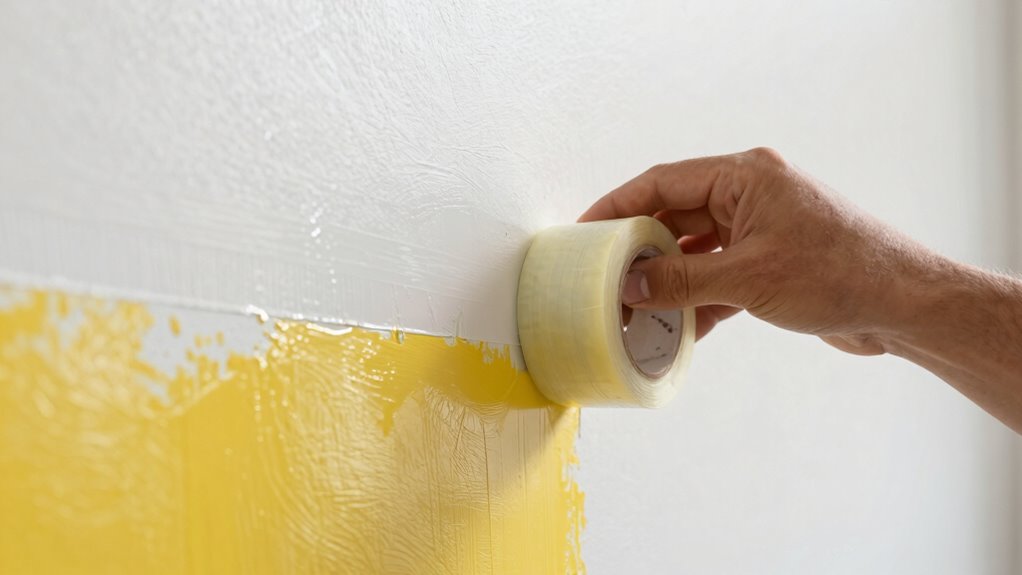
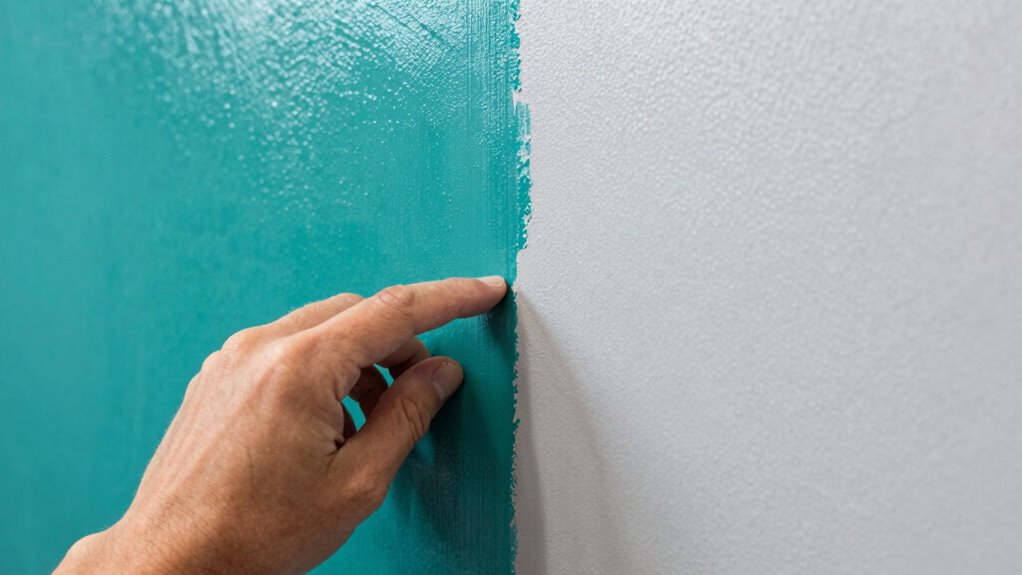
Ever wonder how painters achieve those perfectly sharp paint lines? The secret often lies in the way they handle tape and their brush edge. The key is to use painter’s tape properly and to understand how to work with the tape edge for crisp results. First, you need to choose the right tape for the job—high-quality painter’s tape that sticks firmly but comes off easily without damaging your surface. Once you’ve applied the tape, press it down firmly along the edges, making sure there are no gaps or bubbles. This creates a barrier that prevents paint from bleeding underneath, which is essential for sharp lines.
When painting, use a high-quality, angled brush with a fine tip. The brush edge should be loaded with just enough paint—avoid overloads that could cause drips or smudges. Work carefully along the tape edge, keeping a steady hand and a consistent pressure. It’s often better to use a “feathering” technique, where you gently run the brush along the tape line to lay down an even layer of paint. This approach minimizes brush strokes and helps produce a clean, sharp edge. If you notice any paint pooling or thickening at the tape edge, gently wipe it off with a dry cloth or paper towel before it dries.
Once you’ve finished painting, patience is key. Wait until the paint is just dry to the touch, but not fully cured, before removing the tape. Removing tape too early can cause the paint to peel or smudge, ruining your crisp line. When it’s time to remove the tape, do so slowly and at a 45-degree angle. Pulling it off carefully prevents tearing or disturbing the freshly painted edge. Keep the tape close to the surface as you peel, maintaining control and ensuring your sharp line remains intact. Additionally, understanding how paint adhesion works helps prevent issues like peeling or chipping after tape removal.
high-quality painter's tape for sharp lines
As an affiliate, we earn on qualifying purchases.
As an affiliate, we earn on qualifying purchases.
Frequently Asked Questions
Can I Reuse Painter’s Tape Multiple Times?
You can reuse painter’s tape a few times if it still sticks well and isn’t torn or dirty. Just be mindful of tape disposal; once it loses adhesion or gets debris, it’s best to discard it. Reusing materials like painter’s tape can save money, but don’t compromise on quality. Check the tape’s condition before reapplying, and remember, for sharp paint lines, fresh tape often yields the best results.
What Are the Best Tape Brands for Delicate Surfaces?
For delicate surfaces, you should choose painter’s tape with low tack options to prevent damage. Brands like 3M’s Delicate Surface Painter’s Tape and FrogTape Delicate Surface are excellent choices. They stick firmly enough to create sharp lines but come off easily without peeling paint or leaving residue. Always check the product labels for low tack features, ensuring you protect your surfaces while achieving professional results.
How Long Should Painter’s Tape Be Left on Before Painting?
Think of painter’s tape as a delicate dance partner; you don’t want to rush. You should leave it on for the recommended drying time—usually at least 30 minutes after surface preparation—before painting. This guarantees the tape adheres firmly, preventing bleed-through and jagged lines. Rushing this step can ruin your sharp paint edges, so patience and proper drying time make all the difference for a clean, professional finish.
Is There a Specific Technique for Removing Tape Without Smudging?
To achieve sharp edges, you should remove the tape carefully and at a slight angle. For smooth tape removal without smudging, pull the tape back slowly and steadily, preferably while the paint is still slightly tacky or after it dries completely. This technique minimizes paint lift and guarantees clean, crisp lines. Always use a sharp blade or your fingernail to gently lift any corners before peeling back the tape.
Can Masking Tape Be Used on Textured Surfaces Effectively?
Using masking tape on textured surfaces is like trying to stick a patch to a rough wall—challenging but doable with the right tips. To overcome tape adhesion challenges, choose painter’s tape designed for textured surfaces, press it firmly, and seal edges with a putty knife. For best results, use low-tack tape and consider applying a thin layer of primer or wall prep to enhance adhesion and prevent paint bleed.
Conclusion
With the tape technique, you hold the brush’s edge like a maestro’s baton, guiding your paint to perfection. It’s your secret weapon to transform a plain wall into a work of art, sharp and precise as a finely cut gemstone. Trust in this simple yet powerful tool, and watch your space come alive with clean, crisp lines that speak of craftsmanship. In this dance of paint and tape, mastery is just a careful step away.