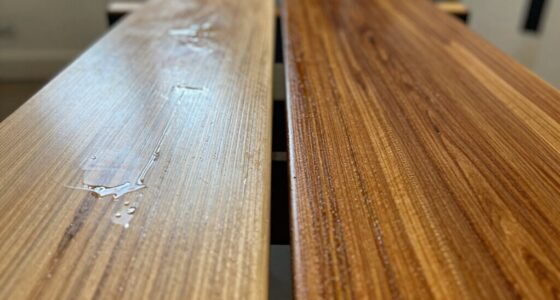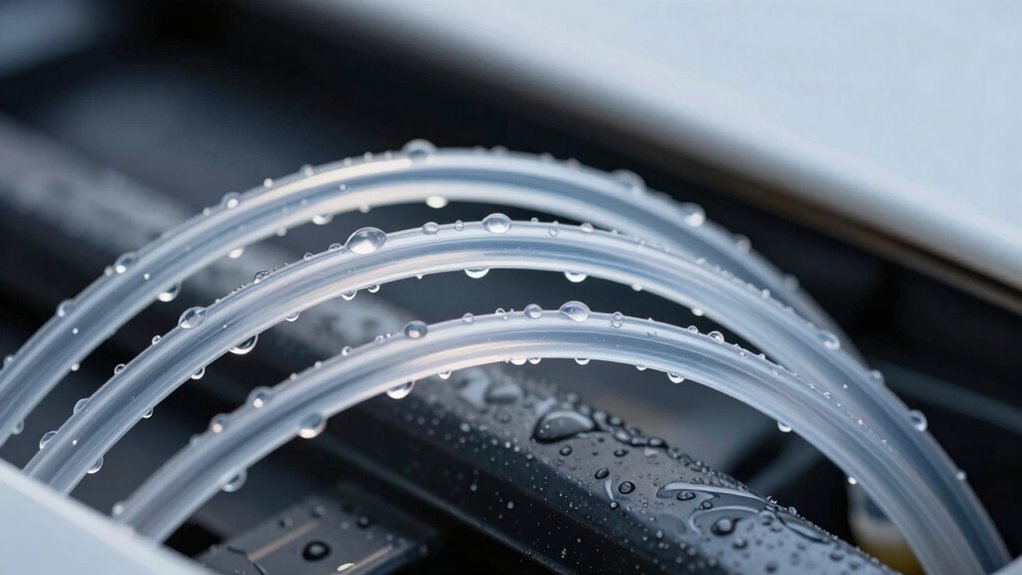

Moisture in your air lines is a common hidden cause of fish-eyes and surface defects. As compressed air contains humidity, it often condenses into water in hoses, filters, and spray guns, contaminating your finish. If you don’t manage this moisture properly, it can lead to bubbles, blemishes, and inconsistent paint application. To fix this, you need to implement moisture control devices like filters, traps, or dryers. Keep watching to uncover proven techniques to prevent this problem for good.
Key Takeaways
- Moisture in compressed air condenses into water, which can cause fish-eyes and surface defects in finishes.
- Inadequate draining and filtration allow moisture buildup, increasing the risk of water contamination during painting.
- High humidity environments and improper system maintenance exacerbate moisture presence in air lines.
- Installing moisture separators, traps, and dryers helps prevent water from reaching the spray surface.
- Regularly inspecting and maintaining hoses, filters, and the compressor system reduces moisture-related finish issues.
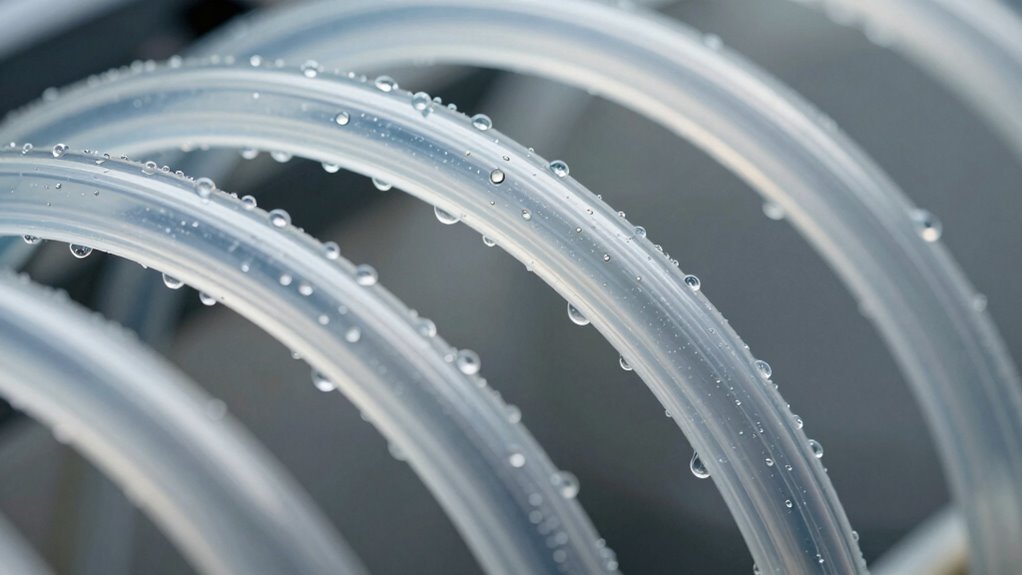
Have you ever wondered why moisture in air lines can cause issues in pneumatic systems? When you’re working with air-powered tools or painting equipment, even tiny amounts of water can lead to significant problems. Moisture tends to accumulate in compressed air systems because air naturally contains humidity, and when compressed, that humidity becomes concentrated. If you don’t address it through proper air compressor maintenance, it can cause defects like fish-eyes in your finish, which are small craters or bumps that ruin the surface quality. That’s why understanding moisture prevention techniques is essential for maintaining a flawless finish.
Moisture in air lines can cause surface defects like fish-eyes, ruining your finish.
First, it’s essential to grasp how moisture enters your system. When your compressor compresses air, it also compresses the water vapor present in it. Without proper intervention, this vapor condenses into liquid water, which then travels through your air lines. Over time, this moisture can settle in hoses, filters, and spray guns, leading to inconsistent paint application, clogging, and surface imperfections. That’s why routine air compressor maintenance is critical to prevent these issues. Regularly draining the compressor’s tank, checking for leaks, and replacing filters help keep moisture levels under control. These steps are simple but effective moisture prevention techniques that keep your system dry and operational.
Implementing moisture prevention techniques involves more than just manual draining. Installing moisture filters or separators at strategic points in your air line system can drastically reduce water content before it reaches the spray area. These devices trap moisture and allow dry air to flow through, ensuring a consistent, high-quality finish. Additionally, using refrigerated or desiccant dryers can remove residual moisture from compressed air, especially in environments with high humidity or when working on critical projects. Such investments in your equipment improve the reliability of your air system and help prevent fish-eyes and other surface imperfections caused by water contamination. Proper maintenance of air compressor systems is crucial to avoid these problems altogether.
Furthermore, maintaining proper air pressure levels plays a role in moisture control. Over-pressurizing your system can increase condensation, so keeping your compressor within recommended settings minimizes this risk. Regularly inspecting and replacing worn-out hoses and fittings also prevents leaks that can draw in humid air or allow moisture to accumulate. When you combine diligent air compressor maintenance with moisture prevention techniques, you create a system that produces clean, dry air—essential for achieving a smooth, flawless finish.
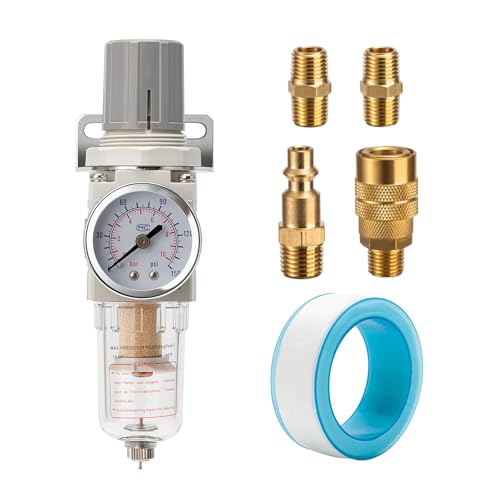
LNCHKA Pneumatic Air Compressor Filter Regulator Combo 1/4" NPT 150 PSI w/Adjustable Gauge-Water Separator,Metal Bracket,Manual Drain,5 Micron Brass Cartridge
CONDITIONS OF USE:Air pressure filter 1/4 NPT should meet the values specified As follows: Maximum pressure:145PSI,recommended pressure adjustment…
As an affiliate, we earn on qualifying purchases.
As an affiliate, we earn on qualifying purchases.
Frequently Asked Questions
Can Moisture in Air Lines Cause Long-Term Equipment Damage?
Yes, moisture in air lines can cause long-term equipment damage if you neglect proper air line maintenance. Over time, trapped moisture leads to corrosion and clogging of valves, regulators, and spray guns. To prevent this, use moisture prevention techniques like air dryers, filters, and regular draining. These steps help extend your equipment’s lifespan and ensure consistent, high-quality finishes. Regular maintenance is key to avoiding costly repairs down the line.
How Often Should I Check for Moisture in My Air Lines?
You should check your air lines weekly to make certain moisture isn’t building up. Regular air line maintenance helps prevent moisture from causing issues like fish-eyes in your finish. Use simple moisture prevention techniques, such as draining moisture traps and inspecting filters often. Staying proactive keeps your equipment in top shape, avoiding long-term damage and costly repairs. Consistent checks save you time and effort in the long run, ensuring smooth, flawless finishes every time.
Are Certain Paints More Susceptible to Moisture-Related Finish Issues?
Yes, certain paint formulations are more susceptible to moisture-related finish issues. Water-based paints and those with longer drying times tend to absorb moisture more easily, increasing the risk of fish-eyes and other imperfections. To prevent this, you should choose high-quality, moisture-resistant paints and ensure proper drying conditions. Regularly checking and maintaining your air lines helps keep moisture levels low, protecting your finish from these common problems.
What Are the Best Methods for Detecting Moisture in Air Lines?
You can detect moisture in air lines effectively by using dew point testing, which measures the temperature at which moisture condenses. Additionally, moisture indicator strips provide a quick visual check for humidity levels in your compressed air. These methods help you identify hidden moisture before it causes finish issues, ensuring your paint application stays smooth and flawless. Regular testing keeps your equipment in top shape and prevents costly mistakes.
Does Temperature Fluctuation Increase Moisture Accumulation in Air Lines?
Yes, temperature fluctuations increase humidity build-up in air lines, leading to more condensation effects. When the temperature drops, moisture in the air condenses, creating water droplets that can cause fish-eyes in your finish. Rapid changes in temperature prevent the air from stabilizing, making it harder for moisture to escape. To minimize this, keep your air lines at a consistent temperature and use moisture traps to reduce condensation effects.
refrigerated air dryer for compressor
As an affiliate, we earn on qualifying purchases.
As an affiliate, we earn on qualifying purchases.
Conclusion
Think of your air lines like a delicate garden hose, silently trapping tiny drops of water that can ruin your masterpiece. Just as a single leak can flood a garden, moisture in your lines can cause finish fish-eyes that ruin your work. Stay vigilant, drain your lines regularly, and keep that “garden” dry. Only then can your finish bloom flawlessly, free from hidden leaks and imperfections lurking beneath the surface.
air line moisture trap
As an affiliate, we earn on qualifying purchases.
As an affiliate, we earn on qualifying purchases.
paint spray gun moisture separator
As an affiliate, we earn on qualifying purchases.
As an affiliate, we earn on qualifying purchases.