A finishing sander is a must-have for your furniture projects. It gives you a smooth, professional finish, enhancing both the look and feel of your pieces. Its lightweight design makes it easy to maneuver in tight spots, while effective dust management keeps your workspace clean. Plus, it works well on various materials, ensuring high-quality results on intricate shapes or flat surfaces. Stick around, and you’ll discover even more reasons why this tool is a game changer for your crafting.

Get business pricing on tools and workshop supplies
- Business-only prices and quantity discounts
- Tax-exempt purchasing
- Multiple users, one account, clear invoices
Key Takeaways
- A finishing sander ensures a smooth, polished look, enhancing the aesthetics and feel of furniture pieces.
- Its lightweight design allows for easy maneuverability, making it ideal for detailed work in tight spaces.
- Designed for delicate surfaces, it prevents wood damage while providing professional-quality finishes on various materials.
- Built-in dust management features reduce cleanup efforts, creating a cleaner and more pleasant workspace.
- Versatile enough for both intricate shapes and flat surfaces, it enhances project options and craftsmanship quality.
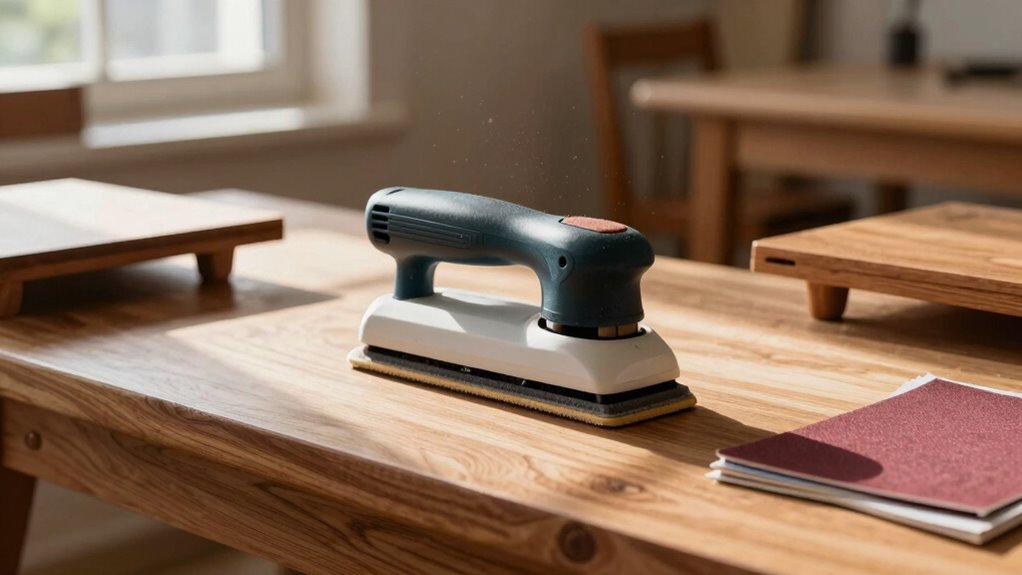
When you’re tackling furniture projects, a finishing sander can make all the difference. You might wonder why you need one when there are so many other sander types available. The truth is, a finishing sander specializes in providing that smooth, polished look you crave for your furniture. It’s designed for the final touches, guaranteeing that your pieces not only look great but feel great too.
A finishing sander is essential for achieving that smooth, polished look in your furniture projects, ensuring both aesthetic and tactile perfection.
Using the right sanding techniques is essential for achieving a professional finish. A finishing sander helps you master these techniques by allowing you to work on delicate surfaces without damaging the wood. Whether you’re refinishing an old chair or smoothing out a new table, you’ll appreciate how a finishing sander gets into those nooks and crannies that larger sanders can’t reach. Its lightweight design makes it easy to maneuver, so you’ll find it simple to control, even when working on intricate shapes.
You’ll encounter different sander types, but the finishing sander stands out because of its versatility. It works well on various materials, including softwoods and hardwoods. Plus, it’s perfect for both flat surfaces and curves. If you’re looking to achieve that flawless finish, you can’t overlook the power of this tool. It can greatly reduce the time you spend on sanding, giving you more time to focus on other aspects of your project. Additionally, proper sanding techniques are crucial for avoiding surface imperfections and ensuring consistent results.
Another benefit is that finishing sanders typically operate quietly and produce less dust compared to other sander types, making your workspace cleaner and more pleasant. If you’ve ever dealt with excessive dust from heavy sanding, you know how significant this can be. Good dust management features are often built in, enhancing your overall sanding experience.
As an affiliate, we earn on qualifying purchases.
Frequently Asked Questions
What Are the Key Differences Between Random Orbit and Sheet Sanders?
The key differences between random orbit and sheet sanders lie in their sanding techniques and design. Random orbit sanders move in a circular motion, giving you a smoother finish and reducing swirl marks, while sheet sanders use rectangular sheets for more control on edges. For peak performance, regular sander maintenance is essential; keep your sanders clean and replace sandpaper as needed to guarantee consistent results and prolong the tool’s lifespan.
How Do I Choose the Right Grit for My Finishing Sander?
To choose the right grit for your finishing sander, start with finer grits for initial sanding, like 120 or 150, to smooth surfaces. If you’re removing old finishes, use coarser grits, around 80. As you refine your work, gradually switch to higher grits, like 220, to achieve a polished look. Remember, effective sanding techniques involve a consistent motion, so keep your sander moving to avoid uneven spots.
Can I Use a Finishing Sander on Painted Surfaces?
Yes, you can use a finishing sander on painted surfaces. Just be careful with the grit you choose, as it affects paint adhesion. Start with a finer grit for surface preparation, gradually moving to coarser grits if needed. This helps remove imperfections without damaging the underlying paint. Always test a small area first to guarantee you achieve the desired finish without compromising the paint’s integrity. Your project will thank you!
How Often Should I Replace Sanding Pads?
You should replace sanding pads every few hours of use or when they show signs of wear. Curiously, a study found that worn pads can reduce sanding efficiency by up to 50%. Keep an eye on sanding pad durability, as it directly affects your results. Also, make certain you’re using pads that are compatible with your sander model, as mismatched pads can lead to poor performance and damage. Regular checks will keep your projects smooth and efficient.
What Safety Equipment Is Recommended When Using a Finishing Sander?
When using a finishing sander, you should wear a dust mask, safety goggles, and ear protection. Dust extraction systems can help minimize airborne particles, making your workspace safer. Make certain your sander’s maintenance is up to date, checking for any wear that could affect performance. By prioritizing safety equipment and proper maintenance, you’ll create a healthier environment and enhance your overall sanding experience. Don’t take shortcuts; it’s worth the effort!
Conclusion
Investing in a finishing sander is like adding the perfect brush to an artist’s toolkit. It smooths surfaces, enhances your furniture’s beauty, and saves you time on projects. With its precision and efficiency, you’ll achieve that professional finish that makes your work stand out. So, whether you’re refinishing an old piece or crafting something new, a finishing sander is a worthy companion in your woodworking journey, ensuring your creations shine like a masterpiece.
Halloween Picks
halloween
As an affiliate, we earn on qualifying purchases.