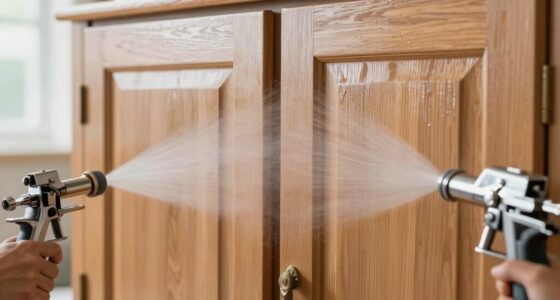
Choosing the right primer is more important than the paint itself when it comes to cabinet durability. A quality primer creates a strong, smooth base that guarantees paint adheres properly and resists peeling, chipping, or fading over time. Skimping on primer can lead to more frequent touch-ups and a shorter lifespan for your cabinets. If you want to maximize durability and learn effective strategies, keep exploring how primer impacts long-lasting cabinet finishes.
Key Takeaways
- Proper primer ensures strong adhesion, preventing peeling and chipping regardless of the paint type used.
- The right primer creates a stable, moisture-locking base that significantly extends paint lifespan.
- Primer compatibility with cabinet material (wood, laminate, MDF) influences durability more than paint alone.
- High-quality primer reduces the likelihood of surface imperfections, leading to a smoother, longer-lasting finish.
- Choosing an appropriate primer tailored to environmental factors (humidity, wear) enhances overall paint durability.

Have you ever wondered how long your cabinet paint will last before it needs a touch-up? The answer isn’t just about choosing the right color or even the right paint brand; it’s largely influenced by your choice of primer and the overall paint finish options. Primer acts as the foundation for your paint, ensuring adhesion, durability, and a smooth surface that can withstand daily wear. Skimping on primer or selecting the wrong type can lead to peeling, chipping, or uneven finishes that require frequent repairs. When considering your cabinet project, prioritize a high-quality primer suited for your cabinet material—whether wood, laminate, or MDF—to lock in moisture and create a stable base. This initial step can dramatically extend the life of your paint, making your cabinets look freshly painted for years. Additionally, understanding the paint finish options available helps you select the most durable choice for your needs. Once you’ve applied the right primer, your choice of paint finish options plays a vital role in durability. For cabinets, semi-gloss or high-gloss finishes are popular because they provide a shiny, smooth surface that’s easier to clean and more resistant to scratches and stains. Matte finishes, while attractive, tend to show fingerprints and are harder to clean, which can diminish their lifespan in high-traffic areas. Satin finishes strike a good balance, offering some sheen and washability without being overly reflective. Whichever finish you select, understanding its properties will help you maintain the look over time. Proper cleaning and maintenance tips—such as wiping down cabinets regularly with a gentle cleaner and avoiding abrasive scrubbers—are essential for preserving your paint’s integrity. When you clean, use a soft cloth and mild soap to prevent scratching or dulling the finish, especially if you’ve opted for a high-gloss or semi-gloss look. The longevity of your painted cabinets isn’t just about initial application; it’s about ongoing care. Regular cleaning prevents grime buildup, which can degrade the paint surface and cause discoloration or peeling. Avoid harsh chemicals or steel wool, as they can damage the finish. Instead, use products designed for painted surfaces, and always follow manufacturer recommendations for maintenance. Additionally, be mindful of moisture and humidity levels, especially in kitchens and bathrooms, since excess moisture can weaken the paint’s adhesion over time. By combining proper primer choice, selecting appropriate paint finish options, and implementing consistent cleaning and maintenance tips, you’re setting yourself up for cabinets that look great and last much longer, saving you time and money on future touch-ups or repainting jobs.
high quality cabinet primer
As an affiliate, we earn on qualifying purchases.
As an affiliate, we earn on qualifying purchases.
Frequently Asked Questions
How Do Humidity Levels Affect Cabinet Paint Longevity?
High humidity levels can markedly impact your cabinet paint longevity by increasing moisture influence, which leads to peeling or bubbling. When humidity impacts your space, it causes moisture to seep into the paint and primer, weakening their bond. To protect your cabinets, ensure proper ventilation and choose moisture-resistant primers. This way, you minimize humidity impact and extend the durability of your paint job, keeping your cabinets looking fresh longer.
Can I Change My Cabinet Color Without Repainting Entirely?
Sure, you can change your cabinet color without a full repaint, turning your kitchen into a chameleon’s playground. Opt for a partial cabinet repainting, focusing on areas you want to refresh. Use a high-quality primer to guarantee new paint sticks like a best friend’s secret. This way, you get a fresh look without the hassle of stripping everything down, saving time and money while still making a bold statement.
What Eco-Friendly Primer Options Are Best for Cabinets?
You should choose eco-friendly primers like those made from low-VOC or biodegradable sealers for your cabinets. These options are safe for the environment and effective at sealing surfaces, ensuring good paint adhesion. Look for labels that specify biodegradable or low-toxicity ingredients. By selecting these eco-friendly primers, you support sustainability while achieving a durable, beautiful finish on your cabinets without harmful chemicals.
How Often Should I Reapply Primer During Cabinet Repainting?
Imagine you painted your cabinets a year ago, and now they’re showing chips; you’ll want to verify your primer. Typically, you don’t need to reapply primer during your repainting schedule unless it’s peeling or compromised. For primer maintenance, inspect for damage every few years, especially before repainting. Regular checks ensure your cabinets stay durable, and reapplying primer becomes part of your long-term repainting schedule to maintain a smooth, lasting finish.
Do Different Wood Types Require Specific Primer or Paint Types?
Yes, different wood types do require specific primer or paint types. For proper wood prep and to guarantee primer adhesion, you should select primers formulated for the wood you’re working with—like oil-based primers for knotty or oily woods, and water-based primers for softer woods. This choice helps prevent issues like bleeding or peeling, giving you a durable finish that sticks well and lasts longer.
durable cabinet paint finish
As an affiliate, we earn on qualifying purchases.
As an affiliate, we earn on qualifying purchases.
Conclusion
Remember, choosing the right primer is like laying a solid foundation for a sturdy house—you guarantee your cabinet paint lasts longer and looks better. Don’t underestimate the power of a good primer; it’s the secret to a durable, professional finish. When you pick wisely, your cabinets will stand up to daily wear like a fortress standing strong against storms. So, invest in quality primer, and your beautiful, lasting finish will be worth the effort.
moisture resistant primer for cabinets
As an affiliate, we earn on qualifying purchases.
As an affiliate, we earn on qualifying purchases.
cabinet paint touch-up kit
As an affiliate, we earn on qualifying purchases.
As an affiliate, we earn on qualifying purchases.