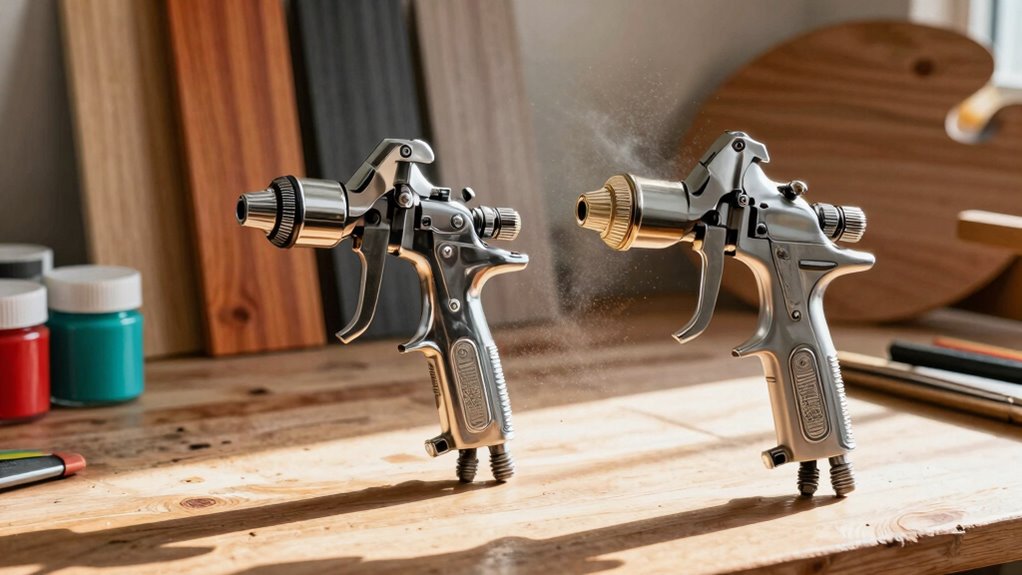

When choosing between airless and HVLP systems for your wood projects, consider what you need most. HVLP is great for fine finishes and smaller areas, while airless excels in speed for large jobs. Think about the type of material you’ll use; HVLP works well with thinner coatings, and airless handles thicker ones better. Factor in cost and complexity too—HVLP is typically easier and more affordable. Keep these points in mind, and you’ll discover what fits best for your project.

Get business pricing on tools and workshop supplies
- Business-only prices and quantity discounts
- Tax-exempt purchasing
- Multiple users, one account, clear invoices
Key Takeaways
- Choose HVLP for detailed work and fine finishes, as it offers better control and less overspray.
- Opt for airless systems for larger projects requiring faster application, such as decks or multiple cabinets.
- Consider material compatibility; HVLP works best with thinner materials, while airless handles thicker coatings effectively.
- Assess your budget; HVLP systems are generally more affordable and easier to set up for DIYers.
- Identify project priorities, such as finish quality or speed, to guide your selection of the spray system.
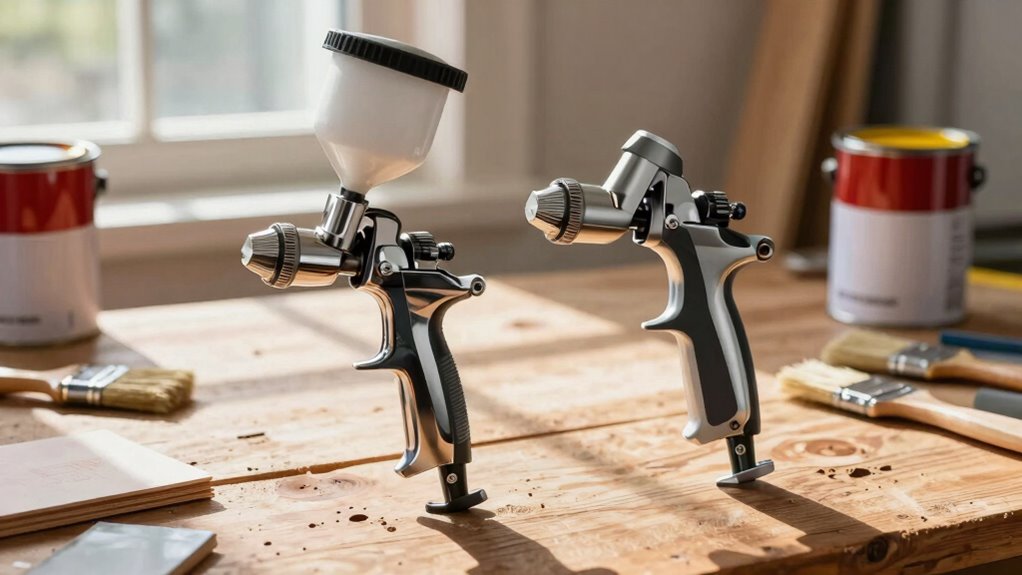
When it comes to finishing wood projects, choosing the right spray system can make all the difference. You’ve got two main options: airless and HVLP (High Volume Low Pressure). Each has its strengths and weaknesses, so understanding how they align with your needs is essential. Let’s explore how to choose the best spray technique for your next project.
First off, think about the finish quality you want. HVLP systems are known for delivering a smooth, fine finish. If you’re working on intricate details or fine furniture, the lower pressure allows for better control and less overspray. On the other hand, airless systems offer a faster application speed, making them ideal for larger surfaces. If you’re tackling a big project, like an entire room or a large piece of furniture, airless might save you time. Additionally, paint atomization plays a crucial role in determining the overall finish quality and efficiency of your spraying process. Proper atomization can also influence material transfer efficiency, which affects paint usage and waste.
Consider the finish quality you desire: HVLP offers precision for fine details, while airless speeds up larger projects.
Next, consider the project scale. If you’re working on small projects, HVLP can be more manageable. The equipment is generally lighter and easier to handle, allowing for precision in smaller spaces. Conversely, if you’re spraying a large deck or multiple cabinets, the speed of an airless system can be a game changer. You’ll finish quicker and get your project done without sacrificing too much on finish quality. Moreover, the material compatibility of each system can influence your choice depending on the type of coatings you plan to apply.
Material compatibility is another key factor. HVLP systems excel with thinner materials, such as stains or lacquers. They atomize the material effectively, providing an even coat. If you’re using thicker materials, an airless system can handle them better without clogging. So, knowing what kind of finish you’ll apply can help you decide which system fits your needs. Additionally, cost and setup complexity can be important considerations, especially for hobbyists or those on a budget. HVLP units tend to be more affordable and easier to set up, making them a popular choice for DIYers. Conversely, airless systems often require a larger initial investment but can provide greater versatility for various projects.
Ultimately, the choice between airless and HVLP boils down to your specific project requirements. Whether you prioritize finish quality, application speed, or ease of maintenance, understanding your needs will guide you to the right spray system. By considering these factors, you’ll make certain your wood projects turn out exactly as you envisioned.
Frequently Asked Questions
What Types of Finishes Work Best With Airless Sprayers?
Airless sprayers work best with oil-based and thicker water-based finishes. If you’re applying an oil-based product, you’ll get a smooth, even coat that enhances the wood’s natural beauty. For water-based finishes, make sure they’re designed for airless application, as they can be thicker. You’ll appreciate the speed and efficiency of airless sprayers, allowing you to cover large areas quickly while achieving a professional-looking finish on your wood projects.
Can I Use HVLP for Outdoor Wood Projects?
Yes, you can use HVLP for outdoor wood projects! It provides a smooth finish and excellent control, making it perfect for detailed work. However, verify the finish you choose offers outdoor durability; not all products are suitable for the elements. Look for finish compatibility with your HVLP sprayer to avoid clogging. With the right preparation and materials, you’ll achieve stunning results that stand up to weather conditions while enhancing your wood’s beauty.
How Do I Maintain My Airless Sprayer?
To maintain your airless sprayer, focus on sprayer cleaning right after use. Flush the system with water or solvent based on the paint type. Disassemble the spray gun and clean the filter and nozzle to prevent clogs. Regularly check for wear on seals and replace them if necessary. Following these maintenance tips will keep your sprayer in top shape, ensuring smooth operation for your next project. Don’t skip this vital step!
Is Noise a Factor With HVLP Sprayers?
Yes, noise levels are a factor with HVLP sprayers. They tend to be quieter than other types, making them more suitable for indoor projects or residential areas. Their efficiency in applying finishes without excessive overspray also contributes to a more pleasant working environment. If you’re sensitive to noise or working in a quiet space, an HVLP sprayer might be your best choice for wood projects.
What Safety Gear Should I Wear When Spraying?
When you’re spraying, it’s essential to wear the right protective equipment. Start with a respirator to shield your lungs from fumes. Safety goggles protect your eyes from overspray, and gloves keep your skin safe from chemicals. You should also consider wearing a full-body suit to minimize exposure. These spraying techniques can be messy, so don’t forget to cover your workspace. Prioritize your safety to enjoy your project without worries!
Conclusion
In the end, the choice between airless and HVLP sprayers could define the success of your wood projects. Imagine the smooth finish of an HVLP or the speed of an airless—each has its allure. But before you decide, consider your specific needs, experience level, and the intricacies of your project. Are you ready to elevate your craftsmanship? The right sprayer could make all the difference, but which one will you choose? The answer might surprise you.
Halloween Picks
halloween
As an affiliate, we earn on qualifying purchases.