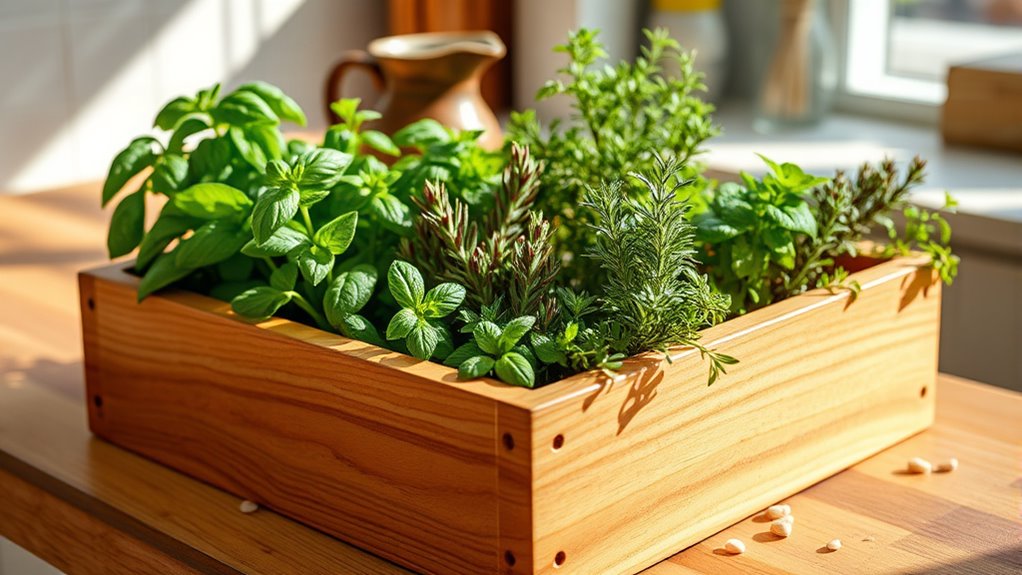

To craft a wooden herb garden for your kitchen, choose rot-resistant cedar or treated lumber for durability, and design a setup that guarantees proper drainage and easy watering with self-watering containers or drip irrigation. Incorporate good airflow, companion planting, and regular pruning to keep pests at bay naturally. Maintain cleanliness by removing debris and monitor for spoilage or pests. Keep learning about materials, pests, and maintenance to create the perfect herb garden that adds both flavor and charm to your space.

Get tools and workshop supplies delivered free — and shop member deals
- Fast, free delivery on millions of items
- Access to Prime Big Deal Days deals on October 6–7
- Prime Video, Amazon Music and more included
Key Takeaways
- Choose rot-resistant cedar lumber and design for proper drainage to ensure durability indoors or on balconies.
- Install a simple drip irrigation or self-watering system for consistent, low-maintenance watering.
- Incorporate pest control strategies like good airflow, companion planting, and fine mesh screens to protect herbs.
- Regularly prune, remove debris, and keep containers clean to promote healthy, pest-resistant herbs.
- Select accessible watering points and attractive materials to create a functional, visually appealing kitchen herb garden.

Creating a wooden herb garden is a simple and attractive way to bring fresh flavors right to your doorstep. Whether you have a dedicated kitchen nook or a sunny balcony, building your own wooden herb garden puts herbs like basil, thyme, and mint within easy reach. To make it functional and low-maintenance, start by choosing the right wood—cedar or cedar-treated lumber works well because it resists rot and pests naturally. When assembling your garden, you’ll want to contemplate a proper watering system. Installing a drip irrigation setup or using self-watering containers ensures your herbs stay consistently moist without overwatering. This not only saves time but also helps prevent common issues like root rot. Keep the watering system simple and accessible, so you can easily check water levels and adjust as needed, especially during hot, dry days. Additionally, using high-quality materials and ensuring proper drainage can prolong the lifespan of your wooden garden and keep your herbs healthy.
Pest control is another critical aspect of maintaining a healthy herb garden. Since you’re growing herbs close to your kitchen, you want to keep pests at bay without resorting to harmful chemicals. One effective method is to guarantee good airflow around your plants, which discourages pests like aphids and spider mites. Companion planting can also help—plant herbs like marigolds or garlic nearby, which naturally repel pests. Regularly inspecting your herbs for signs of pests allows you to catch problems early before they spread. If you do notice pests, manually remove them or use organic remedies like neem oil or insecticidal soap. These solutions are safe for edible plants and won’t compromise your herbs’ flavor or safety. Covering your plants with fine mesh screens can prevent pests from reaching your herbs in the first place, especially if you notice recurring issues.
Additionally, keeping your wooden garden clean and well-maintained is essential for pest control. Remove fallen leaves, debris, or any decaying plant material that could harbor pests or disease. Proper drainage in your wooden containers ensures excess water won’t stagnate, reducing the risk of fungal infections. Remember, healthy, well-cared-for herbs are more resistant to pests and diseases, so regular pruning and proper watering are key. Being aware of potential spoilage signs in stored herbs or plant material helps you maintain a fresh and healthy garden. With a thoughtful watering system in place and proactive pest control, your wooden herb garden will thrive. It will be a convenient, beautiful addition to your kitchen space, offering fresh herbs whenever you need them. Plus, the satisfaction of growing your own flavors makes cooking even more enjoyable.
self-watering herb garden containers
As an affiliate, we earn on qualifying purchases.
As an affiliate, we earn on qualifying purchases.
Frequently Asked Questions
What Types of Wood Are Best for Indoor Herb Gardens?
You should choose untreated cedar, redwood, or cypress for your indoor herb garden, as they’re naturally resistant to rot and pests. Opt for wood that’s properly treated to prevent moisture damage, ensuring the longevity of your garden. Consider aesthetic options like painted or stained wood to match your kitchen decor. These choices combine durability and style, helping your herbs thrive while keeping your garden looking beautiful and functional.
How Do I Prevent Pests in a Wooden Herb Garden?
To prevent pests in your wooden herb garden, start by applying natural pest repellents like neem oil or diatomaceous earth regularly. Guarantee proper airflow around your herbs by spacing the plants well and avoiding overcrowding, which helps reduce humidity that attracts pests. Keep your garden clean by removing dead leaves and debris, and inspect plants frequently to catch pests early. These steps create an inhospitable environment for pests and protect your herbs naturally.
Can I Customize the Size of My Wooden Herb Garden?
Yes, you can customize the size of your wooden herb garden easily. Look for options with adjustable or modular design features, or use DIY resizing techniques like cutting and assembling wood panels. You can also build your own from scratch, tailoring it to fit your space perfectly. Just make sure to measure carefully and choose sturdy materials to guarantee your custom-sized herb garden remains durable and functional.
What Is the Best Way to Water Wooden Herb Containers?
To water your wooden herb containers effectively, use proper watering techniques by applying water slowly at the base of each plant. Guarantee your containers have good drainage by adding drainage holes or using a layer of gravel at the bottom. This prevents water from pooling, which can cause root rot. Check soil moisture regularly, and only water when the top inch feels dry, promoting healthy, thriving herbs.
How Do I Protect the Wood From Moisture Damage?
Imagine your wooden herb garden basking in a sunlit kitchen corner, untouched by water damage. To protect it, apply a quality sealant to shield the wood from moisture, and guarantee proper ventilation strategies are in place to reduce humidity. Regularly reapply the sealant as needed, and keep the area well-ventilated. This duo keeps your herbs thriving and your wood looking beautiful, year after year.
Conclusion
Your wooden herb garden isn’t just a container; it’s a gateway to freshness and life right in your kitchen. As each sprout grows, it symbolizes your care and connection to nature, turning your space into a sanctuary of flavor and fragrance. With every harvest, you nurture more than herbs—you nurture a sense of balance and energy. Let this garden be a reminder that beauty and nourishment can flourish together, right where you cook and create.
Fall Picks
fall essentials
As an affiliate, we earn on qualifying purchases.