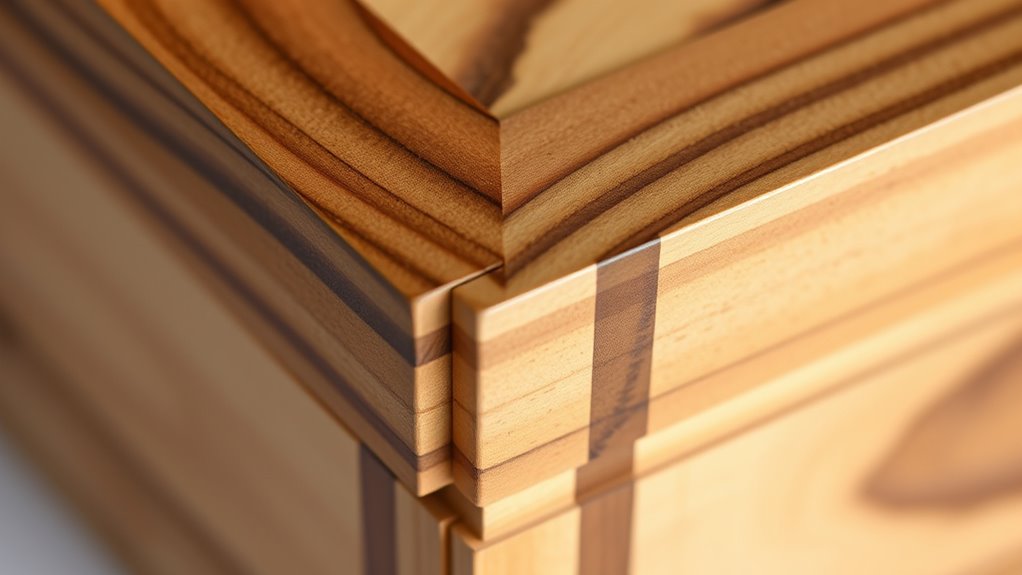

In woodwork, fit and finish mean ensuring your pieces come together precisely and look seamless. It involves aligning the grain properly for strength, beauty, and durability, while sanding carefully to achieve a smooth, flawless surface. Good fit means joints fit tightly without gaps, while quality finish shows attention to detail in sanding and polishing. Mastering these aspects results in professional, long-lasting projects. Keep exploring these techniques to elevate your woodworking skills even further.
Key Takeaways
- Proper grain alignment ensures consistent patterns, enhances aesthetics, and improves the strength of woodwork.
- Fit and finish involve precise joints and smooth surfaces for a professional, polished appearance.
- Sanding in the grain direction creates a flawless, durable surface ready for finishing.
- Attention to detail in grain orientation and surface smoothing increases project longevity.
- Overall craftsmanship emphasizes meticulous alignment and finishing for durable, beautiful results.
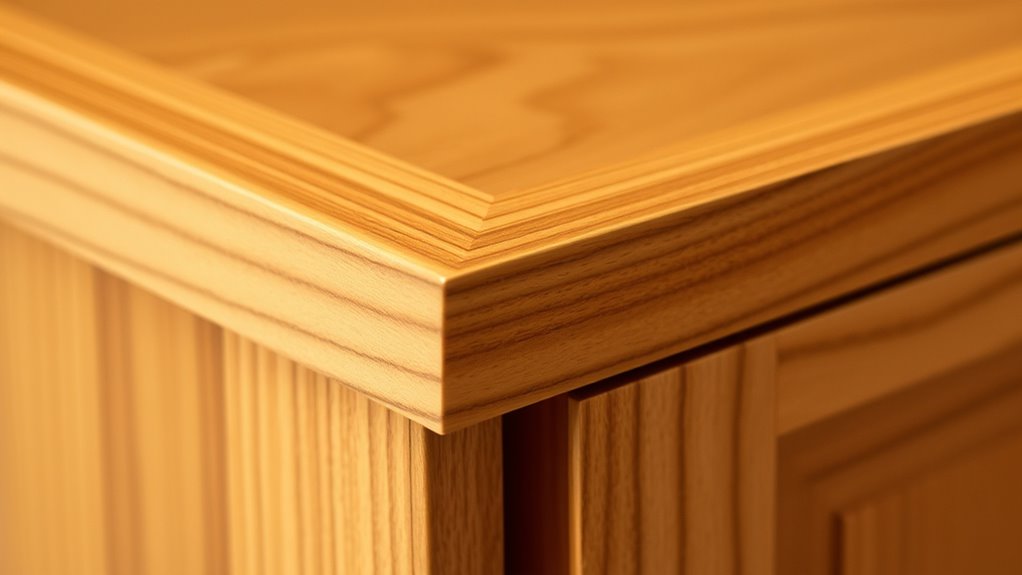
Achieving excellent fit and finish in woodwork is essential for creating pieces that are both durable and visually appealing. When you focus on proper grain alignment, you’re ensuring that the wood’s natural patterns run consistently across joints and surfaces. This alignment not only enhances the aesthetic appeal but also improves the strength of the piece, since aligned grains resist splitting and warping better over time. As you work, pay close attention to how the grain runs in each board. Clamping and gluing panels with grain running in the same direction helps maintain stability and reduces gaps or misalignments. Proper grain orientation also makes finishing easier, as paints, stains, or sealants absorb more evenly, giving your project a smooth, professional look. Incorporating an understanding of Gold IRA considerations can also inspire a sense of value and investment in your craftsmanship, emphasizing quality and longevity. Sanding techniques play a crucial role in achieving a flawless finish. It’s tempting to rush through this step, but meticulous sanding is what separates a good piece from a superb one. Start with a coarser grit to remove rough surfaces and imperfections, then gradually move to finer grits to smooth out the surface. Always sand in the direction of the grain to avoid scratches that stand out once finished. This not only produces a cleaner look but also minimizes the need for additional touch-ups later. When you reach the final stages, switch to very fine grits—220 or higher—to create a silky-smooth surface that’s ready for finishing products. Proper sanding techniques also include maintaining even pressure and checking your work frequently to spot any inconsistencies or scratches that need further attention.
Proper grain alignment ensures durability and a professional finish in woodworking projects.
In addition to focusing on grain alignment and sanding, you should also consider how these steps interact. For instance, if your grain isn’t properly aligned before sanding, you risk creating uneven surfaces or scratches that are difficult to remove. Conversely, diligent sanding can help correct minor imperfections, but only if done carefully and in the right direction. Combining attention to grain alignment with precise sanding techniques ensures that your woodwork not only fits perfectly but also has a polished, professional appearance. The result is a piece that feels solid, looks refined, and will stand the test of time.
Ultimately, mastering fit and finish comes down to your attention to detail. When you prioritize proper grain alignment and employ effective sanding techniques, you set the foundation for a high-quality project. The effort you put into these steps pays off in the end, producing furniture and cabinetry that are both beautiful and long-lasting. Every joint fits just right, every surface is smooth, and the final product truly reflects craftsmanship at its finest.
![Right Angle Clamp, Housolution [4 PACK] Single Handle 90° Aluminum Alloy Corner Clamp, Clamps for Woodworking Adjustable Swing Jaw, Woodworking Tools Photo Frame Vise Holder, Gifts for Men Dad](https://m.media-amazon.com/images/I/51fhtK3TMXL._SL500_.jpg)
Right Angle Clamp, Housolution [4 PACK] Single Handle 90° Aluminum Alloy Corner Clamp, Clamps for Woodworking Adjustable Swing Jaw, Woodworking Tools Photo Frame Vise Holder, Gifts for Men Dad
【Premium Quality Clamps for Woodworking】: Woodworking gifts for men. Sturdy 90 degree wood corner clamps, made of premium…
As an affiliate, we earn on qualifying purchases.
As an affiliate, we earn on qualifying purchases.
Frequently Asked Questions
How Do Environmental Factors Affect Wood Fit and Finish?
Environmental factors like moisture fluctuations and temperature changes can markedly impact your wood’s fit and finish. When humidity rises or falls, moisture levels in the wood shift, causing it to expand or contract. Temperature swings can also lead to warping or cracking. To maintain your craftsmanship, you need to control these factors during storage, assembly, and finishing, ensuring your wood remains stable and your project looks impeccable.
What Tools Are Best for Achieving Perfect Fit and Finish?
You’d think a magic wand would do the trick, but for perfect fit and finish, use sharp chisels and fine sanders. Focus on joint precision with precision tools like a block plane or a dovetail saw. Sand meticulously with different grits, blending surfaces seamlessly. These tools, combined with careful sanding techniques, give you control and consistency, making your woodwork look flawless—no magic required, just good tools and patience.
How Can I Correct Imperfect Fit and Finish in Existing Projects?
To correct imperfect fit and finish in your projects, start with careful fitting adjustments by sanding or planing tight spots, then use refinishing techniques to smooth surfaces. If gaps or misalignments persist, consider filling them with wood filler or glue, then sand and refine. Always test your adjustments in small areas first, and take your time to make sure seamless integration, restoring your piece’s professional look.
What Are Common Mistakes That Ruin a Woodwork’s Finish?
You often ruin a woodwork’s finish by neglecting grain alignment and improper sanding techniques. If you don’t align the grain properly, you risk visible scratches and uneven spots. Using incorrect sanding methods can leave swirl marks or rough patches, spoiling the smoothness. Always sand with the grain and gradually use finer grits. Taking time to correct these mistakes ensures a flawless, professional-looking finish that highlights your craftsmanship.
How Does Wood Type Influence the Finish Quality?
You’re really playing with fire if you ignore how wood type influences finish quality. Different woods, like oak or cherry, have unique grain patterns that affect how smooth your finish looks and how durable it stays over time. The grain can either enhance the beauty or cause issues like uneven absorption, impacting finish durability. Choosing the right wood guarantees your project stands the test of time and looks stunning to boot.

Hand Sanding Block Set of 16,Interchangeable Assorted Contoured Profile Sanding Pad Kit,Hook and Loop Abrasive Sanding Chassis for Sand Wood Furniture, Auto Paint and Crafts,Red
Hand Sanding Block Set:This Sanding Block Set includes 16 sanding blocks in assorted shapes, each 3.8 inches long,…
As an affiliate, we earn on qualifying purchases.
As an affiliate, we earn on qualifying purchases.
Conclusion
So next time you’re inspecting a piece of woodwork, remember that “fit and finish” is more than just words—it’s about the little details that make everything come together. Sometimes, it’s funny how a tiny misaligned edge or a smooth surface can turn a good piece into a great one. You might just find yourself appreciating the craftsmanship more, realizing that perfection isn’t always about flawlessness but about the care put into the details—like a perfect handshake.
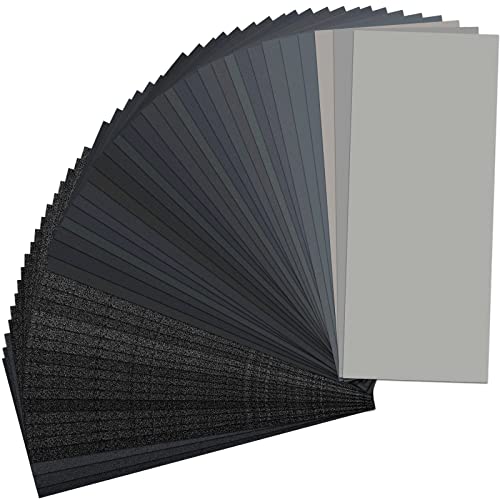
Sand Paper, 48 PCS Sandpaper, 120 to 5000 Assorted Grit Sandpaper Sheets, 9 x 3.6 Inch Premium Wet Dry Sandpaper for Wood Furniture Finishing, Metal Sanding, Automotive Polishing
Meets All Your Needs: 48 pcs sand paper kit, 16 grits sandpaper assortment, including 3 sheets of each…
As an affiliate, we earn on qualifying purchases.
As an affiliate, we earn on qualifying purchases.

Beaiguna Self Centering Dowel Jig Kit, Drill Guide Jig Block for Straight Holes with 6PCS Drill Bushings, Premium Self Centering Doweling Jig Kit for Woodworking, Adjustable Width Biscuit Joiner Tool
FLEXIBLE ADJUSTMENT: Our wood dowel jig can clamp a wide range of wood blocks from 0.4 to 2…
As an affiliate, we earn on qualifying purchases.
As an affiliate, we earn on qualifying purchases.