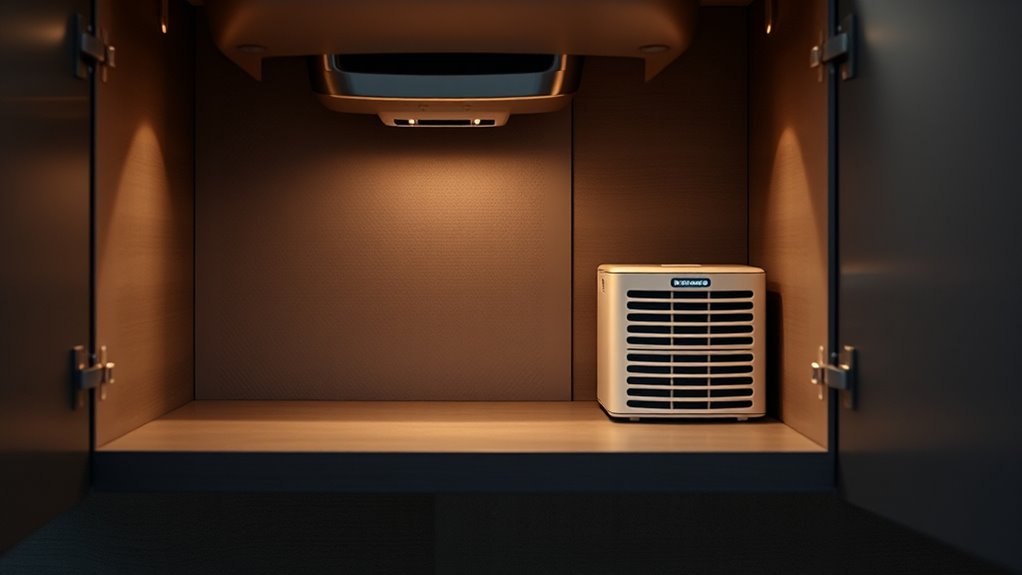

To manage moisture and improve ventilation under your sink, make certain proper airflow by installing small vents or passive air exchange systems. Use fans or dehumidifiers to actively remove excess humidity, and check for leaks regularly to prevent water buildup. Adding insulation with moisture-resistant materials helps keep temperatures stable and reduces condensation. Keeping the area dry and well-ventilated will extend your cabinet’s life and prevent mold. Learn more about effective strategies to protect your space.
Key Takeaways
- Install passive vents or small exhaust openings to promote continuous airflow inside the cabinet.
- Use dehumidifiers or oscillating fans to actively reduce humidity levels beneath the sink.
- Incorporate moisture-resistant insulation to prevent condensation and mold growth.
- Ensure proper drainage solutions, like drip trays or catch pans, to prevent water accumulation.
- Regularly inspect and maintain seals, plumbing, and ventilation components to prevent moisture buildup.

Under-sink cabinets often trap moisture and limit airflow, which can lead to mold, mildew, and wood damage over time. When moisture builds up, it creates an ideal environment for mold growth, compromising both the cabinet’s structure and your health. To prevent this, you need effective drainage solutions that help manage water leaks and condensation. Installing a drain pan or a moisture-absorbing tray beneath pipes can catch minor leaks before they seep into the cabinet materials. Additionally, ensuring proper drainage around your plumbing can reduce water pooling, preventing excess humidity from lingering inside the cabinet.
Use drain pans and proper drainage to prevent moisture buildup and protect your cabinets.
Cabinet insulation plays a critical role in maintaining a stable environment within your under-sink space. Proper insulation helps regulate temperature and minimizes condensation caused by temperature differences between the warm, humid air and cooler cabinet surfaces. When insulation is inadequate or missing, the cabinet interior can become a hotspot for moisture accumulation. Using moisture-resistant insulation materials, like closed-cell foam, can keep the cabinet dry and prevent the formation of mold. Proper insulation also helps protect the cabinet’s wood from warping or rotting caused by repeated exposure to moisture. Incorporating ventilation solutions further enhances airflow, ensuring that moisture does not become trapped inside.
To improve airflow, consider installing ventilation solutions that promote air circulation inside the cabinet. Small vents or passive air exchange systems allow moist air to escape, reducing humidity levels. Some homeowners opt for small oscillating fans or dehumidifiers placed nearby to actively remove excess moisture from the space. Effective ventilation, combined with drainage solutions, ensures that any water or humidity doesn’t get trapped, creating a healthier environment and prolonging the lifespan of your cabinetry.
Regular maintenance is essential. Check for leaks, ensure seals around plumbing are intact, and replace any worn or damaged insulation. Keep the area dry by wiping down surfaces and using moisture absorbers if necessary. Taking these steps minimizes the risk of mold and mildew growth, preserving both the integrity of your cabinets and your indoor air quality. Remember, your goal is to create a dry, well-ventilated space that prevents moisture buildup rather than just reacting to problems after they occur. By focusing on drainage solutions, proper insulation, and ventilation, you turn your under-sink cabinet into a secure, moisture-resistant environment that stands the test of time.
Frequently Asked Questions
How Often Should I Inspect Under-Sink Cabinets for Mold?
You should inspect your under-sink cabinets at least once a month to catch mold early. Regular inspection is key for mold prevention, especially in areas prone to moisture. Look for any signs of mold, water leaks, or dampness. If you notice any issues, address them immediately to prevent mold growth. Consistent inspection helps keep your space healthy and reduces the risk of larger mold problems developing over time.
Are There Specific Materials Best for Moisture-Prone Cabinet Interiors?
You should choose water-resistant materials like plastic or sealed plywood for moisture-prone cabinet interiors. Applying mold-resistant coatings can further protect against mold growth. These materials help prevent water damage and keep mold at bay, especially in areas prone to leaks or humidity. Regular inspections combined with these moisture-resistant options ensure your cabinets stay dry and mold-free, extending their lifespan and maintaining a healthier environment around your sink.
Can Ventilation Improve Energy Efficiency in My Kitchen?
Yes, proper ventilation can improve your kitchen’s energy efficiency by enhancing air circulation. When you allow fresh air to flow and moisture to escape, your cooling systems don’t have to work as hard to maintain a comfortable temperature. This leads to energy savings and reduces your utility bills. Good ventilation helps keep your kitchen environment healthier and more comfortable, making your space more efficient overall.
What Are Signs of Poor Moisture Management Inside Cabinets?
Think of your cabinet as a silent, damp monster hiding behind the scenes. Signs of poor moisture management include musty odors, water stains, and mold spots, which act like warning flags. If you notice peeling paint or warped shelves, mold prevention becomes urgent. Using moisture barriers and ensuring proper airflow keeps this beast at bay, protecting your cabinet’s health and your home’s air quality. Don’t ignore these signs—act now to keep moisture out.
Do Certain Cabinet Designs Resist Mold Better Than Others?
Yes, certain cabinet designs resist mold better than others. Cabinets with good airflow, such as those with built-in vents or open backs, help prevent moisture buildup and mold growth. Mold-resistant materials like plastic or treated wood also improve durability. You should choose designs that promote ventilation and use moisture-resistant materials to keep mold at bay. Proper installation and regular maintenance further enhance mold resistance in your cabinets.
Conclusion
By ensuring proper ventilation and moisture control in your under-sink cabinets, you prevent mold, odors, and damage. Some might think sealing the area tightly keeps everything dry, but without airflow, moisture gets trapped, causing issues over time. Remember, good ventilation isn’t just about comfort—it’s about protecting your home’s structure and your health. Taking these simple steps now saves you headaches and costly repairs later. Stay proactive, and your cabinets will stay dry and durable.