
TL;DR

Get business pricing on tools and workshop supplies
- Business-only prices and quantity discounts
- Tax-exempt purchasing
- Multiple users, one account, clear invoices
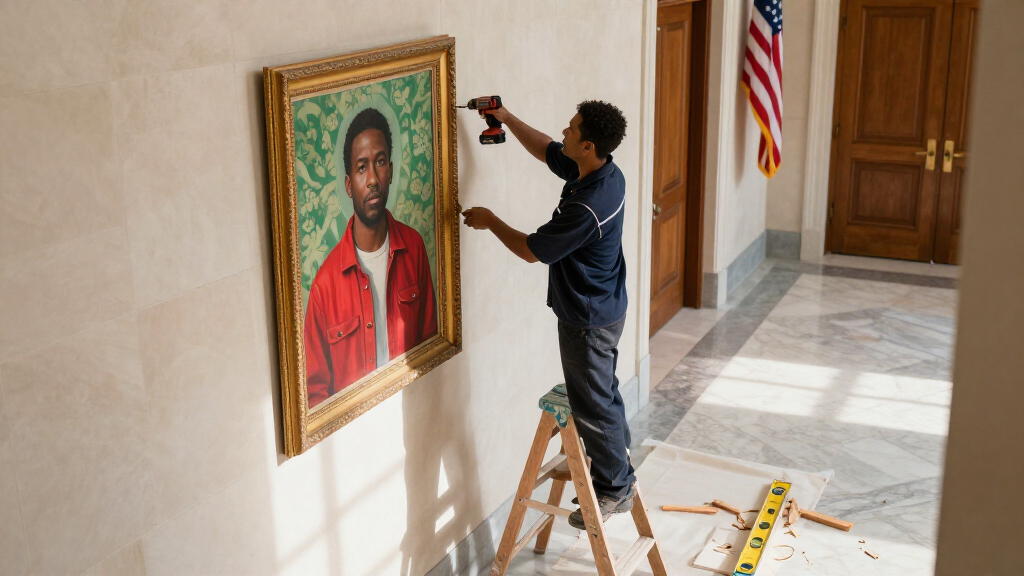
The US State Department has removed a painting by Kehinde Wiley, the artist best known for Barack Obama’s presidential portrait, from display in a federal building. Officials and administration critics have described the work as “woke” art. The removal fits a broader pattern of federal agencies pulling artwork seen as politically charged under the current administration.
The US State Department has taken down a painting by Kehinde Wiley, the American portraitist best known for painting President Barack Obama’s official portrait, from display in a government space, according to reports of the removal. The decision, which follows criticism from administration officials and conservative commentators who labeled the work “woke” art, is part of a wider pattern of federal agencies rethinking artwork displayed in government buildings under the current administration.
Wiley is one of the most prominent contemporary American painters. His 2018 portrait of Obama for the Smithsonian’s National Portrait Gallery became one of the most widely reproduced presidential portraits in modern history. His work typically recasts Black subjects in the poses and visual language of classical European portraiture, a practice that has earned him both acclaim and political criticism.
According to the reports, the painting was removed from a State Department display after it drew criticism from officials and commentators aligned with the administration, who described it as an example of “woke” or politically ideological art unsuitable for government spaces. The department did not immediately publish a detailed public explanation of the decision, the criteria used to judge the work, or who authorized the removal.
Neither Wiley nor his representatives have issued an extensive public response at the time of reporting, according to the available coverage. The work itself remains federal property, and there is no indication it has been damaged or destroyed — only taken off display. Its current location and long-term status have not been disclosed.
Why the Removal Matters
The removal matters first because of what it signals about cultural policy inside the federal government. When a cabinet-level agency removes a work by a major living American artist on grounds that critics describe as ideological, it sets a precedent for how art is selected, displayed, and potentially removed across federal buildings, embassies, and cultural programs the department oversees.
Second, it puts a celebrated artist at the center of a political dispute. Wiley’s work has long engaged race, power, and representation, and his Obama portrait made him a symbolic figure in American culture wars. Decisions like this one turn museum- and lobby-level curatorial choices into public political statements, which can affect how US cultural diplomacy is perceived abroad, particularly in countries where the State Department’s Art in Embassies and similar programs have traditionally showcased American creative freedom.
Third, the episode contributes to a broader debate over government neutrality toward art: whether public institutions should reflect the full range of contemporary American art, or apply ideological filters. Critics of the removal argue it amounts to censorship; supporters argue public buildings should not display art they view as politically charged. The State Department’s lack of a published standard leaves that dispute unresolved.
As an affiliate, we earn on qualifying purchases.
Wiley, Obama’s Portrait, and the Culture Wars
Kehinde Wiley rose to prominence in the 2000s for large-scale portraits that place Black subjects — often ordinary people he met on the street — in poses borrowed from Old Master painting. His subjects are typically set against ornate, decorative backgrounds, a style that reframes who gets commemorated in the grand tradition of portraiture.
His profile changed dramatically with the 2018 unveiling of his portrait of President Obama at the Smithsonian’s National Portrait Gallery, which drew record crowds and made Wiley a household name. He has since remained a frequent target of conservative criticism, both for the political associations of the Obama portrait and for his artistic themes.
The removal also follows a series of actions by federal agencies and institutions during the current administration to remove, cover, or reassess artwork dealing with race, gender, and identity — including murals and exhibitions at other government buildings and at the Kennedy Center, whose leadership changed under administration influence. Culture-war disputes over public art have become a recurring feature of federal cultural policy in recent years.
“The department has not published a detailed public statement explaining the removal, the criteria applied, or the official who authorized it.”
— US State Department
Unanswered Questions About the Decision
Several basic facts remain unclear. The State Department has not said which painting by Wiley was removed, where exactly it was displayed, or when the removal occurred. It has not identified the official who ordered the decision or whether any written policy or review process was followed.
It is also unknown whether the removal was a one-off action or part of a systematic review of artwork across State Department spaces, embassies, or affiliated programs. Whether Wiley or the lending institution was notified in advance, and whether the work will be returned, relocated, or placed in storage, has not been confirmed. The artist’s full response, if any, is still emerging.
Watch for the Department’s Next Move
Watch for a formal State Department statement clarifying the removal and whether a broader art review is underway. Responses from Wiley and his gallery, and from museum and free-expression organizations such as the National Coalition Against Censorship, are likely to shape the public debate.
Lawmakers may raise the removal in oversight inquiries into federal cultural policy. If additional artworks are pulled from government display in the coming weeks, the episode will shift from an isolated incident to a documented pattern with clearer policy implications.
Key Questions
Who is Kehinde Wiley?
Kehinde Wiley is an American portrait painter known for placing Black subjects in poses drawn from classical European portraiture. He painted the official Smithsonian portrait of President Barack Obama unveiled in 2018.
Why was the painting removed?
According to reports, the removal followed criticism from administration officials and conservative commentators who called the work “woke” art. The State Department has not published a detailed official explanation of the decision.
Has the painting been destroyed?
There is no indication the work was damaged or destroyed. It has been taken off display; its current location and long-term status have not been disclosed.
Is this part of a broader removal of federal artwork?
That is not confirmed. The removal follows other reported actions affecting art addressing race, gender, and identity in federal spaces, but the State Department has not said whether a wider review is underway.
Can the government legally remove art from its own walls?
Generally yes, for works the government owns or displays in its own spaces, though advocates argue that ideological removals conflict with principles of artistic freedom. Whether any policy, loan agreement, or review process applied here is unknown.
Source: rss
Halloween Picks
halloween
As an affiliate, we earn on qualifying purchases.