To build a better lathe sharpening routine, start by selecting the right tools for your material. Use angles between 25 to 30 degrees for general-purpose tools and adjust as needed for specific projects. Begin sharpening with coarse grit, then progress to finer grits for a polished edge. Regularly inspect your tools for chips, and prioritize safety by wearing eye protection and keeping your workspace organized. Stick with a consistent process, and you’ll discover even more effective practices.
Key Takeaways
- Select the Right Tools: Use high-speed steel for hardwoods and carbide for softer materials to optimize your sharpening routine.
- Establish Consistent Angles: Maintain a 25 to 30-degree angle for general-purpose tools, adjusting as needed for different materials.
- Use Appropriate Grits: Start with a coarse grit for shaping, then progress to finer grits for honing to achieve a sharp edge.
- Inspect and Maintain Tools: Regularly check for chips or nicks, sharpening damaged tools before use to enhance performance and safety.
- Prioritize Safety: Always wear eye protection and keep your workspace organized to minimize risks during sharpening routines.
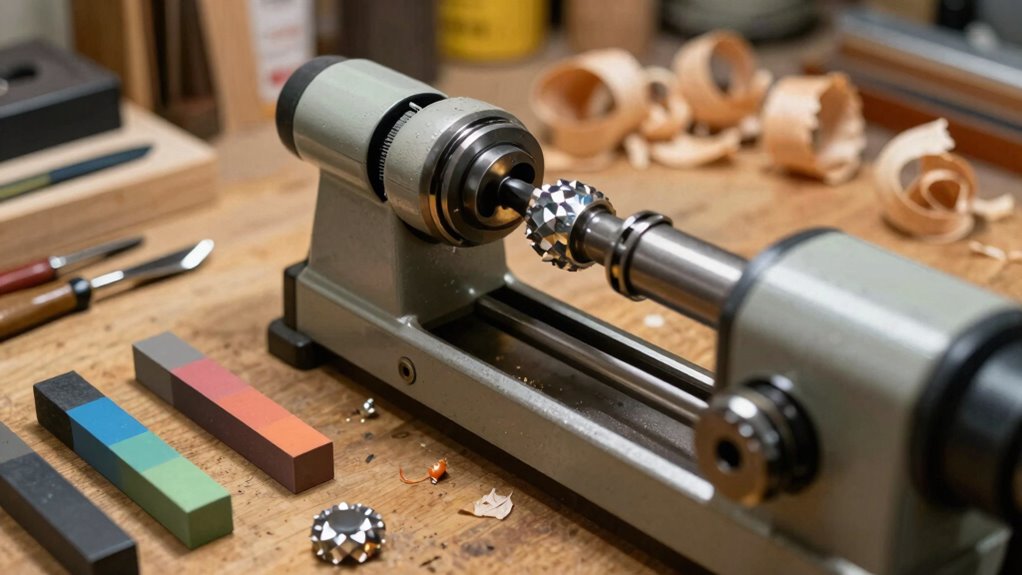
When you’re working on a lathe, having sharp tools isn’t just a luxury; it’s fundamental for achieving precision and efficiency. You might think that any tool will do, but tool selection plays a key role in your overall success. Different material types require specific tools, and understanding this can save you a lot of frustration. For instance, if you’re turning hardwoods, a high-speed steel tool is ideal, while carbide tools excel with softer materials. Choosing the right tool can greatly reduce wear and tear, leading to less frequent sharpening.
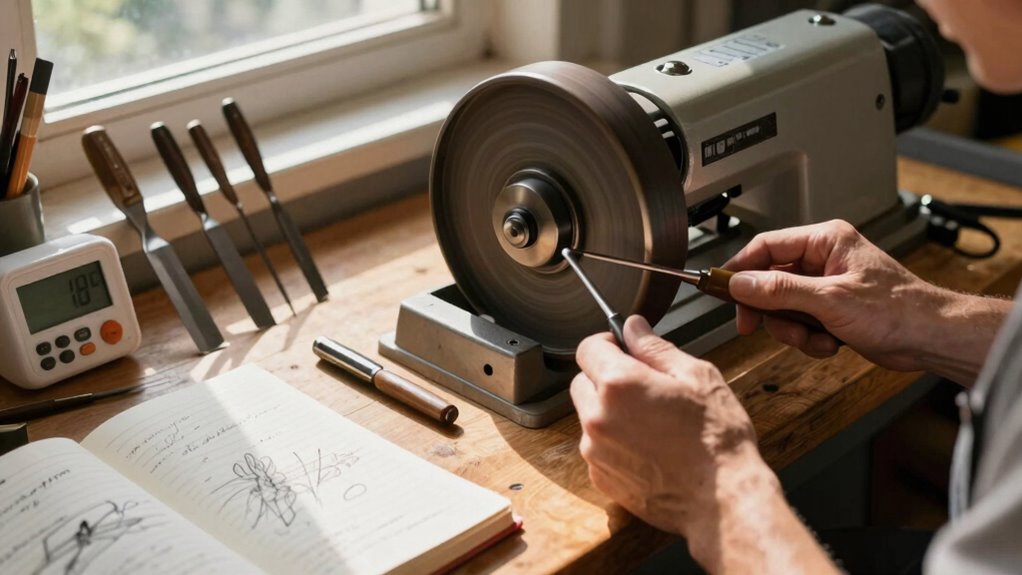
Sharpening angles are another crucial aspect of maintaining your lathe tools. Each tool has a recommended angle that enhances its cutting ability. For example, general-purpose tools generally benefit from a 25 to 30-degree angle. You’ll want to adjust these angles based on the specific material types you’re working with. A sharper angle can yield cleaner cuts but may dull more quickly, so finding the balance is key.
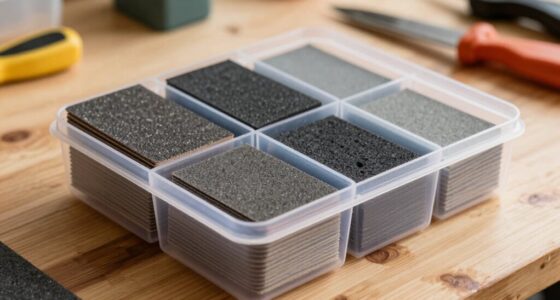
Now, let’s talk about grit choices. The grit of your sharpening stone or wheel will impact how quickly you can sharpen your tools. Coarse grits are great for shaping and grinding away material, while finer grits are better for honing and polishing the edge. Starting with a coarse grit and then moving to a finer one will help you achieve a razor-sharp edge. Don’t forget to clean your tools after sharpening; any residue can affect their performance.
Regular maintenance tips can make a world of difference in your sharpening routine. Always inspect your tools for chips or nicks before you begin working. This can help prevent accidents and guarantee safer practices while you’re at the lathe. If a tool is damaged, it’s better to sharpen it before use than risk ruining your workpiece or injuring yourself. Additionally, understanding sharpness maintenance and how to properly care for your tools can extend their lifespan and improve overall performance.
Lastly, safety practices should never be overlooked. Always wear appropriate eye protection and keep your workspace organized. A cluttered area can lead to accidents, especially when you’re focused on sharpening. By building a consistent routine that includes careful tool selection, correct sharpening angles, appropriate grit choices, and solid maintenance practices, you’ll not only enhance your skills but also make your lathe work safer and more enjoyable.
As an affiliate, we earn on qualifying purchases.
Frequently Asked Questions
What Types of Tools Can I Sharpen on a Lathe?
You can sharpen various tools on a lathe, including gouges, skews, and parting tools. Each chisel type requires specific sharpening angles for ideal performance—typically between 20 to 30 degrees for gouges and about 35 degrees for skews. Adjusting the angle guarantees you maintain the tool’s edge and effectiveness. So, whether you’re working on woodturning or other projects, mastering these tools will enhance your craftsmanship considerably.
How Often Should I Sharpen My Lathe Tools?
You should sharpen your lathe tools regularly, ideally every few hours of use, to maintain peak performance. This sharpening frequency helps prevent dull edges, ensuring smoother cuts and reducing strain on your tools. Pay attention to the type of material you’re working with; harder woods might require more frequent sharpening. Consistent tool maintenance not only prolongs the life of your tools but also enhances the quality of your work.
Can I Use a Bench Grinder for Lathe Tool Sharpening?
Yes, you can use a bench grinder for lathe tool sharpening. The grinder benefits include quick material removal and the ability to achieve a fine edge. Just make sure to use proper sharpening techniques to avoid overheating the tools. Keep your angles consistent, and consider using a jig for accuracy. With practice, you’ll find that a bench grinder can be an effective part of your sharpening routine, giving your tools a longer lifespan.
What Safety Equipment Do I Need While Sharpening?
You need to gear up like you’re facing a storm of flying sparks! Grab your safety glasses to shield your eyes from debris, and don’t forget your hearing protection to muffle the grinder’s roar. A dust mask is essential to keep fine particles at bay, while work gloves protect your hands from sharp edges. With this safety equipment, you’ll be ready to tackle tool sharpening like a pro, ensuring your safety is always a priority!
How Do I Know When a Tool Is Dull?
You know a tool’s dull when its cutting edge struggles to slice through material smoothly. You’ll notice rough edges, increased friction, or burning wood. If you’re using sharpening techniques and still getting poor results, it’s time to sharpen. Regularly check the tool by cutting into scrap material; if it doesn’t perform well, don’t hesitate to refresh that edge. Keeping an eye on these signs will guarantee you maintain peak performance.
Conclusion
By establishing a consistent lathe sharpening routine, you not only enhance your tool performance but also boost your overall woodworking experience. Embrace the rhythm of regular maintenance, and you’ll find it becomes second nature. Remember, sharp tools lead to cleaner cuts and greater precision. Trust in the process, and you’ll see that a well-honed lathe is the key to revealing your creative potential. So, get sharpening—your projects will thank you for it!