
Accurate hole placement starts with a solid layout because it sets the foundation for your project. When you measure and mark carefully, you avoid costly mistakes that can derail your work. Using tools like a tape measure, square, and templates guarantees precision and consistency. Rushing through the layout often leads to errors, so take your time to plan. Mastering these techniques can boost your confidence and accuracy, and there’s more to discover about improving your skills.

Get business pricing on tools and workshop supplies
- Business-only prices and quantity discounts
- Tax-exempt purchasing
- Multiple users, one account, clear invoices
Key Takeaways
- Accurate hole placement is rooted in meticulous layout, ensuring all dimensions and angles are correct from the start.
- Utilizing reliable measurement tools establishes a solid foundation for precise hole placement throughout the project.
- Careful marking processes prevent errors and misalignments, making layout accuracy vital for successful outcomes.
- Templates streamline repetitive measurements, promoting consistent hole placement and reducing the risk of mistakes.
- Regular practice with layout techniques enhances skill and confidence, making accurate hole placement more intuitive over time.
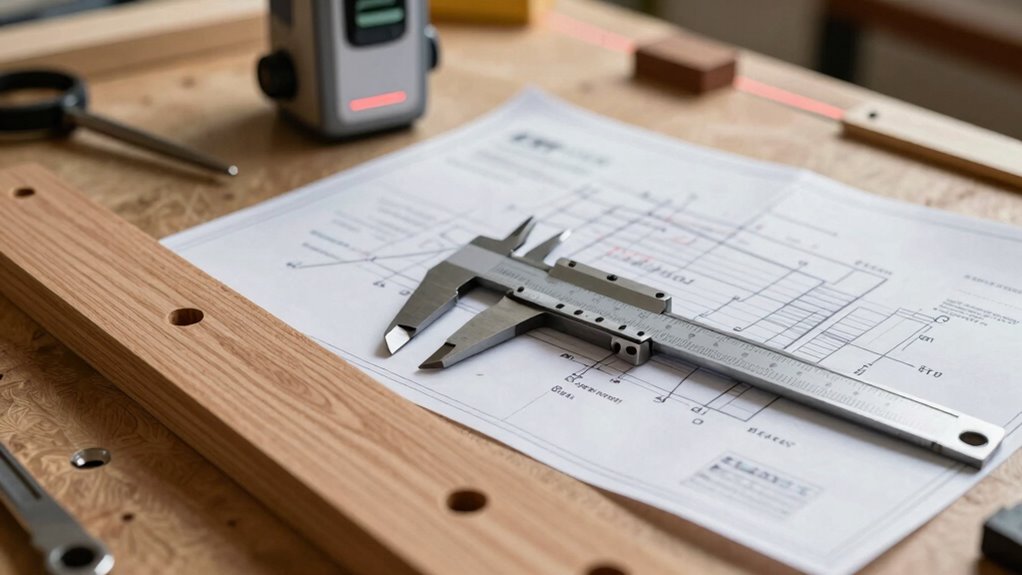
When you’re tackling a project that requires precise hole placement, getting it right the first time is essential. Whether you’re building furniture, installing hardware, or working on a DIY project, accurate layout can make or break your results. You might think that having the right tools is all you need, but without a solid layout, even the best measurement tools won’t save you from mistakes. Precision techniques can help you achieve flawless results, and they often begin with how well you plan and prepare.
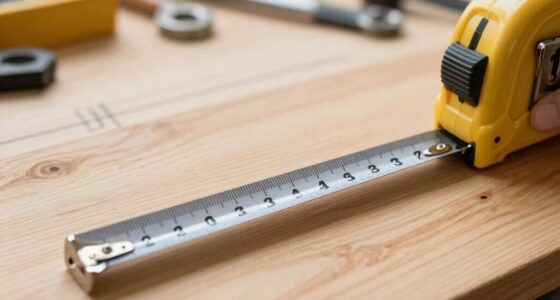
Start by evaluating your project’s requirements. Know exactly where each hole needs to go and what size it should be. This is where your measurement tools come into play. A good tape measure, a square, or even a laser level can help you mark out your layout with utmost accuracy. When you’ve got your measurements down, don’t rush the marking process. Take your time to make sure that every mark is precise; this is the groundwork for your entire project. Incorporating measurement accuracy techniques can further enhance your precision and confidence. Paying attention to layout planning and how it impacts your final assembly is equally important for successful results. Developing your precision skills through consistent practice can also significantly improve your confidence and outcomes.
Evaluating your project’s requirements and using precise measurement tools lay the foundation for flawless results. Take your time with the marking process.
Another effective technique is using a template. If you’re drilling multiple holes in a consistent pattern, creating a template can guarantee uniformity. This approach allows you to repeat the same measurements without rethinking them, enhancing both speed and accuracy. Templates are particularly useful when you’re working with larger materials where a single misalignment can affect the entire project. Practicing your layout skills regularly will also help you become more efficient and precise over time.
Finally, remember that practice makes perfect. The more you work with these precision techniques and measurement tools, the more intuitive the layout process becomes. You’ll develop a keen eye for detail, and soon enough, you’ll find that accurate hole placement feels second nature. Additionally, understanding the importance of workshop equipment can greatly improve your setup and ensure your measurements are as precise as possible.
As an affiliate, we earn on qualifying purchases.
Frequently Asked Questions
What Tools Are Essential for Effective Layout and Hole Placement?
For effective layout and hole placement, you’ll need several essential tools. Measuring tools like tape measures and calipers guarantee accuracy. Layout software can help you visualize your project before you start. Don’t forget to use marking techniques such as chalk lines or laser levels for precision. Finally, precision instruments like drill guides or jigs will enhance your accuracy, making sure every hole is exactly where it needs to be.
How Does Layout Impact Overall Project Efficiency and Cost?
Layout impacts your project’s efficiency and cost considerably. When you prioritize layout precision, you streamline the entire process, which can shorten your project timeline. Accurate measurements reduce errors, minimizing costly rework and delays. By conducting a thorough cost analysis, you’ll see that investing time in layout pays off in efficiency metrics, leading to smoother workflows. Ultimately, a strong layout foundation sets the stage for a successful and cost-effective project.
Can Layout Mistakes Be Easily Corrected?
Layout mistakes can be tricky to correct, but they aren’t impossible. You can make layout revisions to improve accuracy, though it often takes time and effort. Addressing these errors early helps with error prevention, saving you from costly rework down the line. By double-checking your layout before moving forward, you can minimize mistakes and keep your project on track. Remember, a solid layout lays the groundwork for success.
What Materials Are Most Forgiving for Hole Placement Errors?
Wood materials, metal materials, plastic materials, and composite materials each offer unique forgiveness for hole placement errors. When you work with wood, you can easily fill and sand mistakes. With metal, you can often reposition your holes if you’re careful. Plastic allows for some flexibility during drilling, while composite materials can be forgiving if you use the right tools. Each option has its advantages, so choose based on your project’s needs.
How Often Should Layout Techniques Be Updated or Revisited?
You should revisit your layout techniques regularly, ideally every few months or whenever you start a new project. Layout frequency can impact your overall accuracy and efficiency, so staying updated helps you avoid mistakes. Incorporating new tools or methods can enhance your skills, ensuring you’re always using the best practices available. Don’t hesitate to adjust your approach based on feedback or results; it’ll pay off in the long run.
Conclusion
So, you might think the secret to perfect hole placement is all in the drill, but surprise! It starts with a solid layout. It’s ironic, isn’t it? You could have the fanciest tools and still end up with crooked holes if you skip this essential step. By investing a little time in planning, you’re not just saving yourself headaches later; you’re also ensuring every hole is exactly where it should be. Who knew less could actually be more?
Halloween Picks
halloween
As an affiliate, we earn on qualifying purchases.