Air assist boosts your laser cutting and engraving by delivering cleaner edges and enhancing smoke control. It blows away debris and molten material, preventing re-solidification and ensuring sharper cuts. This keeps your laser beam effective, improving overall quality while prolonging the life of your equipment. Plus, it reduces maintenance issues by managing heat buildup. With these benefits, you’ll find it’s essential for achieving precise results. Stick around to discover more about maximizing your laser performance!
Key Takeaways
- Air assist enhances cutting quality by blowing away molten material, leading to sharper edges and intricate designs without re-solidification.
- It effectively pushes smoke away from the cutting area, maintaining laser beam clarity and improving the quality of cuts and engravings.
- Improved smoke control prolongs the life of optics, ensuring consistent performance and clarity during laser operations.
- By reducing heat buildup from smoke and debris, air assist minimizes wear on the laser, contributing to equipment longevity and fewer maintenance issues.
- The incorporation of air assist significantly enhances workflow, guaranteeing cleaner edges and optimal results in laser cutting and engraving projects.
When you’re working with lasers, understanding the role of air assist can greatly enhance your cutting and engraving quality. Air assist isn’t just an optional feature; it’s a game changer that helps you achieve better results. By introducing a stream of compressed air to your laser cutting process, you can markedly improve the edges of your cuts. This air stream interacts with the laser beam and the material, promoting ideal air dynamics that lead to cleaner edges and reduced post-processing time.
One of the main benefits of air assist is its impact on cutting precision. The high-pressure air helps blow away molten material and debris created during the cutting process, preventing it from re-solidifying on your workpiece. If you’ve ever noticed rough edges or burn marks on your materials, you might be aware of how frustrating that can be. With air assist, you’ll find that your cuts are sharper, allowing for intricate designs and finer details without compromising on quality. Additionally, proper airflow plays a crucial role in maintaining consistent cutting conditions and results. Ensuring adequate airflow management is essential for achieving optimal laser performance and consistent results.
One of the key advantages of air assist is its ability to enhance cutting precision, delivering sharper edges and finer details.
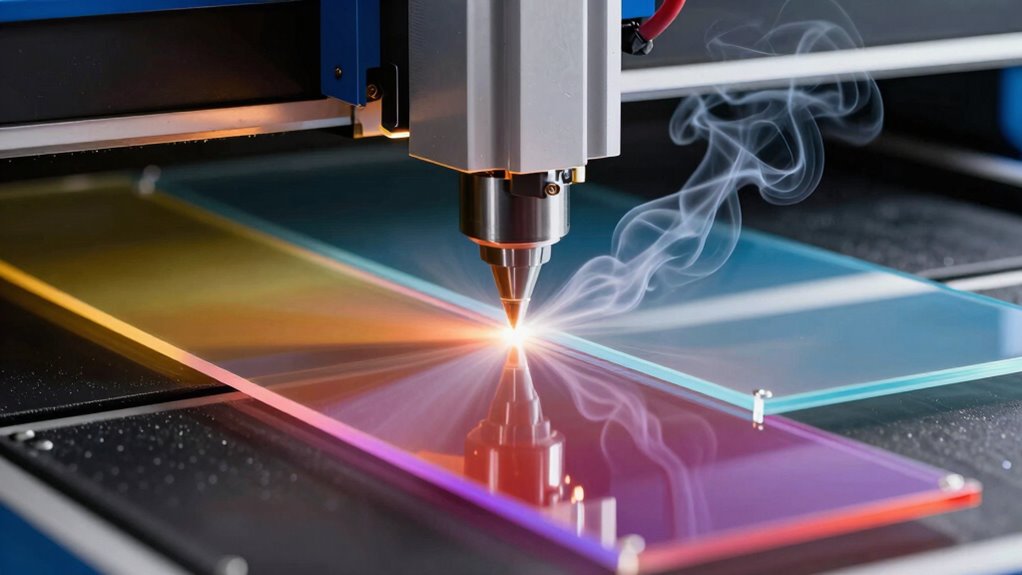
Another vital aspect of air assist is its ability to control smoke. When a laser cuts through material, it generates smoke, which can interfere with the laser beam. This obstruction reduces the effectiveness of your cuts, leading to uneven results. By using air assist, you can effectively push that smoke away from the cutting area, guaranteeing the beam remains unobstructed. This not only improves the quality of your engraving or cutting but also prolongs the life of your optics. You’ll notice that the overall cleanliness of your workspace improves, making it easier to see and evaluate your work as you go.
In addition to enhancing edge quality and smoke control, air assist contributes to the longevity of your equipment. By keeping the cutting area clear and reducing heat buildup from smoke and debris, you’re less likely to encounter wear and tear on your laser. This means fewer maintenance issues and a longer lifespan for your machine—definitely a win-win situation. Proper air dynamics are essential for maintaining optimal laser performance and preventing unnecessary damage.
Ultimately, if you’re serious about improving your laser cutting and engraving projects, don’t overlook air assist. Incorporating this feature into your workflow can make a noticeable difference in the quality of your work. With cleaner edges, better smoke control, and enhanced cutting precision, air assist guarantees you achieve the best possible results every time you fire up your laser.
As an affiliate, we earn on qualifying purchases.
Frequently Asked Questions
How Does Air Assist Affect Different Materials During Laser Cutting?
Air assist affects different materials by enhancing material reactions during laser cutting. It improves edge quality, especially in thicker materials, by reducing melting and burn marks. The type of gas you use—like nitrogen or oxygen—can influence cutting speed and the overall finish. Additionally, effective smoke extraction minimizes residue buildup, which can obscure the laser path and impact precision. By optimizing these factors, you achieve cleaner cuts across various materials.
Can Air Assist Be Adjusted for Various Laser Power Settings?
Imagine you’re a gardener, adjusting the water flow for delicate flowers. Similarly, you can adjust air assist for different laser power settings. By fine-tuning the airflow optimization and pressure settings, you guarantee that each cut flourishes, whether you’re working with wood or metal. Just like nurturing those blooms, the right adjustments enhance precision and quality, giving your projects the care they deserve. So, don’t hesitate to experiment and find what works best for you!
What Maintenance Is Required for Air Assist Systems?
To keep your air assist system running smoothly, regular maintenance is crucial. Start by checking the system components, like hoses and fittings, for wear or blockages. Clean filters monthly to guarantee ideal airflow, and inspect connections for leaks. Stick to a maintenance schedule that includes replacing worn parts and testing pressure levels. By staying proactive, you’ll enhance performance and prolong the life of your air assist system.
Does Air Assist Impact the Engraving Process Differently Than Cutting?
Air assist impacts engraving differently than cutting. Picture your laser carving intricate designs; the air assist keeps the engraving precision sharp, reducing smoke buildup that can blur details. Meanwhile, when cutting, it enhances cutting efficiency by blowing away debris and minimizing heat-affected zones. So, while engraving benefits from clarity and fine lines, cutting thrives on speed and cleanliness, ensuring both processes achieve stellar results with the help of air assist.
What Are the Cost Implications of Adding Air Assist to a Laser System?
Adding air assist to your laser system can lead to increased upfront costs, but a thorough cost analysis shows it often pays off in the long run. You’ll experience efficiency benefits, such as faster processing times and reduced material waste, which can greatly enhance your overall productivity. By investing in air assist, you’re likely to improve your output quality, ultimately boosting your profits and justifying the initial expense.
Conclusion
Incorporating air assist into your laser cutting process isn’t just a game changer; it’s like adding rocket fuel to your creativity. You’ll see sharper edges, reduced smoke, and an overall boost in quality that’ll leave you amazed. By fine-tuning your projects with this technique, you’re not just enhancing your work; you’re stepping into a whole new domain of precision. Embrace air assist, and watch your laser capabilities soar to incredible heights!