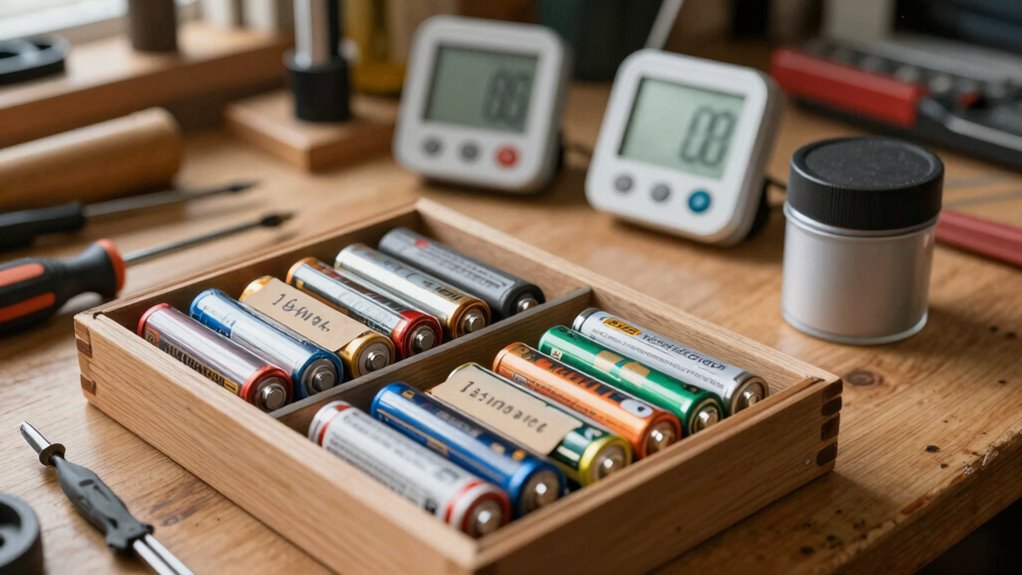

To make batteries last longer in your workshop, store them in a cool, dry place away from heat and sunlight. Keep the terminals insulated with caps or non-conductive tape and use non-metallic containers to prevent short circuits. Regularly check for corrosion, leaks, or damage, and remove batteries from devices if stored long-term. Proper storage methods can extend battery life considerably—learn more ways to optimize your storage techniques below.
Key Takeaways
- Store batteries in a cool, dry, and insulated environment away from heat sources and direct sunlight.
- Use non-conductive containers or original packaging to prevent short circuits and contamination.
- Regularly inspect batteries for corrosion, leaks, or damage, and clean terminals as needed.
- Remove batteries from devices if not in use for extended periods to prevent leaks and deterioration.
- Dispose of damaged or expired batteries properly at designated recycling centers to maintain safety and longevity.
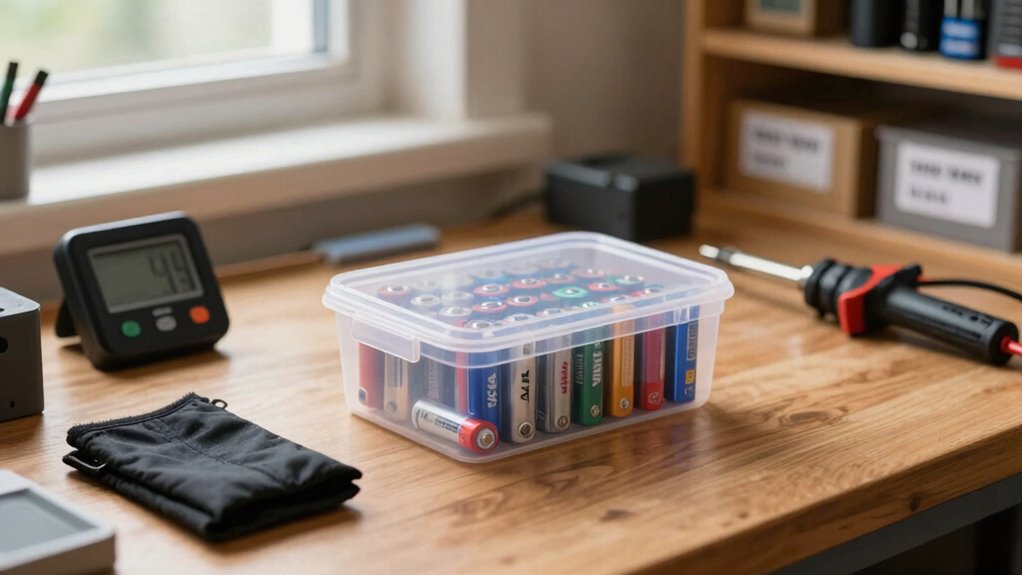
Storing batteries properly is essential to guarantee their safety and longevity. When you take the time to store them correctly, you prevent issues like battery corrosion, which can compromise their performance and pose safety risks. Corrosion occurs when the chemicals inside the battery leak and react with the surrounding environment, often resulting in a buildup of white or greenish deposits on the terminals. To avoid this, always keep your batteries in a cool, dry place and ensure the terminals are covered or insulated. Using terminal caps or wrapping them with non-conductive tape minimizes the chance of accidental contact that could cause corrosion.
Proper storage prevents corrosion and extends battery life by keeping terminals insulated and in a cool, dry environment.
Another vital aspect of proper storage is understanding how to dispose of batteries when they reach the end of their life. Proper disposal prevents environmental contamination and reduces the risk of chemical leaks that could damage your workspace or pose health hazards. Never throw batteries in the trash or pour them down the drain. Instead, locate a designated recycling or disposal center that accepts batteries in your area. Many communities offer special collection days or drop-off points for batteries, making it easy to dispose of them responsibly. Proper disposal isn’t just about environmental care; it also ensures you comply with local regulations and avoid potential fines.
If you’re storing batteries for an extended period, consider removing them from devices to prevent leaks and corrosion that can damage your equipment. Store batteries in their original packaging or in a dedicated container made of non-conductive material. Avoid storing batteries near heat sources or in direct sunlight, as high temperatures accelerate chemical reactions inside the cells, increasing the risk of leaks and decreasing overall lifespan. Additionally, keep batteries away from metal objects, such as keys or coins, which can accidentally short-circuit the terminals, causing sparks or even fires. Proper battery chemistry knowledge can help you make informed decisions about storage and handling to maximize their lifespan.
Maintaining a regular check on stored batteries is a good practice. Examine them periodically for signs of corrosion, leaks, or damage. If you notice any abnormalities, safely dispose of the batteries according to proper disposal procedures. This routine helps prevent potential hazards and ensures your stored batteries remain safe and ready for use when needed. Being familiar with chemical reactions within batteries can also aid in recognizing early signs of failure or damage. Moreover, understanding how different battery chemistries react under various conditions can guide you in choosing the most suitable storage methods for each type. Proper storage techniques and routine inspections can further extend battery life and prevent accidents. By following these guidelines, you not only extend the life of your batteries but also contribute to a safer, more environmentally-friendly workspace. Proper storage, combined with responsible disposal, is the key to keeping your batteries in top condition while protecting yourself and the environment.

Battery Terminal Covers 6PCS Car Battery Top Post Cap with Shim Vehicle Battery Terminal Insulator Protector for Automotive, RV and Boat
- Universal Compatibility: Fits most vehicle battery posts
- Complete Set: Includes 6 covers and 6 shims
- Corrosion Protection: Prevents corrosion and short circuits
As an affiliate, we earn on qualifying purchases.
As an affiliate, we earn on qualifying purchases.
Frequently Asked Questions
Can Storing Batteries in the Freezer Extend Their Lifespan?
Storing batteries in the freezer isn’t recommended for extending their lifespan. Extreme cold can damage the internal chemistry and reduce their effectiveness. Instead, focus on proper storage, like keeping batteries in a cool, dry place away from metal objects. Good charging habits and responsible battery recycling help prolong their life. Remember, maintaining ideal storage conditions and avoiding rapid discharge or overcharging are key to maximizing battery longevity.
How Does Temperature Affect Different Battery Chemistries?
You might think cold storage always extends battery life, but the truth depends on battery chemistry and storage temperature. Different chemistries, like lithium-ion or nickel-metal hydride, react uniquely to temperature changes. Cooler storage generally slows chemical reactions, prolonging lifespan, but too cold can cause damage. For ideal results, understand your specific battery chemistry, keep storage temperatures moderate, and avoid extreme cold or heat to maximize longevity.
Should I Store Batteries in Their Original Packaging?
Storing batteries in their original packaging is a good idea because it helps prevent physical damage and reduces contact with conductive materials. When you’re done using batteries, consider battery recycling options to dispose of old ones responsibly. Use storage container options like plastic cases or insulated boxes to keep batteries organized and safe. These measures help extend their lifespan, guarantee safety, and facilitate easy access when needed.
What Is the Best Way to Prevent Battery Leaks?
To prevent battery leaks, you should regularly check for signs of battery corrosion and remove any leaking batteries immediately. Use storage tips like keeping batteries in a cool, dry place and avoiding contact with metal objects, which can cause short circuits. Always store batteries upright and in their original packaging if possible. Proper storage and handling greatly reduce the risk of leaks, ensuring safety and extending battery life.
How Often Should I Check Stored Batteries for Safety?
You should check stored batteries at least once every three to six months for safety. During these inspections, look for signs of leaks, corrosion, or swelling, and make sure they haven’t reached their end of life, requiring proper battery disposal. Also, consider their charging cycles—if they’ve gone through many, they might need replacing. Regular checks help prevent accidents and ensure your batteries remain safe and effective for future use.
Conclusion
By following these simple storage tips, you’ll extend your batteries’ lifespan and keep your tools running smoothly. Remember, a stitch in time saves nine—taking a little extra care now prevents bigger problems later. Store batteries in a cool, dry place, keep terminals clean, and avoid extreme temperatures. With proper storage, you’ll get the most out of every charge and guarantee your workshop stays well-equipped. Don’t let your batteries go to waste—treat them right and watch them work for you longer.