When choosing a planer for your small shop, consider portability and size first. Portable planers are compact and easy to store, while benchtop models offer more robustness if space allows. Set a budget that fits your needs and research reliable brands. Don’t forget to check maintenance requirements and noise levels, especially in shared spaces. Finding the right fit can make your projects smoother and more enjoyable, and there’s plenty more to explore to guarantee you make the best choice.
Key Takeaways
- Assess your workspace dimensions to ensure the planer fits comfortably and allows for efficient wood feeding and movement.
- Set a realistic budget that meets your needs, avoiding overinvestment in high-end models if you’re a beginner.
- Research reliable brands and read customer reviews to ensure quality and longevity before making a purchase.
- Consider maintenance requirements, opting for models that allow easy blade replacement and upkeep for frequent use.
- Evaluate noise levels, especially if working in shared spaces, and choose a portable model if mobility is essential.
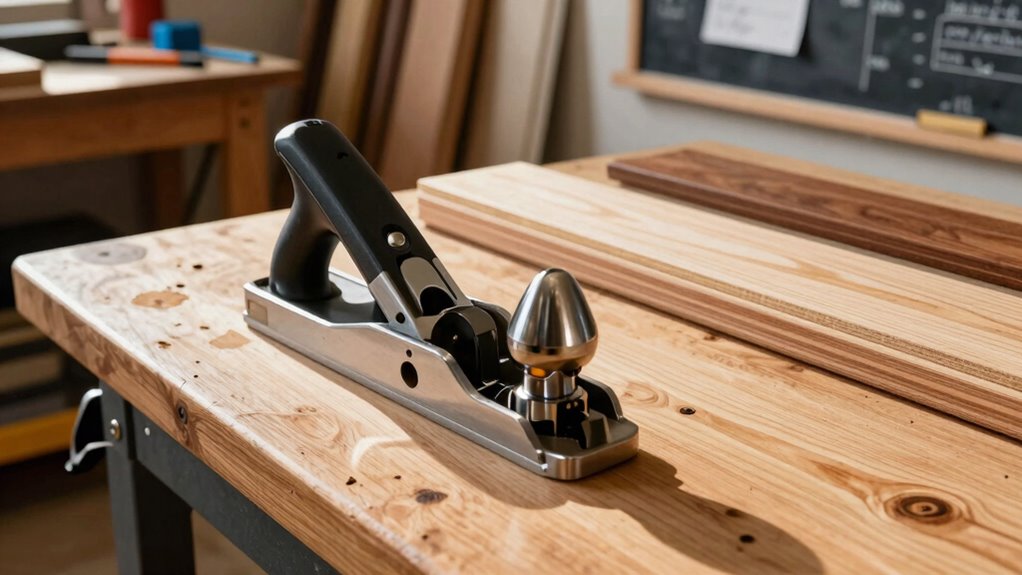
When setting up a small shop, choosing the right planer can make all the difference in your woodworking projects. You’ll want to evaluate various planer types, such as portable, benchtop, or stationary models. Each type has its own advantages and drawbacks, so contemplate what suits your specific needs best. If you’re tight on space, a portable planer could be a great option since it offers flexibility and easy storage. However, if you’re looking for something more robust, a benchtop model might be ideal, provided you’ve got the room for it.
Budget considerations are also essential. You don’t want to break the bank on a high-end model if you’re just starting out. Set a budget that reflects your shop’s needs, but be aware that sometimes spending a bit more on a reliable brand can save you headaches down the road. Brand reliability plays a significant role in your decision-making process. Researching customer reviews and product ratings can help you find a planer that meets your expectations for quality and durability.
Consider your budget carefully; investing in a reliable brand can save you from future issues.
Size limitations in your shop can influence your choice, too. You need a machine that fits comfortably while allowing you enough space to work efficiently. Measure your workspace beforehand, and don’t forget to account for any additional room needed for feeding wood through the planer. Proper workspace planning can help ensure your chosen model fits seamlessly into your setup. Additionally, considering power options can help you select a machine that aligns with your available outlets and workflow. Knowing the power requirements of your selected planer can prevent future electrical issues and ensure smooth operation.
While you’re at it, think about maintenance tips for the model you’re eyeing. Some planers require more upkeep than others, so check how easy it is to replace blades or perform routine maintenance. You’ll want a machine that’s straightforward to take care of, especially if you’re planning to use it frequently. Additionally, consider the noise levels of the planer, as some models operate much louder than others, which could be disruptive in certain environments. Incorporating maintenance ease into your decision can help prolong the lifespan of your planer and ensure consistent performance.
Noise levels can’t be overlooked, either. Some planers are louder than others, which could be an issue if you’re working in a shared space or sensitive area. Portability features are worth evaluating if you plan to move your planer around. A lightweight model with a sturdy handle makes it easy to transport when you need to.

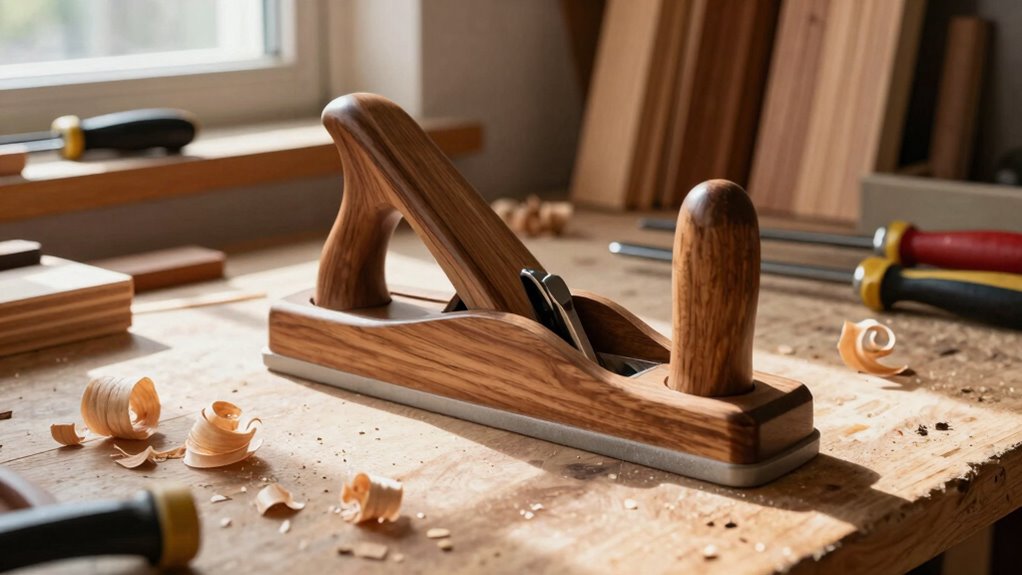
JORGENSEN No.101 Mini Wood Planer – Mini Hand Planer for Woodworking, Block Plane, Small Hand Plane for Trimming, Wood Planing, Craft, Professional Ductile Iron Body, Adjustable Cutting Depth
- Professional Blade Material: Made of durable O1 tool steel
- Heavy-Duty Construction: Ductile iron body for rugged use
- Adjustable Cutting Depth: Easily set and fix blade depth
As an affiliate, we earn on qualifying purchases.
As an affiliate, we earn on qualifying purchases.
Frequently Asked Questions
What Is the Average Lifespan of a Planer?
The average lifespan of a planer typically ranges from 10 to 20 years, depending on the type and how well you maintain it. Regular planer maintenance, like cleaning blades and lubricating parts, can extend its life considerably. You’ll find that quality varies among planer types, with higher-end models generally lasting longer. By taking care of your tool and choosing wisely, you can guarantee it serves you well for many projects to come.
Can I Use a Planer for Softwood and Hardwood?
Absolutely, you can use a planer for both softwood and hardwood. While softwood’s lower wood density makes it easier to work with, hardwood demands more from your planer types due to its density. If you’ve got a versatile planer, it’ll handle both with ease. Just be mindful of the settings; adjusting for wood density guarantees a smoother finish. So, whether you’re crafting a soft pine piece or a dense oak project, you’re covered!
How Often Should I Sharpen Planer Blades?
You should sharpen your planer blades regularly, typically after every few hours of use, depending on your material and workload. Blade maintenance is key to achieving smooth cuts and prolonging your tool’s life. Pay attention to the quality of the finish; if it starts to degrade, it’s time to sharpen. Use effective sharpening techniques, like honing and grinding, to keep those blades in top shape for your projects.
Are There Portable Planers for Small Spaces?
Portable planers are a game-changer for small spaces. With their compact design, they fit snugly in your workshop, making them feel like a miracle worker. You’ll find a variety of power options, from corded to battery-operated models, ensuring you can tackle any project without being tethered to a wall. Plus, their lightweight nature lets you easily move them around as needed. You won’t regret adding one to your toolkit!
What Safety Features Should I Look for in a Planer?
When choosing a planer, look for safety features like effective dust collection to keep your workspace clean and reduce hazards. Make certain it has a reliable blade adjustment system, allowing you to change blades easily and safely. Also, check for safety guards to protect your hands during operation and a sturdy base to prevent tipping. These features not only enhance safety but also improve your overall experience while using the planer.
Conclusion
In the end, selecting a planer for your small shop is like finding the perfect partner; it should complement your needs and elevate your projects. Keep your budget, space, and specific tasks in mind, and don’t rush the decision. With the right choice, you’ll transform rough wood into smooth masterpieces and enjoy every moment spent crafting. Trust your instincts, and you won’t just choose a tool—you’ll gain a reliable companion for your woodworking journey.