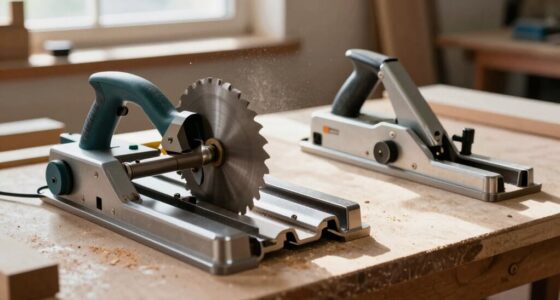
If you use a miter saw, you know dust can be a real headache. Fine particles fly everywhere, cluttering your workspace and posing health risks when inhaled. Even with built-in dust collection systems, you often need a vacuum for better results. Plus, constant cleanup can distract you from your project. Implementing effective dust management strategies can greatly improve your environment. Want tips on how to tackle this problem more efficiently? There’s more to discover about keeping your workspace clean.

Get business pricing on tools and workshop supplies
- Business-only prices and quantity discounts
- Tax-exempt purchasing
- Multiple users, one account, clear invoices
Key Takeaways
- Fine dust from miter saws creates a messy environment and poses health risks when inhaled.
- Built-in dust collection systems often fall short for larger projects, requiring additional cleanup measures.
- Connecting a quality shop vacuum to the saw enhances dust extraction and simplifies cleanup efforts.
- Using drop cloths or tarps can effectively catch dust, making post-project cleanup easier and more efficient.
- Regular maintenance of ventilation systems and air filtration improves overall air quality and workspace safety during woodworking tasks.
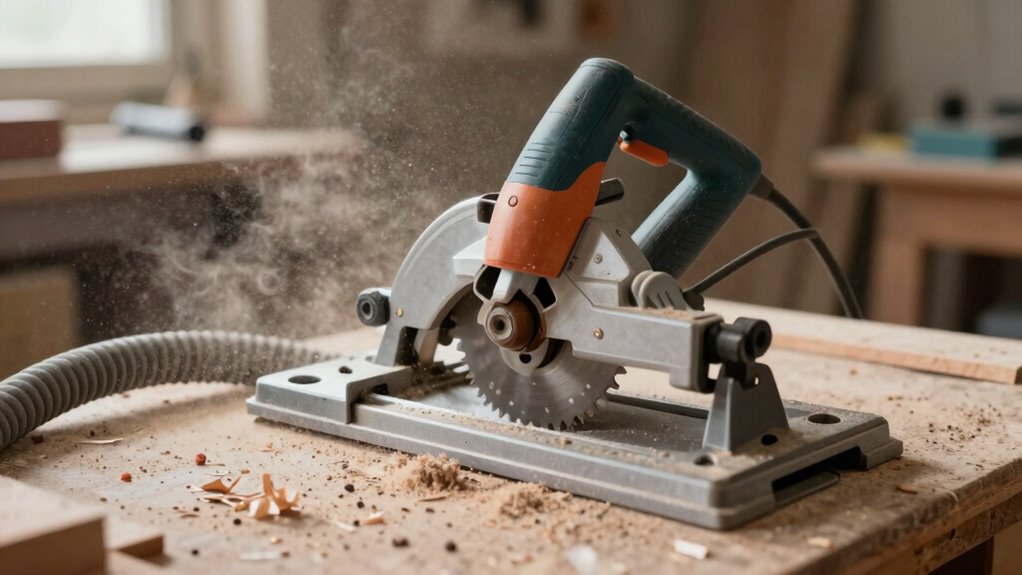
When you’re using a miter saw, it’s hard to ignore the dust problem that quickly builds up around your workspace. The fine particles generated during cutting can create a messy environment and even pose health risks if inhaled. You might find yourself constantly sweeping or vacuuming, but without effective dust extraction, the problem seems never-ending.
Implementing a good dust extraction system can make a world of difference. Many miter saws come with built-in dust bags or ports designed to connect to a shop vacuum. If you haven’t already, consider investing in a quality vacuum that fits your saw’s specifications. This setup not only reduces the mess but also makes cleanup easier. When you’re cutting wood, you’ll notice that most of the dust gets sucked away, allowing you to focus on your project without being distracted by flying debris.
However, relying solely on these built-in systems might not be enough for larger projects or when you’re dealing with particularly dusty materials. This is where effective cleanup techniques come into play. Before you start cutting, lay down a drop cloth or tarp to catch a considerable portion of the dust. It’s a simple step that can save you time when it comes to cleaning up afterward. When you’re finished, just gather the edges of the cloth and shake it outside or vacuum it up.
Another technique you might consider is positioning your saw near a door or window for better ventilation. This setup not only helps with dust control but can also improve air quality in your workspace. If you have a portable saw, moving it outside for larger cuts can greatly minimize indoor dust accumulation. Additionally, proper workspace organization can help reduce the spread of dust and make cleanup more manageable. Using dust containment methods can further improve your workspace cleanliness and health safety. Incorporating air filtration systems into your workspace can also significantly reduce airborne dust particles, enhancing safety and comfort during woodworking tasks. Regularly maintaining and upgrading your ventilation systems can ensure ongoing air quality improvement.
Products Worth Considering

Ring Alarm 14-Piece Wireless Security System Kit

Dyson Cyclone V10 Origin Cordless Vacuum

Dyson V8 Cyclone Cordless Vacuum
As an affiliate, we earn on qualifying purchases.
Frequently Asked Questions
Can I Use a Shop Vac With My Miter Saw?
Yes, you can use a shop vac with your miter saw! Most miter saws are designed with vacuum compatibility, making dust management easier. Simply attach the shop vacuum to the dust port of your saw. This setup helps capture sawdust and debris, keeping your workspace cleaner. Just confirm your shop vacuum has sufficient suction power to handle the volume generated. You’ll notice a significant difference in cleanliness and efficiency while you work!
What Are the Best Dust Collection Bags for Miter Saws?
When you’re tackling a woodworking project, choosing the right dust collection bags is like picking the perfect partner for a dance. Look for bags with good capacity and durability, as they’ll catch the flying particles like a net in the wind. Confirm they’re compatible with your miter saw to avoid frustrating compatibility issues. Features like easy attachment and a sturdy design will keep your workspace clean and your creativity flowing.
How Often Should I Clean My Miter Saw?
You should clean your miter saw regularly, ideally after every use. Dust buildup can affect its performance and accuracy, so make it a maintenance habit. Wipe down the surfaces, check the blade for debris, and clear out any dust from the motor area. Keeping your saw clean not only prolongs its lifespan but also guarantees safer operation. Follow these maintenance tips to keep your miter saw in top shape!
Are There Aftermarket Dust Collection Accessories Available?
Yes, there are plenty of aftermarket dust collection accessories available. In fact, studies show that proper dust collection can improve efficiency by up to 40%. You can enhance your miter saw setup with specialized bags, hoses, or even dedicated vacuum systems. These aftermarket solutions not only boost dust collection efficiency but also keep your workspace cleaner and safer. So, investing in these accessories can greatly enhance your cutting experience!
Does the Size of the Blade Affect Dust Production?
Yes, the blade diameter definitely affects dust production. Larger blades typically create more dust due to increased cutting surface area, which can lead to more debris. To improve dust control, consider using a blade that matches your project’s needs while also optimizing your dust collection setup. By being mindful of the blade size, you can minimize the mess and improve your workspace’s cleanliness, making your cutting tasks more efficient and enjoyable.
Conclusion
In the battle against sawdust, your miter saw’s effectiveness can be clouded like a sunny day hidden behind stormy clouds. By investing in proper dust collection systems and maintaining a clean workspace, you can transform chaos into clarity. Don’t let dust obscure your vision of precision; tackle it head-on. With the right strategies, you’ll not only protect your health but also enhance the quality of your cuts, turning frustration into flawless finishes.