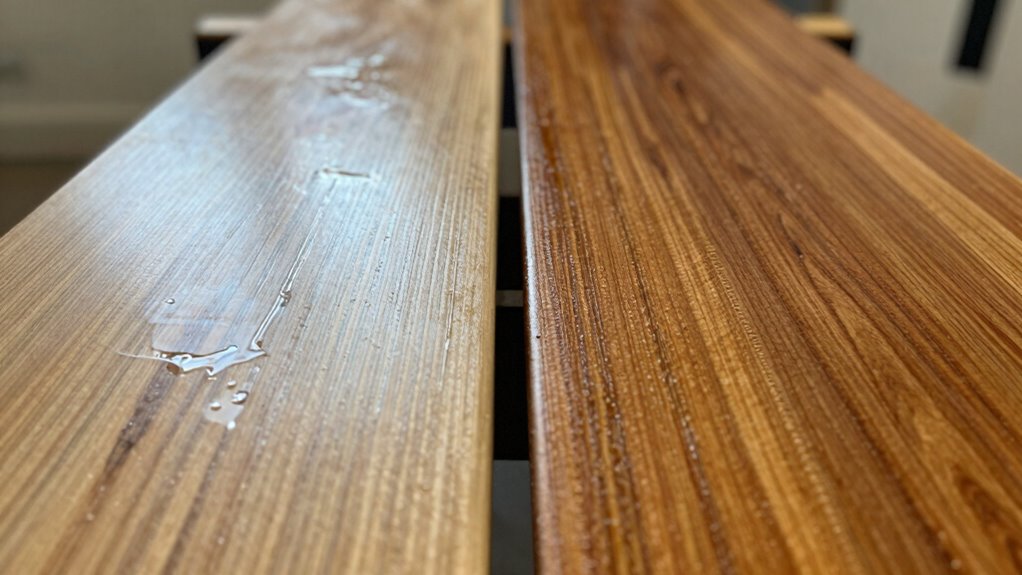

When choosing between water-based and oil-based finishes, consider your priority for durability, environmental impact, and appearance. Oil-based options are tougher and add warmth but have longer drying times and higher VOCs. Water-based finishes dry faster, are eco-friendlier, and preserve a natural look, making them ideal for indoor projects with less wear. For high-traffic or outdoor surfaces, oil-based is often better. To make the best choice, weigh these factors carefully—more insights await as you continue.
Key Takeaways
- Consider durability needs: oil-based finishes for high-traffic or outdoor use, water-based for indoor or less-worn surfaces.
- Prioritize environmental impact: water-based finishes have lower VOCs and are more eco-friendly.
- Evaluate application and drying time: water-based dries faster and is easier to apply, while oil-based takes longer.
- Decide on the desired aesthetic: oil-based adds warmth and richness; water-based maintains a clear, natural wood look.
- Balance safety and project requirements: choose water-based for healthier indoor environments; oil-based for maximum toughness.
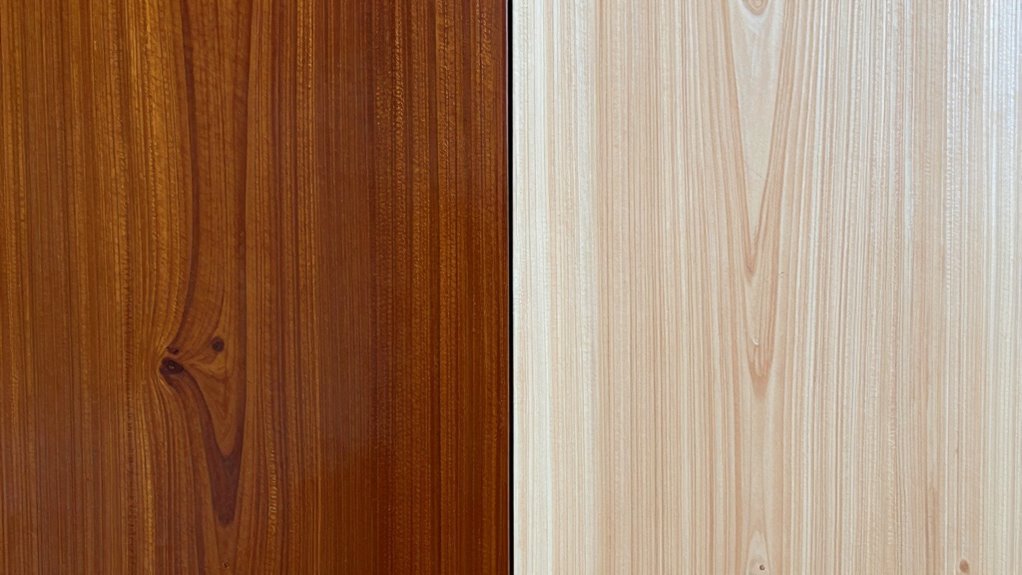
When choosing a finish for your woodworking project, understanding the differences between water-based and oil-based finishes is essential. One of the first considerations is durability concerns. Oil-based finishes are renowned for their toughness and resistance to wear, making them ideal for surfaces that endure frequent handling or exposure to elements. They penetrate deeply into the wood, forming a robust barrier that guards against scratches, dents, and moisture. Water-based finishes, while improving steadily, tend to be less durable over time. They can be more susceptible to scratches and may require reapplication sooner, especially on high-traffic surfaces. However, advancements have enhanced their resilience, so if you choose a high-quality water-based product, you can still achieve a long-lasting finish. The key is selecting the right product for your specific needs and understanding that oil-based finishes often hold up better under demanding conditions. Additionally, considering the application process and drying times can influence your overall satisfaction with the final result. Environmental impact is another critical factor that influences your decision. Oil-based finishes typically contain higher levels of volatile organic compounds (VOCs), which can release harmful fumes into the environment during application and curing. These fumes not only pose health risks but also contribute to air pollution and smog formation. They often have a stronger smell and require proper ventilation when used indoors. In contrast, water-based finishes are generally lower in VOCs, making them a more environmentally friendly option. They emit fewer fumes and are safer to work with in enclosed spaces, reducing your exposure to potentially hazardous chemicals. Additionally, water-based products tend to have a smaller carbon footprint during manufacturing and disposal. If sustainability and reducing environmental impact are priorities for you, water-based finishes offer a compelling choice, provided their durability meets your project’s requirements. Ultimately, your decision hinges on balancing durability concerns with environmental considerations. If your project demands maximum resilience—say, for a tabletop or outdoor furniture—an oil-based finish might be the better option, despite its environmental drawbacks. Conversely, if you prefer a safer, eco-friendlier finish for indoor furniture that won’t be subjected to heavy use, a high-quality water-based finish can deliver excellent results with less environmental impact. It’s also worth considering the look you want; water-based finishes tend to dry clearer and faster, preserving the natural beauty of the wood, while oil-based finishes add warmth and a richer hue. By weighing these factors carefully, you can choose a finish that aligns with your priorities and ensures you won’t have regrets after completing your woodworking project.

Varathane Water-Based Ultimate Satin Polyurethane
- Indoor wood surface protection: Protects furniture, windows, cabinets, trim
- Water-based formula: Dries quickly, easy soap and water cleanup
- Fast drying time: Touch dry in 30 minutes, recoat in 2 hours
As an affiliate, we earn on qualifying purchases.
As an affiliate, we earn on qualifying purchases.
Frequently Asked Questions
Are Water-Based Finishes More Eco-Friendly Than Oil-Based Options?
Yes, water-based finishes are generally more eco-friendly than oil-based options. They offer eco-friendly benefits because their chemical composition contains fewer volatile organic compounds (VOCs), reducing harmful emissions. This means you’ll breathe easier and lessen environmental impact. Plus, water-based finishes dry faster and cleanup is easier with water, making them a smarter, greener choice for your projects. You’ll enjoy a healthier, more sustainable finish without sacrificing durability.
How Long Does Each Type of Finish Typically Last?
Imagine your finish as a shield—water-based lasts around 2-5 years, while oil-based can stand strong for 5-10 years. The durability comparison shows oil-based finishes resist wear longer, but they may demand more maintenance, like reapplication or recoating. Water-based options dry faster and are easier to touch up, making them ideal for quick fixes. Your choice depends on how much upkeep you’re willing to invest for lasting beauty.
Can Water-Based Finishes Be Used Outdoors Effectively?
Yes, water-based finishes can be used outdoors effectively if you choose one with good weather resistance and UV protection. Look for products specifically designed for exterior use, as they’ll withstand sun, rain, and temperature changes better. Regular maintenance and reapplication will also help prolong their lifespan. With the right product, you’ll enjoy a clear, eco-friendly finish that protects your outdoor surfaces without fading or peeling quickly.
Do Oil-Based Finishes Require Special Disposal Methods?
Oil-based finishes demand careful disposal because they’re classified as hazardous waste, requiring adherence to specific disposal regulations. You shouldn’t pour leftover oil-based products down drains or onto the ground. Instead, you should store residuals safely and take them to designated hazardous waste collection centers. Proper disposal prevents environmental harm, ensuring you stay compliant and environmentally responsible. So, always check local guidelines before handling or discarding oil-based finishes to avoid penalties and protect nature.
Are There Health Risks Associated With Oil-Based Finishes?
Yes, oil-based finishes pose health risks like toxic fumes and skin irritation. When you work with them, you might inhale harmful vapors that can cause respiratory issues, so make certain proper ventilation. Skin contact can lead to irritation, so wear gloves and protective clothing. Always handle these finishes carefully, and wash thoroughly afterward to minimize health risks. Staying cautious helps you enjoy your project without unnecessary health concerns.
Conclusion
When choosing between water-based and oil-based finishes, remember that 70% of professionals prefer water-based for its quick drying and low odor. However, if durability matters most, oil-based offers a longer-lasting protective coat. Consider your project’s needs and environment carefully. By understanding these key differences, you’ll sidestep regret and make an informed choice. Ultimately, selecting the right finish ensures your work looks great and lasts for years to come.