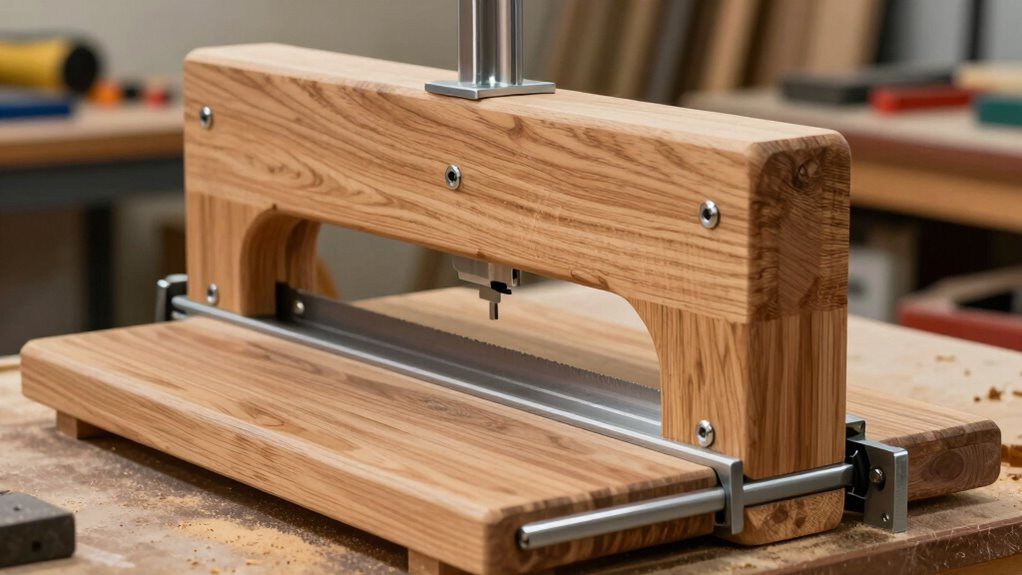
A bigger bandsaw capacity helps when you need to cut thicker or larger materials safely and efficiently. Using riser blocks can increase your saw’s height capacity, but only if you choose the right materials and guarantee proper installation. Poor material choice or improper setup can lead to safety risks or tool failure. To make the most of a larger capacity, you also need regular maintenance and safety checks. Keep going to discover more about making your bandsaw work best for you.
Key Takeaways
- Larger bandsaw capacities often require taller riser blocks to accommodate bigger blades and cuts safely.
- Bigger capacity bandsaws benefit from increased riser block size by improving stability and reducing blade stress.
- Using larger riser blocks enhances safety when cutting thick or wide materials, preventing blade pinching or binding.
- Properly matched riser blocks ensure safe operation by maintaining correct tension and alignment for larger blades.
- Upgrading to bigger riser blocks can extend bandsaw versatility, allowing for more complex and larger projects safely.
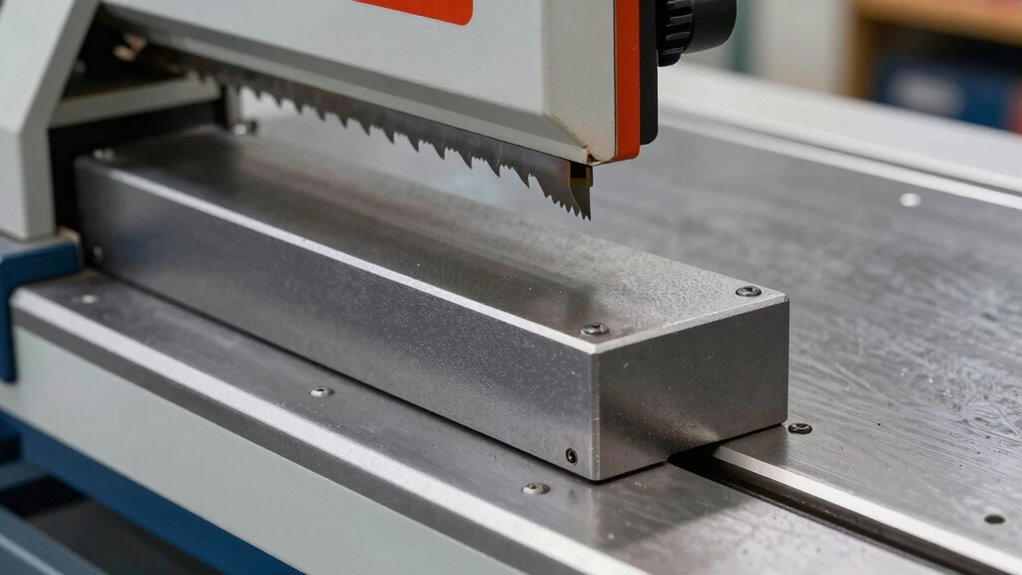
Riser blocks are essential components used to elevate plumbing fixtures, machinery, or equipment to the desired height, ensuring proper alignment and clearance. When choosing riser blocks, safety considerations should be your top priority. You need to guarantee that the materials used can withstand the environment they’ll be installed in, whether that’s exposed to moisture, chemicals, or extreme temperatures. Inadequate material selection can lead to deterioration or failure over time, posing safety risks like leaks, structural instability, or equipment malfunction. To prevent these issues, always verify that the riser block’s material is compatible with the application environment. For example, if you’re working in a humid or corrosive setting, opt for non-corrosive materials like stainless steel or certain plastics to guarantee longevity and safety. Proper material selection is also crucial for ensuring easy maintenance and long-term durability.
Material compatibility isn’t just about durability; it also impacts safety. Some materials might react adversely with the substances they come into contact with, causing deterioration or releasing harmful substances. For instance, using a riser block made of a material incompatible with certain chemicals could lead to corrosion, weakening the structure, and possibly causing leaks or failures. This could result in safety hazards, including water damage or hazardous spills. Consequently, it’s vital to review the chemical and environmental conditions before selecting your riser blocks.
In addition to safety considerations, you should evaluate the load-bearing capacity of the riser block relative to the equipment it supports. Overloading a riser block that isn’t rated for the weight can cause cracking or collapse, risking damage to your equipment and creating safety hazards. Always follow manufacturer specifications and select a riser block with a suitable capacity. Proper installation is equally important; make sure the riser block is level and securely anchored to prevent shifting or instability.
When it comes to safety, don’t overlook the importance of regular inspections. Check for signs of wear, corrosion, or cracking, especially in harsh environments. Maintaining the integrity of your riser blocks preserves safety and prevents costly failures later on. By carefully considering material compatibility and safety factors, you can guarantee that your riser blocks serve their purpose effectively and reliably, supporting your equipment while keeping everyone safe. Additionally, selecting riser blocks with appropriate safety features can further enhance overall safety and performance.

Grizzly Industrial T25555 – Riser Block Kit for G0555LX/G0555LA35
- Increases cutting height: Boosts capacity to 12 inches
- Complete hardware included: Includes all necessary parts and blade
- High air suction: 1700 CFM airflow capacity
As an affiliate, we earn on qualifying purchases.
As an affiliate, we earn on qualifying purchases.
Frequently Asked Questions
Can Riser Blocks Be Added to Any Bandsaw?
Yes, you can add riser blocks to many bandsaws, but it depends on your model’s design. Before installing, confirm your bandsaw’s frame can accommodate the extra height without affecting blade tension or motor horsepower. Riser blocks increase capacity, but you might need to adjust blade tension for thicker cuts. Always verify compatibility with your saw’s specifications to avoid straining the motor or compromising safety.
How Do Riser Blocks Affect Bandsaw Stability?
Riser blocks improve your bandsaw’s stability by providing better support for larger blades, which helps maintain proper blade tension. This added support reduces vibration, making cuts smoother and safer. With increased stability, you’ll find it easier to control the saw and achieve precise results. Just make certain the riser blocks are properly installed and compatible with your machine to maximize these benefits and prevent any wobbling or instability during operation.
Are Riser Blocks Compatible With All Blade Types?
You might think riser blocks work with every blade type, but that’s not true—they’re not compatible with all blades. When installing riser blocks, you need to consider blade tension and motor horsepower, as some setups demand specific blade sizes and tension levels. For best performance, check your bandsaw’s specifications first. Using incompatible blades could turn your powerful machine into a clunky, dangerous beast, so be cautious!
What Is the Maximum Blade Length With Riser Blocks?
With riser blocks, your bandsaw can accommodate a maximum blade length of around 144 inches, depending on your model. This capacity upgrade allows you to cut larger, thicker pieces more efficiently. By increasing the blade length, you expand your cutting capabilities, making it easier to handle bigger projects. Always check your specific bandsaw’s manual to confirm the exact maximum blade length and verify compatibility before upgrading.
Do Riser Blocks Require Professional Installation?
Did you know that improper installation can increase your risk of accidents by 30%? Riser blocks typically don’t require professional installation, but you should carefully follow the manufacturer’s instructions. Pay attention to safety precautions, like ensuring the blocks are securely fastened and aligned. If you’re unsure or uncomfortable with the process, it’s wise to consult a professional to guarantee safe, correct installation and avoid potential damage or injury.
Conclusion
Just like lifting a mountain to see the horizon, adding riser blocks expands your bandsaw’s potential, opening new horizons in your woodworking journey. It’s not just about size; it’s about embracing the opportunity to create bigger, bolder projects. Remember, the right tools elevate your craft—turning what once seemed impossible into your next masterpiece. So, when you consider a bigger capacity, think of it as reaching for new heights, where your true craftsmanship can truly shine.