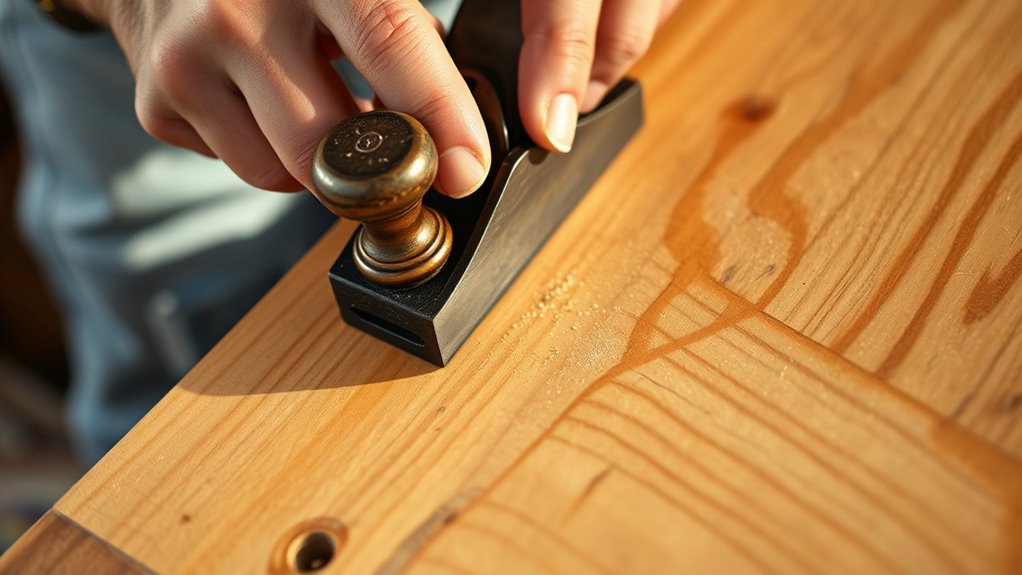

To use a hand plane effectively, start by ensuring the blade is sharp and properly adjusted—set it shallow to remove thin shavings and align it evenly across the mouth. Use smooth, controlled strokes, following the grain to create a flat, smooth surface. Maintain steady pressure, keep the plane level, and use your whole arm for stability. Practicing these adjustments and techniques will help you achieve professional results with ease. Keep going to master the details.
Key Takeaways
- Sharpen the blade regularly using a sharpening stone or honing guide for clean, smooth cuts.
- Adjust the blade depth to remove thin shavings (~1/64 inch) for better control.
- Set the blade evenly across the mouth to ensure consistent contact and a smooth surface.
- Follow the grain direction with smooth, controlled strokes to minimize tear-out and achieve a fine finish.
- Use long, steady pulls or pushes, maintaining consistent pressure and body balance for effective planing.
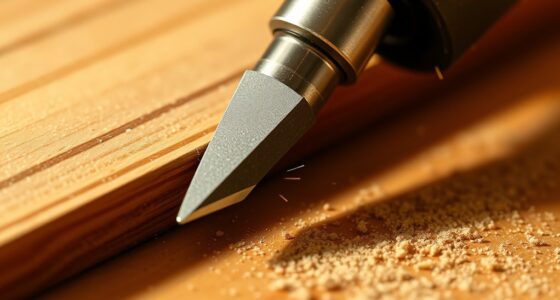
Using a hand plane is an essential skill for woodworkers who want to achieve smooth, precise surfaces. Before you start, it’s vital to understand the importance of blade sharpening. A sharp blade makes your work easier and produces cleaner, more uniform shavings. Dull blades require more force, which can lead to uneven cuts or gouges, so taking the time to sharpen your blade regularly is worth the effort. Use a sharpening stone or honing guide to maintain a keen edge, guaranteeing that the blade slices through the wood effortlessly. Proper blade sharpness directly influences the quality of your work and reduces fatigue during use.
Another key aspect is wood selection. Not all woods behave the same under a hand plane. Hardwoods like maple or oak demand a sharper blade and more careful technique, while softer woods like pine or cedar can be planed more easily. Choosing the right type of wood for your project also affects the outcome; straight-grained, defect-free pieces are easier to work with and produce better results. When selecting wood, inspect for knots, splits, or warping, which can hinder your planing process and cause uneven surfaces. The grain direction is also important—planing along the grain creates smoother surfaces and reduces tear-out, especially when the blade is properly sharpened.
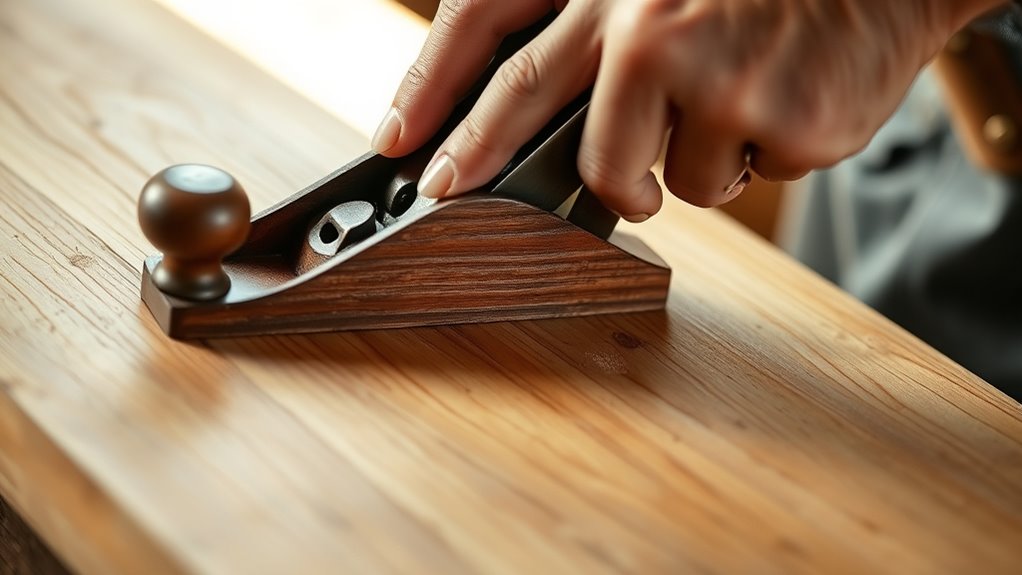
Once you’ve prepared your blade and selected appropriate wood, you can focus on adjusting your hand plane. Set the blade depth so it just cuts a thin shaving—about 1/64 inch or less—allowing for controlled, smooth removal of material. Too deep, and you’ll struggle to get a clean finish; too shallow, and progress slows. Adjust the blade alignment so it protrudes evenly across the mouth of the plane, ensuring consistent contact with the wood. Test your adjustments on scrap pieces before working on your project, fine-tuning as needed.
Your stroke technique also plays a significant role. Use smooth, even pulls or pushes, maintaining consistent pressure and following the grain direction. Start with long, steady strokes, focusing on keeping the plane level and stable. Avoid rocking the plane or applying uneven force, as this can cause dips or ridges. When planing, keep your body balanced and use your whole arm rather than just your wrist, which provides better control and reduces fatigue. Regularly check your work to ensure you’re achieving the desired flatness and smoothness, making adjustments to your technique or the plane’s settings as you go.
With practice, mastering blade sharpening, wood selection, and proper stroke technique will help you produce professional-quality surfaces. The more attention you pay to these fundamentals, the better your results will be, making hand planing an indispensable skill in your woodworking toolbox.

Chisel Sharpening Jig, Wood Honing Guide for Chisels and Planes Width 0.1" to 2.8" with Sharpening Angle Fixture, Angle Gauge from 10° to 45°(With 2 Sharpening Stones)
- Accurate Honing Kit: Includes guide, stones, and angle tools
- Adjustable Clamping Jaws: Securely hold blades at correct bevels
- Angle Gauge & Fixture: Quickly set and measure bevel angles
As an affiliate, we earn on qualifying purchases.
As an affiliate, we earn on qualifying purchases.
Frequently Asked Questions
How Often Should I Sharpen My Hand Plane Blade?
You should sharpen your hand plane blade whenever you notice it’s dull or the cuts become rough. Generally, blade maintenance involves sharpening every few uses or when you see tear-out, ensuring peak performance. Regular sharpening frequency depends on how often you work and the materials you cut. Keep a keen edge by checking your blade often and sharpening it as needed, so your projects stay smooth and precise.
Can I Use a Hand Plane on Curved Surfaces?
Yes, you can use a hand plane on curved surfaces by adapting it for arches. To do this effectively, you need a curved sole or a custom jig that matches the surface’s contour. This allows you to maintain consistent contact and achieve smooth, even cuts. Practice gentle strokes and adjust your technique to make sure the plane glides smoothly along the curves, giving you precise control for shaping arches and other curved surfaces.
What Safety Precautions Should I Take When Using a Hand Plane?
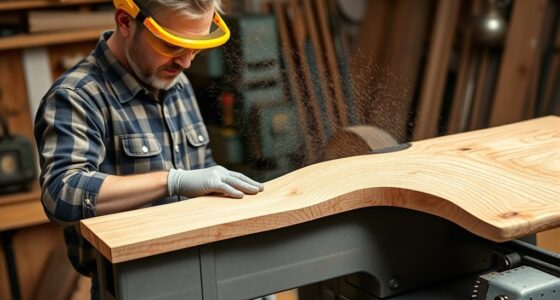
Safety is your shield when wielding a hand plane, like a guardian guiding your craft. Always wear personal protective equipment such as goggles and gloves to guard against flying chips and splinters. Keep your workspace tidy, free of clutter that could trip you up. Maintain a firm grip and controlled strokes, focusing on the task. By prioritizing workspace safety, you turn your woodworking into a harmonious dance rather than a risky gamble.
How Do I Prevent Tear-Out When Planing Hardwood?
To prevent tear-out on hardwood, always follow the grain direction and plane with it, not against. Adjust your blade angle to a higher setting, typically around 45 degrees or more, to reduce tear-out risk. Keep your blade sharp for cleaner cuts, and make light, controlled passes. By respecting grain direction and setting the proper blade angle, you’ll achieve smoother surfaces and minimize tear-out effectively.
What’s the Best Way to Store My Hand Plane to Prevent Rust?
Did you know that rust can develop in just a few days in high humidity? To prevent this, store your hand plane in a dry place and regularly oil the storage area. Use a light coat of oil on the plane’s metal parts and consider silica gel packs to control humidity. This keeps your plane protected, ensuring smooth performance and longevity. Proper storage makes a big difference!
Conclusion
Now that you know how to make proper adjustments and use the right stroke technique, you’ll find working with a hand plane much more satisfying. With practice, your projects will turn out smoother and more professional-looking. So, why settle for uneven surfaces when mastering these skills can elevate your craftsmanship? Keep honing your technique, stay patient, and enjoy the process—soon, you’ll wonder how you ever worked without this versatile tool.