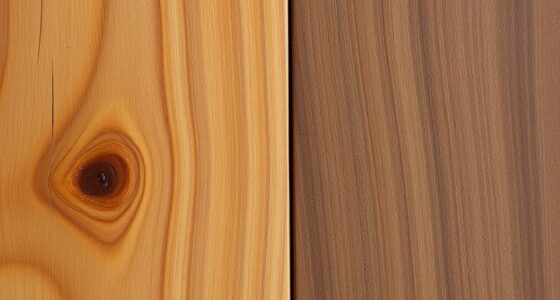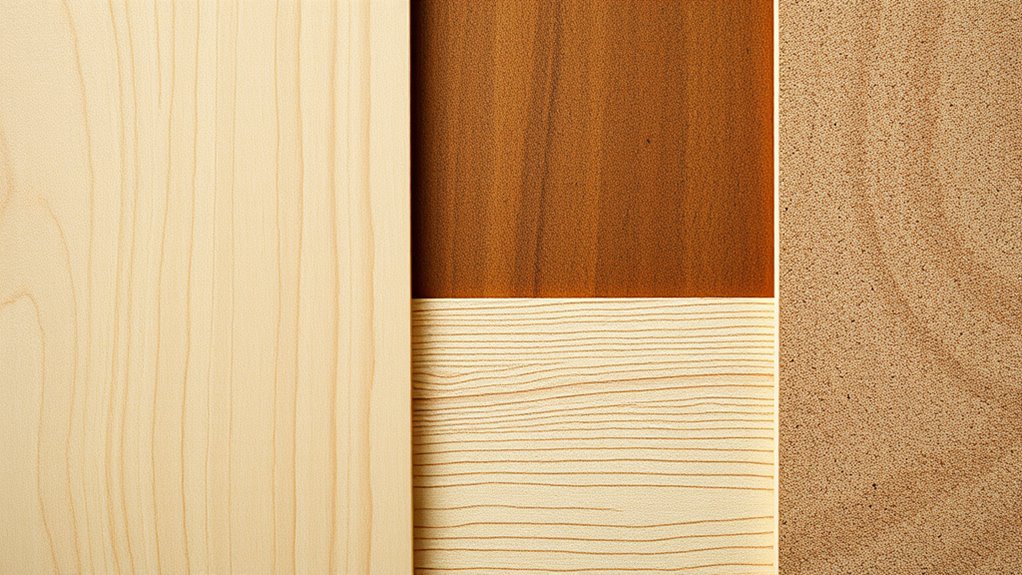
To recognize common veneer backings and cores, start by examining their materials and surfaces. Hardwood plywood features layers of durable wood like oak or cherry, while softwood plywood uses pine or fir for a lighter feel. Engineered cores like MDF or particleboard are smooth and uniform, often with less weight. Marine plywood is moisture-resistant and perfect for outdoor use. Understanding these differences helps you choose panels that suit your project’s durability, appearance, and budget needs—learn more to make the best choice.
Key Takeaways
- Common veneer backings include hardwood plywood, softwood plywood, MDF, particleboard, and marine plywood.
- Core materials impact panel strength, stability, weight, moisture resistance, and cost.
- Hardwood plywood cores offer durability and aesthetic appeal, while MDF and particleboard are budget-friendly options.
- Marine plywood cores are specially manufactured for moisture resistance, suitable for outdoor applications.
- Recognizing core types helps in selecting panels for specific environmental conditions and end-use requirements.
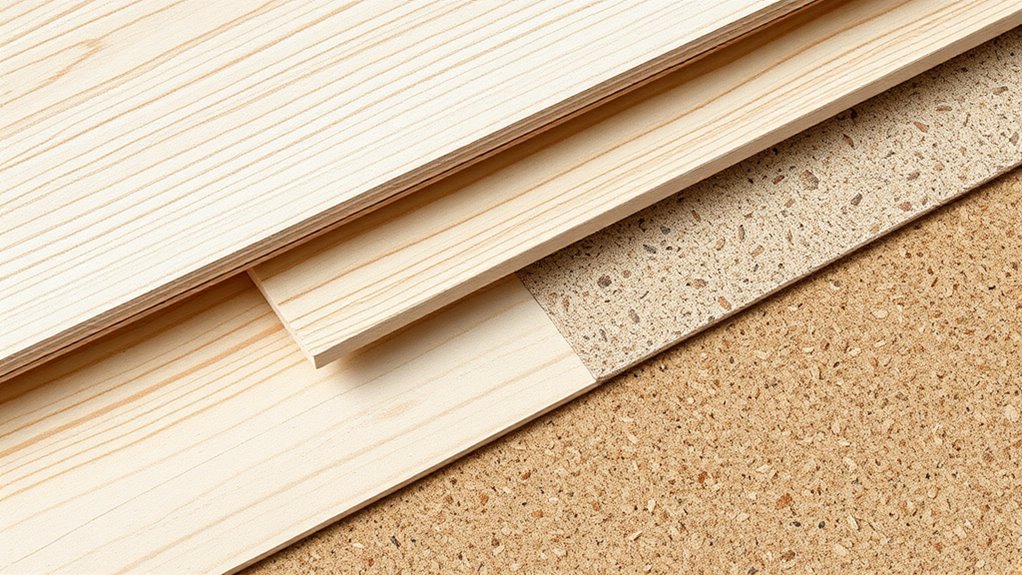
Veneer backings and cores play a crucial role in the strength, stability, and overall quality of veneered panels. When you’re choosing the right veneer for your project, understanding the different plywood types and how veneer selection interacts with the core material becomes essential. The core provides the foundation for the veneer, influencing durability, weight, and cost, while the veneer adds the aesthetic appeal. Knowing your options helps guarantee you select the best combination for your specific application.
Choosing the right veneer and core ensures panel strength, appearance, and durability for your project.
There are several common plywood types used as cores in veneered panels. Hardwood plywood, made from durable wood species like birch or oak, offers excellent strength and a smooth surface, making it ideal for furniture and cabinetry. Softwood plywood, typically from pine or fir, tends to be lighter and more economical but still provides reliable stability. Marine plywood is specially manufactured to resist moisture, making it suitable for outdoor or humid environments, though it often comes with a higher price tag. Particleboard and MDF are engineered cores that are less expensive and provide a uniform surface, but they may lack the strength and moisture resistance of traditional plywood types. Each of these options impacts the veneer’s performance and looks, so your choice depends on the end-use, environmental conditions, and budget.
When selecting veneer, you need to take into account the type of core that best complements your desired finish. For example, if you’re aiming for a high-end, natural look, a hardwood plywood core paired with premium veneer might be your best bet. Conversely, if you’re working on a budget or need a lightweight panel for interior applications, MDF or particleboard with a veneer finish can deliver good aesthetics at a lower cost. The veneer selection itself varies from species like cherry, maple, or walnut, each offering distinct grain patterns and colors. The combination of veneer and core impacts everything from the panel’s strength to its appearance and how well it resists warping or splitting.
In essence, understanding the interplay between plywood types and veneer selection enables you to make informed choices that enhance your project’s durability and visual appeal. Whether you prioritize strength, cost, or aesthetic qualities, recognizing the common cores and how they work with different veneers ensures you end up with a panel that meets your needs. By carefully matching the core material with the right veneer, you can achieve a balance of functionality and beauty that lasts, no matter what your application demands.

1/4" / 6mm Baltic Birch Plywood Panels for Laser Cutting and Engraving… (18" x 24")
LASERABLE – Laser safe plywood for vector cutting and engraving.
As an affiliate, we earn on qualifying purchases.
As an affiliate, we earn on qualifying purchases.
Frequently Asked Questions
How Can I Tell the Quality of Veneer Backing Materials?
You can tell the quality of veneer backing materials by inspecting their adhesion and consistency. Use veneer backing adhesives to test how well the veneer sticks without peeling or warping. Conduct backing material testing by examining the backing’s thickness, uniformity, and flexibility. High-quality backing materials resist moisture and temperature changes, ensuring durability. If the backing passes these tests and adheres properly with minimal defects, you’re likely working with a top-quality veneer backing.
Are Certain Cores Better for Specific Furniture Types?
Think of it as matching the right shoe to the outfit—you need the right core for your furniture type. For example, hardwood cores work best for sturdy pieces like tables because they handle wear and tear, while plywood cores suit lighter furniture due to their stability. Consider the wood grain and veneer thickness; thinner veneer with flexible cores is great for decorative accents, ensuring your furniture stays both beautiful and durable in the long run.
What Environmental Factors Affect Veneer Backing Durability?
Environmental exposure and climate impact considerably influence veneer backing durability. You should consider humidity, temperature fluctuations, and exposure to moisture, as these factors cause expansion, contraction, and potential warping. In humid environments, veneers may swell, while dry conditions can cause cracking. Protecting veneer backings from direct sunlight, water, and extreme temperature changes helps maintain their strength and appearance, ensuring long-lasting, stable furniture.
Can Veneer Backings Be Recycled or Reused?
Yes, veneer backings can be recycled or reused, though it depends on the material type. You can explore recycling processes that separate veneer from adhesives or backing layers, increasing reuse potential. While some veneer backings are recyclable, others may require special disposal methods. By understanding the material and proper recycling techniques, you help reduce waste and promote sustainability in woodworking and furniture manufacturing.
How Do Veneer Core Options Impact Cost and Longevity?
Veneer core options considerably impact both cost and longevity. For example, plywood cores tend to be more affordable and durable, making them a cost-effective choice that lasts longer. Particleboard cores are cheaper but may not hold up as well over time. Your selection influences the initial expense and how long the veneer maintains its quality, so consider your budget and durability needs when choosing the right veneer core option.

CertBuy 12" x 12" Plywood Board 1/2 Thick, 4 Pack Plywood Squares, Baltic Birch Plywood for Laser Projects, Arts and Crafts, DIY
[Good Quality]: Wood performance is stable, not easy to crack and deform, compact structure, high hardness, strong toughness,…
As an affiliate, we earn on qualifying purchases.
As an affiliate, we earn on qualifying purchases.
Conclusion
Now that you can identify common veneer backings and cores, imagine running your fingers over a smooth, sturdy surface, feeling the perfect balance of strength and flexibility beneath your fingertips. Whether it’s a lightweight plywood or a dense fiberboard, recognizing these layers helps you choose the right material for your project. With this knowledge, you’re equipped to craft furniture and panels that not only look beautiful but stand the test of time, like a finely crafted piece waiting to be touched.

4 Pack MDF Wood Boards 12"x17"-1/4th inch Thick Wooden Planks, Double Sided Veneered MDF Sheet for Homemade DIY Crafts
Including:4 pieces of veneered MDF board with double side paulownia wood
As an affiliate, we earn on qualifying purchases.
As an affiliate, we earn on qualifying purchases.

WoodPress® Maple Wood Veneer – Pack of 6 Sheets – US Letter Size (Approx 8 & 1/2" x 11") – Veneer for Marquetry, Crafts, Model Making, Panels, Cabinets and Furniture Repair, School Projects
PREMIUM MAPLE WOOD VENEER: The wood veneer sheets contained in this pack offer a thickness of 1/64” and…
As an affiliate, we earn on qualifying purchases.
As an affiliate, we earn on qualifying purchases.