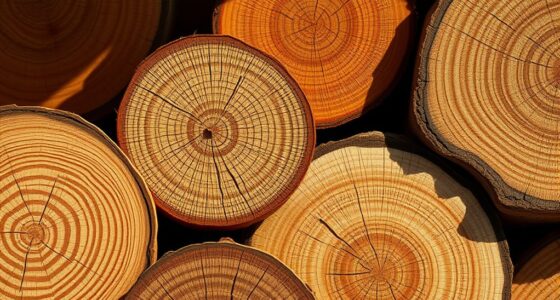
To identify cherry wood, look for its warm, reddish-brown color that deepens with time into darker hues like amber and chocolate. Its fine, straight grain creates a sleek, uniform appearance, though grain patterns can vary from narrow lines to flowing textures. As the wood ages, its color and grain become more pronounced, adding character and depth. If you want to understand how these features develop, there’s more to discover about cherry’s natural aging process.

Get business pricing on tools and workshop supplies
- Business-only prices and quantity discounts
- Tax-exempt purchasing
- Multiple users, one account, clear invoices
Key Takeaways
- Fresh cherry wood has a warm, reddish-brown color with fine, straight grain patterns.
- Over time, cherry darkens to richer, deeper hues with hints of amber or chocolate.
- Grain patterns range from narrow, tight lines to broader, flowing forms, creating visual variation.
- Aging enhances grain prominence and adds depth, emphasizing natural flow and texture.
- Recognizing color transformation and grain characteristics aids in authentic identification and appreciation of cherry wood.

Cherry wood is prized for its rich, warm color and smooth grain, making it a popular choice for furniture and cabinetry. When you first examine cherry, you’ll notice its fine, straight grain that offers a sleek, uniform appearance. However, what truly sets cherry apart in the world of woodworking is its wood grain variation. Over time, the grain pattern can subtly shift, revealing a natural depth and character that adds to its appeal. You might see slight differences in how the grain flows across different pieces, which is part of what makes each item unique. This variation can include narrow, tight lines or broader, more flowing patterns, giving you a range of visual textures within the same wood type.
One of the most fascinating aspects of cherry is its aging color change. When you first work with cherry, it displays a warm, reddish-brown hue that’s inviting and vibrant. But as the wood ages, exposed to light and air, it undergoes a gradual transformation. Its color deepens, shifting toward a richer, darker tone with a hint of amber or chocolate. This natural aging process enhances the visual depth, giving your furniture or cabinetry a distinguished, vintage look over the years. The change isn’t abrupt; it’s a subtle evolution that rewards patience and appreciation for natural beauty. If you’re planning a project that will last decades, understanding this color change helps you anticipate how the piece will mature and develop character.
The wood grain variation and aging color change are closely linked in cherry. As the wood darkens, the grain pattern becomes more pronounced, highlighting the natural flow and texture of the fibers. You might notice that the initial uniformity gives way to a more complex, layered appearance as the color deepens. This dynamic process emphasizes the importance of choosing cherry for projects intended to age gracefully. When you select cherry, you’re not just choosing a beautiful, versatile wood; you’re investing in a material that will evolve over time, adding depth and distinction to your craftsmanship. Recognizing these features helps you identify genuine cherry and appreciate its unique aging process, ensuring your work retains its beauty for generations to come.
As an affiliate, we earn on qualifying purchases.
Frequently Asked Questions
How Does Cherry Wood Compare to Other Hardwoods in Durability?
Cherry wood is quite durable, but its aging process causes it to develop a richer color and smoother grain over time. Compared to other hardwoods like oak or maple, cherry is moderately durable, making it suitable for furniture and flooring. Its color consistency may vary initially, but as it ages, the wood’s warm hue deepens, enhancing its appearance. You’ll find cherry offers a good balance of beauty and resilience for your projects.
Can Cherry Wood Be Stained to Alter Its Natural Color?
Yes, you can stain cherry wood to alter its natural color. Using staining techniques, you can deepen, brighten, or change its hue for a custom look. For color enhancement, apply a gel or oil-based stain evenly, allowing you to highlight the grain patterns. Make sure to sand the surface smoothly before staining, and test your stain on a scrap piece to achieve the desired shade.
What Are the Best Finishes to Highlight Cherry Wood Grain?
Oh, absolutely, because who wouldn’t want their cherry wood to shout, “Look at my gorgeous grain!”? To highlight cherry wood grain, opt for clear finishes like polyurethane, lacquer, or a good oil finish. These wood grain enhancement options bring out the natural beauty, emphasizing the intricate patterns and rich color. Choose a finish that provides a smooth, glossy surface to truly showcase your cherry wood’s stunning character.
How Resistant Is Cherry Wood to Pests and Decay?
Cherry wood offers moderate pest resistance, meaning it can deter some insects but isn’t completely immune. It has a low decay susceptibility compared to softer woods, especially if properly sealed and maintained. To enhance its resistance, you should apply protective finishes and avoid prolonged exposure to moisture. Regular inspections and prompt repairs help prevent pest infestations and decay, ensuring your cherry wood pieces stay durable and beautiful over time.
Is Cherry Wood Suitable for Outdoor Furniture?
Yes, cherry wood can be used for outdoor furniture, but it’s not the most weather-resistant option. You’ll need to apply protective sealants regularly to guard against moisture and UV damage. Proper maintenance reduces the risk of cracking or warping, so expect some upkeep. If you’re willing to do the work, cherry wood’s beautiful grain and warm color can make stunning outdoor pieces that age gracefully with proper care.
Conclusion
Now that you’ve uncovered the secrets of cherry wood’s color shift and grain patterns, you can confidently identify this beautiful material. Think of cherry wood as a storybook, its hues and grains revealing chapters of nature’s artistry. With your newfound knowledge, you can appreciate its character and charm in every piece. Just like a treasured keepsake, cherry wood’s unique traits make it a timeless addition to your woodworking journey.
Fall Picks
fall essentials
As an affiliate, we earn on qualifying purchases.