To select the right workbench, first consider its height—aim for elbows at a 90° angle when standing for ergonomic comfort. Next, choose a size that fits your workspace and project needs, ensuring enough surface area without clutter. Focus on features like adjustable height, stability, and durable materials suited to your tasks. Balancing these aspects helps improve safety and efficiency, and understanding more will help you make the best choice for your workspace.
Key Takeaways
- Choose an adjustable workbench height that allows elbows to be at 90° when standing for ergonomic comfort.
- Measure your workspace to select a size that comfortably accommodates tools, materials, and projects without clutter.
- Opt for durable materials like hardwood or steel to ensure longevity and resistance to damage during use.
- Consider features such as stability, surface resistance to chemicals, and proper surface area for your specific tasks.
- Balance ergonomics, size, and durability to select a workbench that enhances productivity, safety, and comfort.
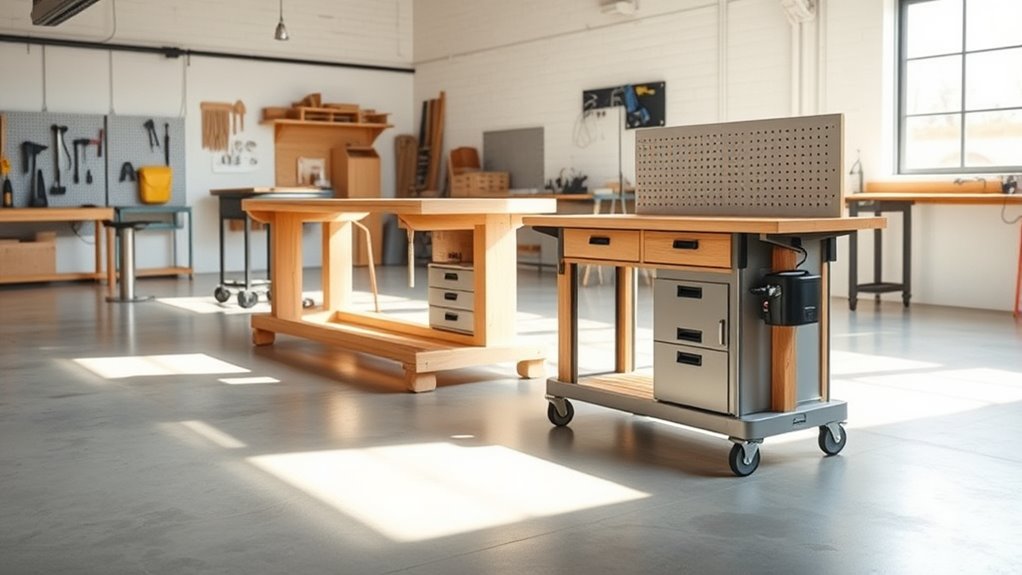
Are you struggling to choose the perfect workbench for your workspace? Finding the right fit isn’t just about size or features; it’s about creating a setup that supports your work comfortably and efficiently. One of the most important aspects to consider is ergonomics considerations. You want a workbench that promotes good posture, reduces strain, and allows you to work for extended periods without discomfort. Think about the height of the bench—too high, and you’ll strain your shoulders and neck; too low, and you’ll hunch over, causing back pain. Ideally, the work surface should be at a height where your elbows are bent at roughly 90 degrees when you’re standing upright, giving you *best* comfort and control. Adjustable workbenches are a smart choice if multiple users will be sharing the space, as they let you customize the height to fit your specific needs.
Choose a workbench with adjustable height for optimal comfort and ergonomic support.
Material durability is another critical factor that influences your decision. You’ll want a workbench built from sturdy materials that can withstand the demands of your projects. Look for solid hardwoods, heavy-duty steel, or high-quality composite surfaces—these materials resist dents, scratches, and other damage that comes with regular use. A durable workbench not only lasts longer but also maintains its stability and appearance over time. Avoid cheaper, flimsy options that might wobble or degrade quickly, as they can compromise safety and precision in your work. In addition, consider how the material reacts to your typical tasks—if you work with chemicals or liquids, opt for surfaces that are resistant to corrosion and easy to clean.
Size is equally important when selecting your workbench. Measure your available space carefully before making a purchase. You want a surface large enough to hold all your tools, materials, and projects comfortably, without crowding your workspace. Too small, and you might find yourself constantly rearranging or feeling cramped; too large, and it could overwhelm your area or limit mobility. Think about the type of projects you undertake—if you work on big pieces or need space for multiple tools, choose a larger surface. Conversely, if your tasks are more detailed or delicate, a smaller, more precise workspace might suit you better. Remember, a well-sized workbench that fits your space and work style helps you stay organized and efficient, making your entire workflow smoother.
Ultimately, selecting the right workbench involves balancing ergonomics considerations, material durability, and size to fit your unique needs. Prioritize comfort, stability, and practicality, and you’ll set yourself up for a more productive, enjoyable working environment.

OLBRUS 48 "Adjustable Workbench with Power Outlet, Heavy Duty 2000 LBS Load Capacity Hardwood Workbench Suitable for Workshop, Office, Garage, Home
Adjustable Non-slip Foot Pad: Each leg of the work bench is equipped with an adjustable rubber non-slip foot…
As an affiliate, we earn on qualifying purchases.
As an affiliate, we earn on qualifying purchases.
Frequently Asked Questions
What Materials Are Best for Heavy-Duty Workbenches?
For heavy-duty workbenches, you should choose materials like steel or hardwood, as they offer excellent workbench durability under tough conditions. Steel provides strength and stability, while hardwood like maple or oak is resilient and resistant to wear. Keep in mind, steel tends to be more costly in material cost, but it offers greater longevity. Overall, prioritize durability to guarantee your workbench withstands demanding tasks.
How Do I Customize a Workbench for Specific Projects?
You can tailor your workbench for specific projects by exploring modular workbench customization options. Adjust the workbench height to suit different tasks, improving comfort and efficiency. Add or remove features like shelves, drawers, or pegboards to organize tools better. Consider attaching specialized accessories or upgrading surfaces to match your project needs. This flexibility ensures your workspace adapts seamlessly, making your projects more manageable and enjoyable.
Are There Ergonomic Features to Consider for Long-Term Use?
Yes, ergonomic features are essential for long-term use. Look for a workbench with ergonomic design, which reduces strain and improves comfort. An adjustable height workbench lets you customize the height to match your working posture, preventing back and neck pain. Prioritize features like cushioned surfaces or anti-fatigue mats, and guarantee the workbench accommodates your specific project needs while supporting good ergonomics for extended periods.
What Safety Features Should I Look for in a Workbench?
When choosing a workbench, prioritize safety features like sturdy clamps, anti-slip surfaces, and rounded edges for workbench safety. Look for protective features such as reinforced frames and secure storage options to prevent accidents. guarantee the workbench has proper weight capacity and stable footing to avoid tipping. These protective features help safeguard you during projects, making your workspace safer and more efficient for long-term use.
How Do I Maintain and Clean Different Workbench Surfaces?
Cleaning and maintaining your workbench surfaces is like tending a garden—consistent care keeps it thriving. You should regularly wipe down surfaces with appropriate cleaners to prevent dirt buildup, and use protective mats or coatings for surface protection. Keep workbench organization in mind by decluttering and cleaning spills immediately. This routine preserves your workbench’s durability, ensures safety, and maintains a tidy workspace, making it easier to focus on your projects.

AFF Workbench – Heavy Duty Work Table with Storage Shelf – 1300 LB Capacity
WORKBENCH – AFF's Workbench with 1,300 lb capacity features a spacious work surface and an under bench storage…
As an affiliate, we earn on qualifying purchases.
As an affiliate, we earn on qualifying purchases.
Conclusion
Choosing the right workbench makes all the difference in your projects. Imagine you’re building a custom desk; a height-adjustable workbench allows you to work comfortably and prevent fatigue. By considering size, features, and your specific needs, you guarantee a safe and efficient workspace. When you pick wisely, like Sarah did, you’ll enjoy smoother workflows and better results. So, invest time in selecting the perfect workbench—you’ll thank yourself every time you work.
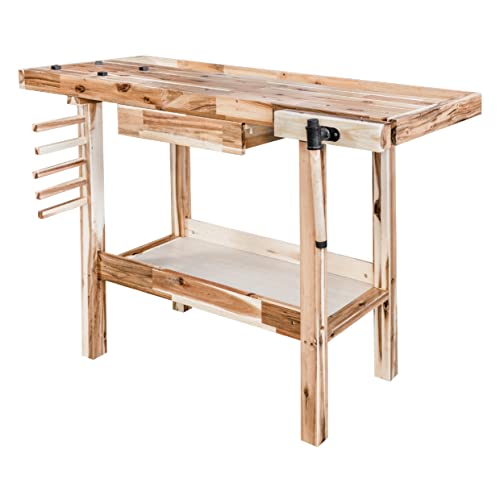
Olympia Tools 48-Inch Acacia Hardwood Workbench with Drawer – 330lbs Weight Capacity Heavy Duty Portable Wood Work Bench Table for Garage, Workshop, Home Storage – Woodworking Wooden Workbenches
Sturdy and Durable Workbench – Crafted with high-quality acacia wood, this 48-inch wooden workbench is built to last….
As an affiliate, we earn on qualifying purchases.
As an affiliate, we earn on qualifying purchases.

FLEXISPOT Electric Adjustable Workbench, 55×28 Inches Ergonomic Worktable for Garage, Workshop, Office and Home, Spacious Desktop for Woodworking Sewing and Crafts, Maple, 2 Packages
SMOOTH ELECTRIC HEIGHT ADJUSTMENT: Ultra-smooth adjustment from 28.1" to 45.7" allows you to easily find the perfect height…
As an affiliate, we earn on qualifying purchases.
As an affiliate, we earn on qualifying purchases.