

To optimize your workshop lighting, combine natural sunlight with energy-efficient LED fixtures. Position your workbenches near windows to maximize daylight, while using dimmable LEDs to adjust brightness for different tasks. Reflective surfaces and light-colored walls help distribute natural light evenly. Use window coverings to reduce glare, and add supplemental LED lighting for cloudy days or evening work. Keep exploring ways to create a bright, safe, and productive workspace by adjusting your setup accordingly.

Get business pricing on tools and workshop supplies
- Business-only prices and quantity discounts
- Tax-exempt purchasing
- Multiple users, one account, clear invoices
Key Takeaways
- Combine natural light with well-placed LED fixtures to ensure consistent, glare-free illumination throughout your workshop.
- Position workbenches near windows to maximize daylight exposure and use reflective surfaces to distribute light evenly.
- Choose high-CRI, dimmable LED bulbs with 4000K–5000K color temperature for clarity and task-specific brightness.
- Use adjustable window coverings to control glare and weather-dependent natural light variations.
- Incorporate energy-efficient LED lighting to supplement natural light during cloudy days or late-night work sessions.
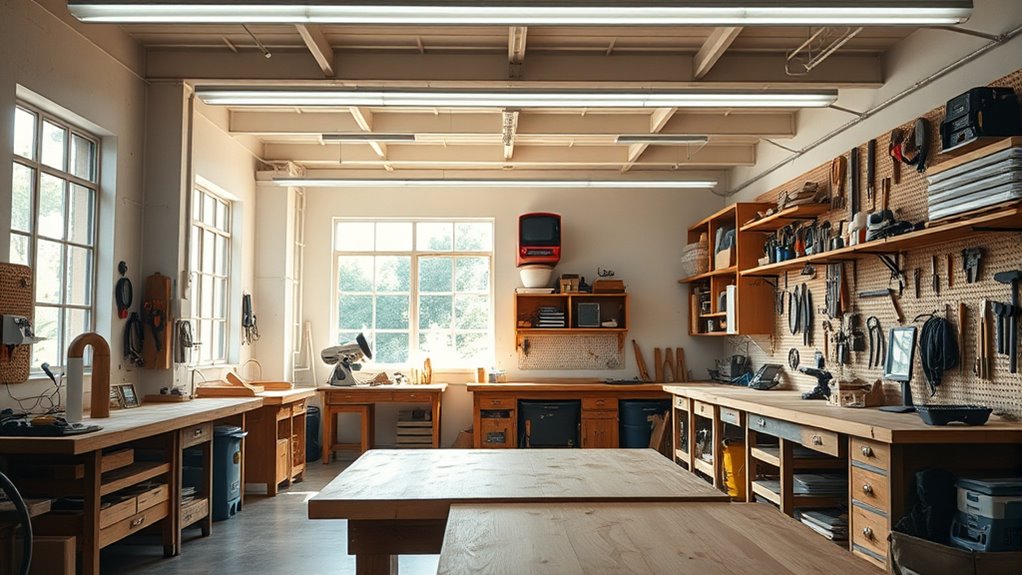
Have you ever struggled to see your work clearly in your workshop? Poor lighting can make even simple tasks frustrating, causing eye strain and mistakes. One of the best ways to improve visibility is by focusing on your lighting setup. When it comes to choosing the right lighting, LED bulb selection plays a vital role. LEDs are energy-efficient, long-lasting, and available in various color temperatures, making them ideal for workshops. Opt for bulbs that emit a bright, white light—around 4000K to 5000K—so you can see fine details without the harshness of overly cool or warm tones. Look for options with high CRI (Color Rendering Index) ratings to make sure your colors appear true to life, which is essential when working on projects that require color accuracy.
But lighting isn’t just about artificial sources. Natural light benefits your workspace in many ways, and integrating it into your workshop can make a significant difference. Natural light is free, abundant, and provides a full spectrum of light that’s ideal for detailed work. It reduces eye fatigue, enhances mood, and boosts productivity. When planning your workshop layout, position workbenches near windows or skylights to maximize daylight exposure. Use light-colored walls and reflective surfaces to bounce and diffuse sunlight evenly across your workspace. This not only brightens the room but also minimizes shadows that can hinder your work. Keep in mind that natural light varies throughout the day and weather conditions, so relying solely on it isn’t enough. Combining it with well-placed LED lighting ensures a consistent, glare-free environment.
Additionally, understanding the benefits of natural light can help you make more informed decisions about your workspace design. To optimize natural light benefits, consider installing adjustable window coverings. Sheer curtains or blinds allow you to control the amount of sunlight entering the space, preventing glare on surfaces and screens. Additionally, using supplemental LED lighting ensures you have sufficient illumination during cloudy days or late-night projects. When selecting LED bulbs, prioritize those with high efficiency and appropriate brightness levels—measured in lumens—to match your workshop’s needs. Dimmable LEDs are also a smart choice, giving you control over lighting intensity based on the task at hand.
dimmable LED workshop light bulbs
As an affiliate, we earn on qualifying purchases.
As an affiliate, we earn on qualifying purchases.
Frequently Asked Questions
How Can I Optimize Natural Light for Different Seasons?
You can optimize natural light for different seasons by adjusting window placement and making seasonal light adjustments. In winter, maximize sunlight by keeping windows unobstructed and using reflective surfaces to bounce light around. During summer, install shades or blinds to reduce glare and heat. Consider adding skylights or vented windows for better airflow and light control. Regularly update these features to guarantee your workspace stays well-lit and comfortable year-round.
Are There Safety Concerns With LED Lighting in Workshops?
You should be aware of safety concerns with LED lighting in workshops. Guarantee eye safety by avoiding overly bright or flickering lights that can cause strain. Also, prioritize electrical safety by installing LED fixtures correctly, using proper wiring, and avoiding overloading circuits. Regularly check for damaged components, and use certified products to prevent electrical hazards. Properly maintained LEDs create a safer, well-lit workspace for your projects.
How Do I Choose the Right LED Brightness?
In the grand scheme of things, choosing the right LED brightness depends on your tasks. You should consider the color temperature for accurate color rendering and energy efficiency to save costs. For detailed work, opt for higher lumens, around 800-1000, with a cooler color temperature (4000K-6500K). For softer ambiance, lower lumens and warmer tones work best. Always match brightness to your specific workshop needs to guarantee ideal visibility.
Can LED Lights Be Dimmed Effectively in a Workshop?
Yes, LED lights can be dimmed effectively in your workshop if they have dimming compatibility. When choosing LEDs, verify they support dimming controls for smooth adjustments. Also, consider the color temperature; dimming can sometimes change it slightly, so look for LEDs with good color stability. This way, you get customized lighting that enhances visibility and comfort, making your workspace more efficient and adaptable.
What Are the Cost Differences Between Natural and LED Lighting?
The cost difference between natural and LED lighting is enormous—natural light is practically free, while LEDs involve a significant upfront investment. However, when you consider energy savings, LEDs quickly pay for themselves through lower electricity bills, whereas natural light’s savings are limitless but unpredictable. Over time, LEDs prove to be a smart, cost-effective choice, offering consistent illumination and long-term savings that natural light simply can’t match.
Conclusion
By blending the warm glow of natural light with the crisp clarity of LEDs, you create a symphony of illumination that dances across your workspace. Let the sunlight pour in like golden rivers, while LEDs cut through shadows like sharp, guiding stars. Together, they paint your workshop in a harmonious glow—bright, inviting, and ready for your next masterpiece. Light your space wisely, and watch your creativity blossom under the perfect glow.
Columbus Day / Indigenous Peoples' Day Picks
long weekend sales
As an affiliate, we earn on qualifying purchases.