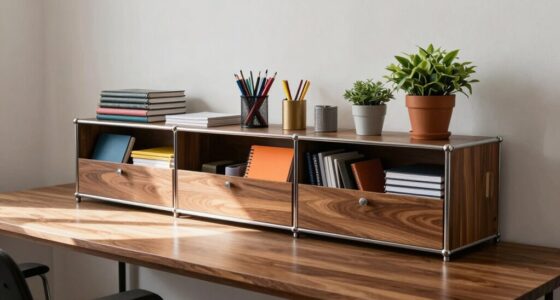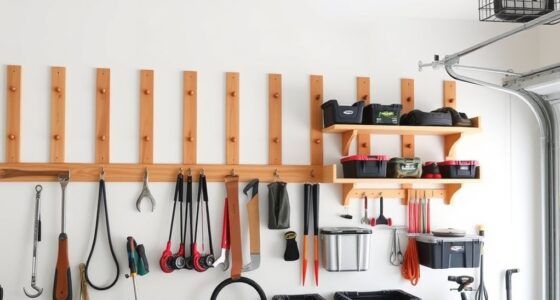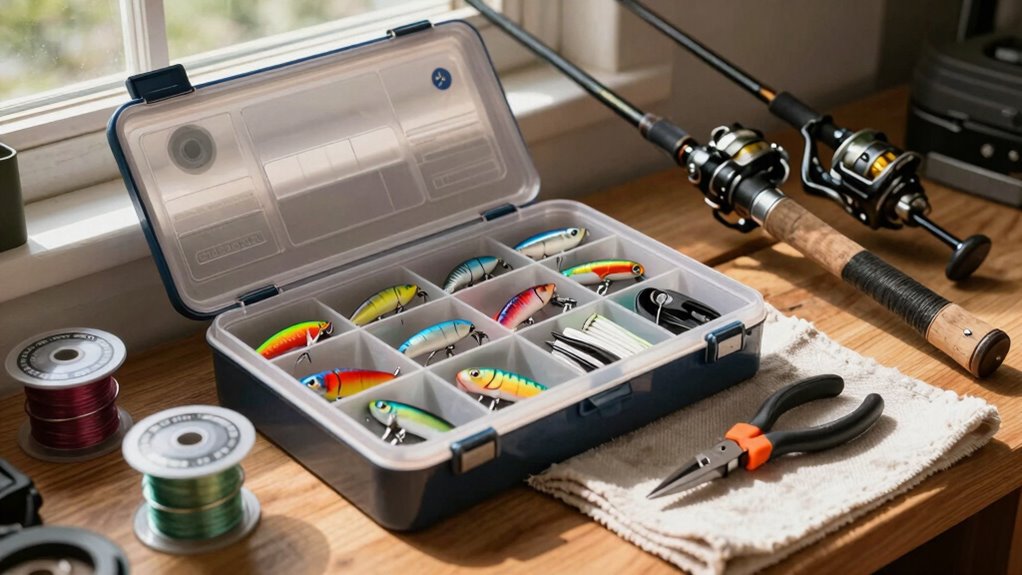
To keep your finishing gear organized and guarantee it gets used effectively, start by categorizing equipment by frequency and type for easy access. Implement clear labeling on bins and shelves to enhance efficiency. Utilize vertical space and store frequently used items at eye level. Regularly check gear for condition and set maintenance routines. Finally, make returning items to their spots a habit to maintain order. If you’re curious about more tips, there’s plenty more to explore!

Get business pricing on tools and workshop supplies
- Business-only prices and quantity discounts
- Tax-exempt purchasing
- Multiple users, one account, clear invoices
Key Takeaways
- Categorize finishing gear by usage frequency and type to streamline access and enhance workflow efficiency.
- Implement a clear labeling system on storage bins and shelves to facilitate quick identification of items.
- Optimize space by using vertical storage solutions and keeping frequently used items at eye level for easy access.
- Establish maintenance routines to regularly check gear condition and remove unnecessary items, preventing clutter.
- Develop consistent habits of returning items to their designated spots after use to maintain organization and efficiency.
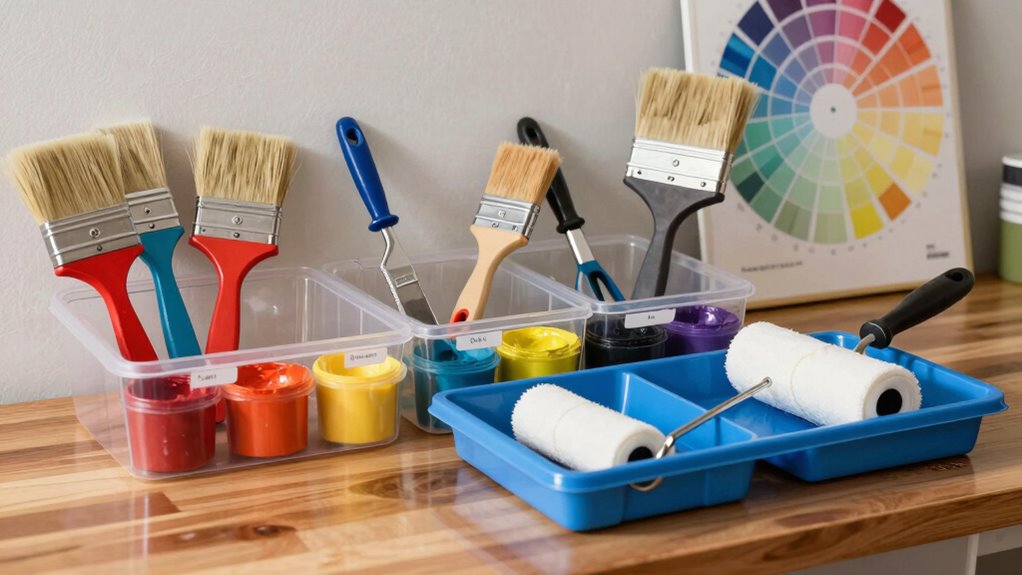
Keeping your finishing gear organized can feel overwhelming, especially when you’re juggling multiple projects. You want everything accessible and ready to use, but clutter can quickly build up. The key is to establish a system that maximizes your gear storage and allows for efficient access. Start by categorizing your equipment based on usage frequency and type. This way, you’ll know where everything is and can grab what you need without rummaging through piles of stuff.
Once you’ve categorized your gear, consider implementing equipment labeling. Clear labels on bins or shelves help you quickly identify what’s where. When you’re busy, the last thing you want is to waste time searching for a specific item. Labeling not only enhances efficiency but also encourages you to maintain order. A well-labeled space prevents confusion and helps you stick to your organization routine.
Implementing clear labels on your gear storage not only boosts efficiency but also fosters a tidy, organized workspace.
Space optimization is another essential aspect. If you’re short on room, think vertically. Use shelves, pegboards, or hooks to utilize wall space. Storing items at eye level guarantees you can grab them quickly while keeping less-used equipment higher up. Additionally, consider using transparent containers. They allow you to see contents without opening each one, streamlining your workflow and enhancing your inventory tracking. Incorporating space-saving solutions can further improve your organization by making efficient use of available areas. Regularly reviewing your storage setup can help identify areas for improvement and prevent clutter from accumulating. Implementing systems thinking can also help you design a more holistic and sustainable organization strategy.
Don’t forget about your maintenance routines. Regularly check your gear to confirm everything’s in good condition. This not only extends the life of your equipment but also keeps your workspace tidy. If something’s broken or no longer needed, it’s better to part ways. You’ll save space and avoid clutter, making it easier to find the tools you actually use. Incorporating storage solutions can further improve your organization by making it easier to arrange and access your gear efficiently.
Lastly, establish a habit of putting things back in their designated spots after use. This simple practice goes a long way in maintaining organization. If you consistently return gear to its home, you’ll prevent the disarray that often accompanies a busy schedule. Making this a routine guarantees that your workspace remains efficient and clutter-free. This habit is especially important when working with small tools, which are easy to misplace.
Frequently Asked Questions
What Types of Containers Are Best for Storing Finishing Gear?
For storing finishing gear, you’ll want to choose durable storage solutions that suit your needs. Plastic containers are lightweight and waterproof, making them great for protecting gear from moisture. Metal bins offer sturdiness, while fabric organizers are flexible and easy to transport. Look for clear containers to quickly see contents, and guarantee lids seal tightly to keep dust out. With the right container materials, you’ll keep everything organized and accessible.
How Often Should I Reorganize My Finishing Gear?
You should reorganize your finishing gear at least twice a year, ideally during seasonal audits. Research shows that 70% of people can’t find their gear when they need it, leading to wasted time and frustration. By sticking to frequency guidelines, you’ll keep everything accessible and in top shape. Each time you audit, assess what you use often and what’s gathering dust, ensuring your setup always works for you when you need it most.
Can I Use Household Items for Organizing Tools?
Absolutely, you can use household items for organizing your tools! Repurposed containers like jars, boxes, or even old drawer organizers make for creative storage solutions. You can sort screws, nails, and brushes easily, keeping everything accessible. Get creative with what you already have—an old shoe box can hold sandpaper, while a spice rack can store your small tools. You’ll find that using these items not only saves money but also maximizes your space effectively!
What Are the Best Labels for Organizing My Gear?
You can’t find what you don’t label! For organizing your gear, consider using waterproof vinyl labels for durability, or paper labels for a budget-friendly option. Label types like color-coded or clear tags help you quickly identify items. If you want a more polished look, try using laminated labels. Whatever you choose, make sure they’re easy to read and stick well, so you’ll always know where to find your finishing gear when you need it!
How Do I Maintain My Finishing Gear After Organization?
To maintain your finishing gear, follow these gear maintenance tips: clean tools after each use, guaranteeing no residue builds up. Store them in a dry, organized space to prevent rust and damage. Regularly inspect for wear and tear, and replace any worn parts promptly. For finishing tool care, apply lubricants to moving parts and keep blades sharp. By staying proactive, you’ll guarantee your gear performs well and lasts longer.
Conclusion
By keeping your finishing gear organized, you’ll not only streamline your workflow but also inspire creativity. A well-arranged space makes it easier to find what you need when you need it, preventing frustration and wasted time. So, why not take a few moments to tidy up? You might just discover new ways to use that gear you’ve overlooked! Remember, an organized setup fosters inspiration and productivity, making every project a little more enjoyable.
Fall yard work Picks
leaf blowers
As an affiliate, we earn on qualifying purchases.