To use a chisel effectively, understand these key techniques. Paring involves holding the chisel bevel down and gently slicing along the grain for smooth surfaces. Mortising starts with careful marking and gradual removal of material, keeping the chisel perpendicular to the surface for clean joints. Chop cuts use a mallet to strike the chisel, removing large chunks quickly. Proper tool maintenance and technique will improve your control. Keep exploring to master these essential woodworking skills.
Key Takeaways
- Paring involves bevel side facing down, using gentle pushes for fine surface smoothing and detailed work.
- Mortising requires careful marking, gradual material removal, and a perpendicular chisel angle for clean joints.
- Chop cuts involve positioning the bevel away from the cut, then striking confidently to remove large material chunks.
- Maintaining a sharp, well-maintained chisel improves control, safety, and the quality of all cut types.
- Proper technique and tool care reduce effort, prevent damage, and ensure precise, clean results in woodwork.
Have you ever wondered how to carve wood or shape stone with precision? Mastering the use of a chisel requires understanding different techniques like paring, mortising, and chop cuts, but it all starts with how you approach your tool. A good chisel isn’t just about sharpness; it’s also about how well you maintain it. Regular tool maintenance ensures your chisel stays sharp and effective, allowing you to work smoothly and safely. When working on wood, pay close attention to the wood grain because it influences your cut. Cutting parallel to the grain reduces splintering, while going against it can cause tearing. Understanding the grain helps you decide the best angle and force to use, making your work cleaner and easier.
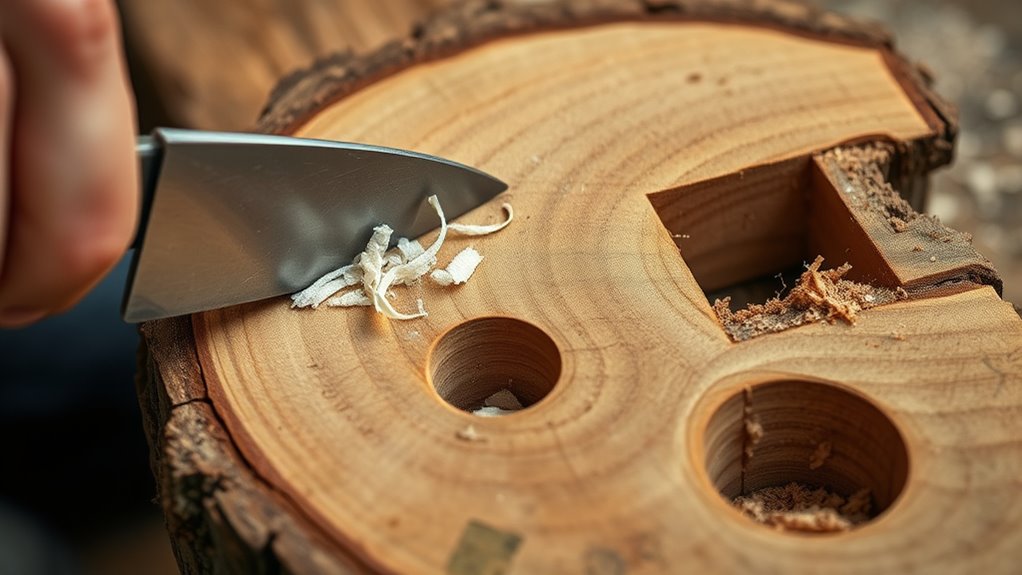
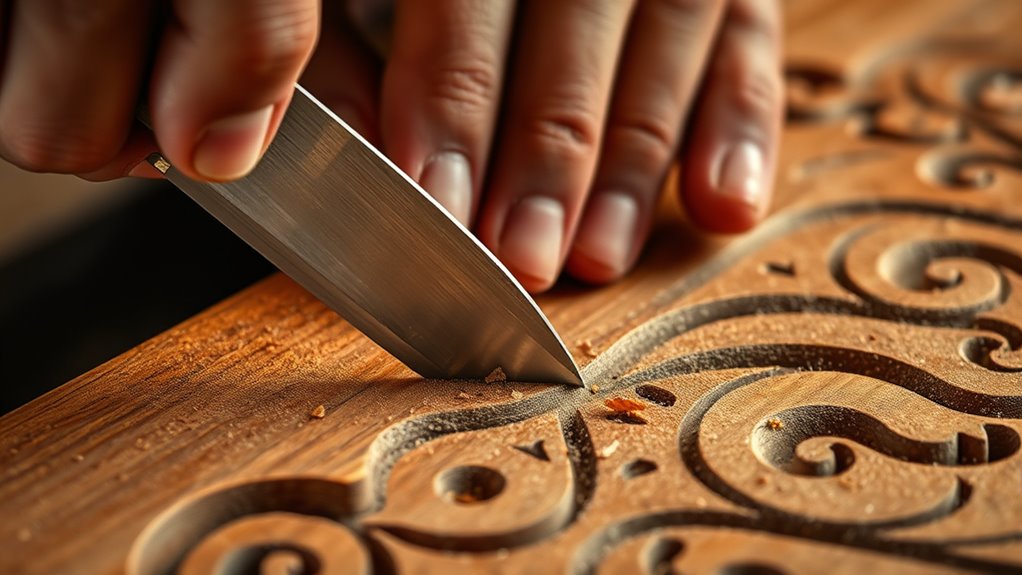
When you perform a paring cut, you use the chisel with the bevel side facing down, gently pushing or pulling it along the surface. This technique is perfect for refining details or smoothing surfaces. A sharp chisel slices through the wood fibers effortlessly, but dull tools require more force and can cause damage, especially if you ignore routine tool maintenance. Always keep your chisel sharp with a honing stone or sharpening system, and check the edge frequently. A well-maintained tool minimizes effort and prevents accidents, ensuring you can focus on precision rather than fighting against a dull blade.
Mortising involves chiseling out a rectangular or square hole, often for joinery purposes. You start by marking the outline carefully, then using a chisel to remove the bulk material. For clean, accurate mortises, you need to work slowly and precisely, always keeping the chisel perpendicular to the surface. Proper tool maintenance, including keeping the blade sharp and free of rust, helps you control your cuts better, especially as you work into the corners. When doing chop cuts, you position the chisel with the bevel facing away from the area you’re cutting, then strike the handle with a mallet or hammer. This cut is great for removing large chunks of material quickly. The key is to strike confidently but accurately, and again, a sharp, well-maintained chisel makes all the difference.
Frequently Asked Questions
What Safety Gear Should I Wear When Using a Chisel?
When using a chisel, you should wear safety goggles to protect your eyes from flying wood chips and debris. Protective gloves are also recommended to prevent cuts and splinters on your hands. Make sure your workspace is clear, and keep your fingers away from the cutting edge. These safety gear items help keep you safe while working precisely and confidently with your chisel.
How Do I Sharpen a Dull Chisel Effectively?
You suspect your chisel’s dullness, and it’s time to act. To sharpen effectively, start with sharpening techniques using honing stones—coarse for reshaping, fine for polishing. Keep a consistent angle and apply even pressure, checking frequently. As you hone, you’ll feel the edge catching like a whisper of sharpness. Don’t rush—patience transforms a dull tool into a precise instrument, ready to carve with confidence.
Can I Use a Chisel on All Types of Wood?
You can use a chisel on most types of wood, but wood compatibility hinges on the chisel material and the hardness of the wood. High-quality steel chisels work well on soft and hard woods alike. For very hard woods, choose a durable, hardened steel chisel to prevent dulling or damage. Always sharpen your chisel properly, and consider the wood’s grain to ensure clean cuts and avoid splitting.
What Are Common Mistakes to Avoid With a Chisel?
You should avoid poor blade control and an improper grip, as these mistakes can lead to slips or uneven cuts. Always hold the chisel firmly with a proper grip, keeping your hands steady, and control the blade’s angle and pressure carefully. Rushing or applying too much force also risks damaging the wood or causing injury. Practice patience and focus on smooth, controlled movements to get the best results.
How Do I Maintain and Store My Chisels Properly?
Your chisels are superheroes of your workshop, so treat them like royalty! To keep them sharp and ready, establish simple maintenance routines—wipe off debris, sharpen regularly, and oil the blades to prevent rust. Store your chisel storage in a dry, padded case or on a protective rack to avoid dulling or damage. Proper maintenance routines and careful storage make certain your chisels stay powerful, precise, and long-lasting.
Conclusion
Mastering chisel techniques like paring, mortising, and chop cuts takes patience and practice. Remember, “A craftsman is only as good as his tools,” so keep your chisels sharp and your skills sharpens. With time, you’ll carve with confidence and precision, transforming raw wood into beautiful projects. Embrace each cut as a step toward mastery, knowing that persistence turns rough work into refined art. Happy chiseling!