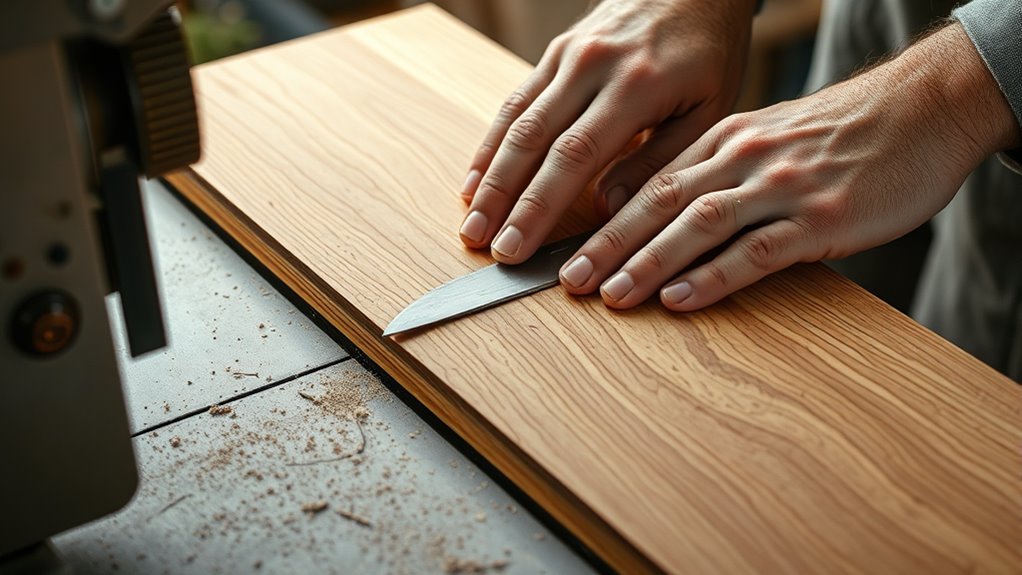
To resaw thick veneers on a bandsaw, choose a thin-kerf blade (1/4 inch or less) with fine teeth (10-14 TPI) for clean cuts, and guarantee proper tension and alignment. Adjust the saw speed to prevent burning while feeding at a steady pace to avoid chipping or overheating. Secure the veneer firmly, keep it flat, and guide it steadily through the blade. For more tips on achieving smooth, precise slices, keep exploring the techniques behind perfect resawing.
Key Takeaways
- Use a thin-kerf, fine-tooth (10-14 TPI) bandsaw blade for cleaner, more precise cuts on thick veneers.
- Ensure proper blade tension, alignment, and slow, steady feed rates to prevent chipping and burning.
- Position the veneer so the grain runs parallel to the saw blade for smoother resawing.
- Securely clamp and support the veneer to minimize movement and ensure an even cut.
- Wear safety gear and maintain a controlled environment to handle sawdust and prevent accidents.
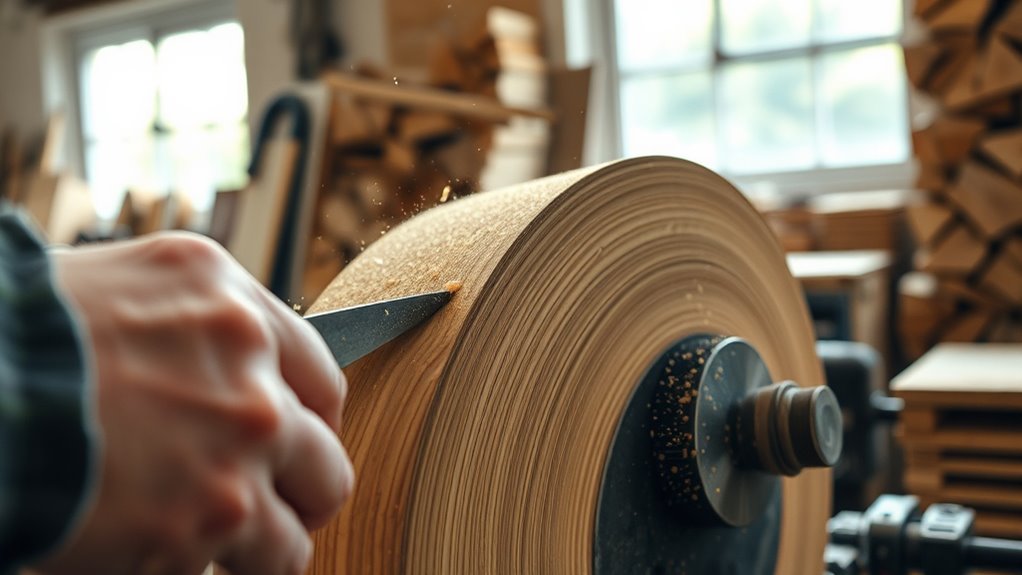
Have you ever struggled to thin thick veneers for your woodworking projects? Resawing thick veneers can be tricky, but understanding the importance of grain orientation and blade selection can make all the difference. When you’re planning to resaw, it’s crucial to pay close attention to the grain direction of your wood. Grain orientation determines how the veneer will split and how smoothly it will cut. For best results, you want to cut with the grain, which allows the veneer to remain intact and minimizes splintering. Cutting against the grain often causes tearing and rough edges, making subsequent finishing more difficult. Before you start, examine your veneer carefully and identify the grain pattern. Position your stock so that the grain runs parallel to the saw blade, ensuring a cleaner cut and less stress on the material.
Choosing the right blade is equally important. A thin-kerf bandsaw blade, ideally with a width of 1/4 inch or less, is preferable for resawing veneers. Thinner blades remove less material, reducing the workload on the saw and decreasing the chances of blade drift or wandering. Look for blades with fine teeth—those with a high tooth count, such as 10 to 14 teeth per inch, work well because they produce cleaner cuts and reduce tear-out. Carbide-tipped blades are also a good choice if you’re working with harder woods or multiple veneer layers, as they stay sharper longer and provide consistent results. When selecting your blade, ensure it’s properly tensioned and aligned; a loose or misaligned blade can cause uneven cuts and damage your veneer. Additionally, proper blade speed significantly impacts cut quality, as a slower, controlled speed helps prevent burning and chipping of delicate veneers. Setting the correct cutting speed and feed rate is crucial to achieving a clean, precise veneer slice. Too fast, and you risk burning or chipping the veneer; too slow, and the blade may overheat or bind. Maintain a steady, moderate feed rate, letting the blade do the work without forcing it. Make sure your bandsaw’s guides and fences are properly adjusted to keep the veneer steady during cutting. Clamping the veneer securely prevents movement that could cause misalignment or rough edges. Remember to always wear safety equipment, like eye protection and a dust mask, since resawing can generate fine sawdust and debris.

Timber Wolf Bandsaw Blade 3/4" X 93-1/2", 3 Tpi
High silicon, low carbide steel
As an affiliate, we earn on qualifying purchases.
As an affiliate, we earn on qualifying purchases.
Frequently Asked Questions
What Is the Maximum Thickness Suitable for Resawing on a Bandsaw?
You can typically resaw veneers up to 6 inches thick on a bandsaw. To do this effectively, choose a sharp, narrow blade designed for resawing, like a 3/4-inch or 1-inch blade with more teeth per inch. Maintain a steady feed rate, avoiding forcing the wood, to prevent blade deflection or burning. Proper setup guarantees clean cuts and reduces strain on your equipment.
How Do I Prevent Tear-Out When Resawing Thick Veneers?
Think of your veneer as a delicate dance partner—you need to guide it gently. To prevent tear-out, always be mindful of grain direction; cut with the grain whenever possible. Adjust your feed rate so the saw moves smoothly without forcing it, which can cause chipping. Using a sharp blade and applying a light, steady pressure guarantees clean slices, keeping your veneer flawless and your project looking professional.
What Blade Tension Is Ideal for Resawing Thick Veneer?
You should set your bandsaw blade tension to high, ensuring the blade stays straight and reduces chatter. A sharp blade is essential, so keep it well-maintained for clean cuts. Adjust your feed rate to a moderate pace—too fast can cause tear-out, while too slow may burn the veneer. Finding the right tension, maintaining sharpness, and controlling your feed rate helps you achieve smooth, tear-out-free resawing of thick veneers.
Can I Resaw Multiple Veneers Simultaneously?
Yes, you can resaw multiple veneers simultaneously by layering techniques and selecting compatible veneer types. Place the veneers flat and secure them with clamps or tape to prevent shifting. Use a sharp, fine-tooth blade and maintain proper tension. Confirm your bandsaw is set to the correct blade tension for thick veneer. This approach saves time and produces consistent layers, making your project more efficient and ensuring high-quality, uniform results.
How Should I Finish the Edges After Resawing Thick Veneers?
After resawing thick veneers, you should focus on edge smoothing using finishing techniques like sanding or planing to achieve a clean, flat edge. Start with a coarse grit and gradually move to finer grits for a smooth finish. If needed, use a hand plane or a straight edge to correct any unevenness. Proper edge smoothing guarantees your veneers bond well and look professional in your project.

FOXBC 111 Inch x 3/4 Inch x 3 TPI Bandsaw Blades Fit Rikon 10-324 10-325 10-326 14" Bandsaw and Grizzly G1538
111" long, 3/4" wide, 0.025" thick bandsaw blades fits Grizzly G1538 16" and Rikon 10-324 10-324TG 10-325 10-326…
As an affiliate, we earn on qualifying purchases.
As an affiliate, we earn on qualifying purchases.
Conclusion
By mastering resawing thick veneers on your bandsaw, you can achieve precise, consistent thin sheets for your projects. For example, imagine resawing a 1-inch oak board into multiple 1/8-inch veneers, saving money and customizing your designs. With careful setup and patience, you’ll create flawless slices every time. This skill not only enhances your woodworking but also opens up new creative possibilities for your furniture or decorative pieces.

Dark Stone 93-1/2" Carbide-Tipped Resaw Bandsaw Blade, 3/4" x 2 TPI – Long-Life Carbide Teeth with Hook Tooth Geometry for Straight Hardwood Resawing, Heavy-Duty Professional Use | Model DS23293
1️⃣ Carbide-Tipped Resaw Bandsaw Blade (Long-Life Edge Retention) Carbide-tipped teeth maintain sharpness significantly longer than standard carbon steel…
As an affiliate, we earn on qualifying purchases.
As an affiliate, we earn on qualifying purchases.

Lenox, 62126, Band Saw Blade Tension Meter
As an affiliate, we earn on qualifying purchases.
As an affiliate, we earn on qualifying purchases.