If you’re exploring mortise and tenon joints, you’ll find variations like through, haunched, and twin, each offering unique benefits. Through joints pass entirely through the piece, providing strength and a clean look. Haunched joints include a shoulder for extra stability, ideal for structural needs. Twin joints feature two tenons for added support in large or heavy projects. Understanding these options helps you choose the best joint for your project—keep going to discover more details.
Key Takeaways
- Through mortise and tenon involves a full-depth slot allowing the tenon to pass completely through the wood for strong support.
- Haunched mortise and tenon features a shoulder or “haunch” for added strength and resistance to twisting forces.
- Twin mortise and tenon employs two tenons on opposite sides of a piece, ideal for wide or heavy structural components.
- Through joints provide a clean, exposed look emphasizing craftsmanship, while haunched and twin variants enhance strength.
- Each variation offers specific benefits in strength, aesthetics, and suitability for different structural or decorative applications.
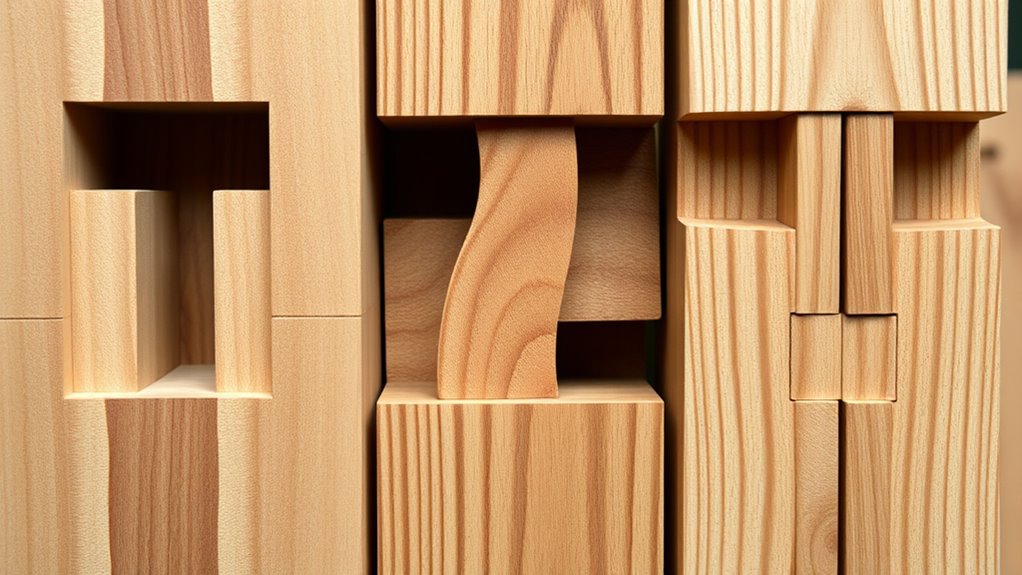
The mortise and tenon joint is a fundamental woodworking technique, but its variations allow for different strengths and aesthetics to suit diverse projects. When choosing among the types, you consider the joint strength required and the visual appeal you want to achieve. Each variation offers distinct advantages, making them suitable for different applications and woodworking techniques.
The through mortise and tenon is perhaps the most straightforward variation. You cut a hole, or mortise, all the way through the wood piece, allowing the tenon on the adjoining piece to pass completely through. This creates a strong connection because the entire tenon is supported on both sides, providing excellent joint strength. It’s often used in furniture like tables or frames where the exposed tenon adds an architectural element. The through joint is also easy to assemble, requiring precise measurements but minimal additional work, which makes it a popular choice among woodworkers. Its aesthetic appeal is clean and simple, especially when the tenon is visible, emphasizing craftsmanship.
Next, the haunched mortise and tenon adds a small shoulder or “haunch” to the joint. This variation enhances joint strength, particularly in resisting twisting or racking forces, which are common in door frames or structural elements. The haunch provides extra glue surface and mechanical support, making the joint more durable. From a woodworking techniques perspective, incorporating a haunch involves additional planning and precision, but it pays off in increased stability. Visually, it can be subtle or prominent, depending on how much of the haunch you leave visible, allowing you to tailor the look to your project.
The haunched mortise and tenon adds strength and stability with a visible or subtle shoulder.
Finally, the twin mortise and tenon involves creating two separate tenons on either side of a single piece, which fit into corresponding mortises. This variation is especially useful when joining wide or thick stock, distributing the load across multiple points for improved joint strength. It’s common in large furniture pieces or structural components requiring high stability. From a woodworking techniques standpoint, twin joints demand careful measurement and precise execution but result in a joint that’s markedly stronger than a single tenon. The multiple tenons can be designed to be hidden or visible, depending on the aesthetic you’re aiming for.

Mortising Machine, Tenon Tools Mortising Attachment for Drill Press and Woodworking Mortise, Bench Drill Locator Set for Mortiser Circles/Square Hole Chisel Drilling Machine Mortise Machine.
Mortising Attachment for Drill Press Set include:locator,press block,side positioning rod,fixed seat and other accessories,also comes with 4 kinds…
As an affiliate, we earn on qualifying purchases.
As an affiliate, we earn on qualifying purchases.
Frequently Asked Questions
What Are the Historical Origins of Mortise and Tenon Joints?
You might be surprised to learn that mortise and tenon joints originate from ancient woodworking practices, dating back thousands of years. These joints held significant cultural importance, especially in Asian and European architecture, symbolizing craftsmanship and durability. As you study their history, you’ll see how early artisans perfected these techniques to create strong, lasting structures, showcasing the timeless value of skilled woodworking shared across different civilizations.
How Do Different Wood Types Affect Joint Strength?
Different wood types substantially influence joint strength because of their wood grain and moisture content. Hardwoods with straight grain and low moisture content create stronger, more stable joints, resisting movement and cracking. Softwoods or wood with irregular grain and higher moisture tend to weaken joints over time, as they expand or contract. To maximize joint durability, choose wood with favorable grain patterns and properly dried moisture levels.
Can Mortise and Tenon Joints Be Disassembled Easily?
You can disassemble mortise and tenon joints if you use detachable joints or clever assembly techniques. Think of these joints as a puzzle with removable pieces; they lock tightly but can be taken apart with the right tools and skill. Properly designed detachable joints allow you to reassemble without damage, making maintenance or adjustments easier. So, with careful planning, your mortise and tenon joints won’t be permanent prisons—they’ll be flexible parts of your project.
What Tools Are Best for Creating Precise Variations?
You should use precision tools like marking gauges, try squares, and calipers to create accurate mortise and tenon variations. A drill press or mortising machine helps make certain clean, consistent cuts, while chisels refine the joints. Applying precise measurement techniques, such as careful marking and double-checking dimensions, guarantees your variations fit perfectly. These tools and techniques help you achieve tight, professional joints with minimal errors.
How Do Environmental Factors Influence Joint Durability?
You might think your perfect joint is invincible, but environmental factors like moisture impact can surprise you. Climate considerations, such as humidity and temperature changes, cause wood to expand or contract, stressing connections. This natural movement can weaken your joint over time, making it less durable. So, while you craft with precision, don’t forget to account for environmental influences to keep your joint strong and lasting longer.

General Tools Mortise and Tenon Jig – Drill Template Set with Hollow Chisel Bit Attachment
TABLE ADJUSTERS: Our mortise machine features integrated clamps and swings arms that align and secure wood for accurate…
As an affiliate, we earn on qualifying purchases.
As an affiliate, we earn on qualifying purchases.
Conclusion
Now that you’ve explored the different mortise and tenon styles, imagine the possibilities they open in your projects. Each variation offers unique strength and character, but which one will you choose for your next masterpiece? The choice isn’t just technical—it’s about what you want your craftsmanship to convey. So, are you ready to push your skills further and discover the perfect joint that could transform your work forever? The next move is yours.
Mortising Machine, Tenon Tools Mortising Attachment for Drill Press and Woodworking Mortise, Bench Drill Locator Set for Mortiser Circles/Square Hole Chisel Drilling Machine Mortise Machine.
Mortising Attachment for Drill Press Set include:locator,press block,side positioning rod,fixed seat and other accessories,also comes with 4 kinds…
As an affiliate, we earn on qualifying purchases.
As an affiliate, we earn on qualifying purchases.
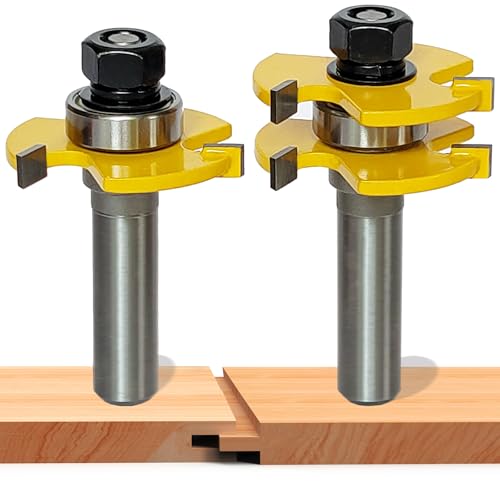
2 PCS Tongue and Groove Router Bit Set 1/2 Shank, 3Tooth Adjustable T-Shaped Wood Router Bit for Woodworking, Mortise and Tenon Tools
[Specifications and Craftsmanship] router bits 1/2 shank,Tongue and Groove Set, handle diameter: 1/2 inch, tooth width: 1/2 inch,…
As an affiliate, we earn on qualifying purchases.
As an affiliate, we earn on qualifying purchases.