
When thinking about CNC router bits for wood, acrylic, and detailed work, you’ve got to evaluate materials, sizes, and shapes. Use high-speed steel bits for wood and carbide bits for tougher jobs. For acrylic, choose sharper edges to avoid melting. Smaller bits offer precision but work slower, while larger bits remove material quickly. Regular maintenance is key for performance. By understanding these factors, you can enhance your projects and achieve better results—there’s more to explore on maximizing efficiency!

Get business pricing on tools and workshop supplies
- Business-only prices and quantity discounts
- Tax-exempt purchasing
- Multiple users, one account, clear invoices
Key Takeaways
- Choose high-speed steel bits for wood projects and sharper bits for acrylic to prevent melting during cutting.
- Select bit sizes carefully; larger bits remove material quickly, while smaller bits provide detail but require slower feed rates.
- Balance bit size with speed to ensure project precision and efficiency, adjusting feed rates according to material and bit type.
- Regularly inspect and maintain bits to ensure sharpness and cleanliness, enhancing cut quality and prolonging tool life.
- Draft designs considering bit types and sizes to optimize toolpaths, reduce waste, and improve overall craftsmanship.
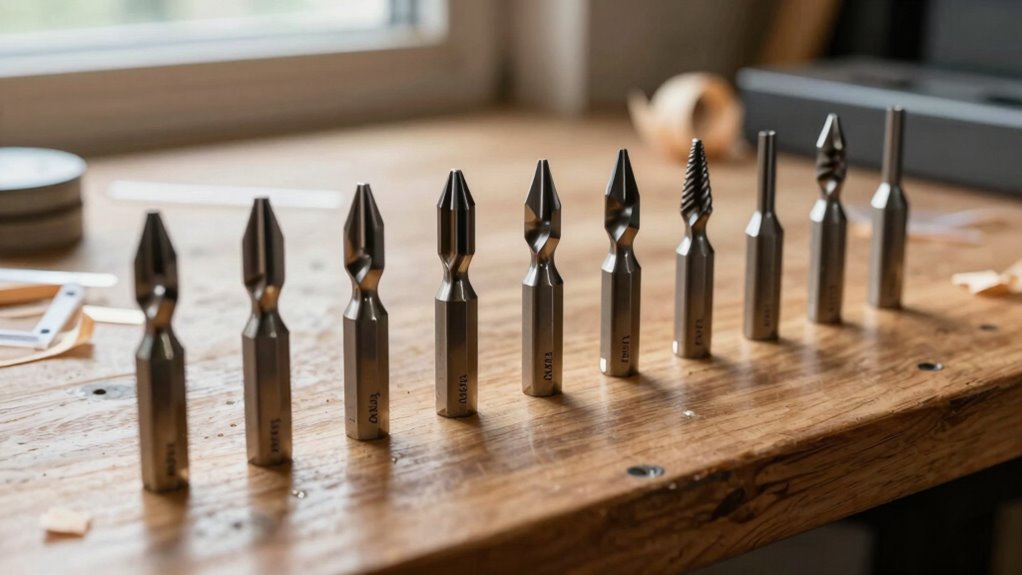
When it comes to CNC routing, choosing the right bits can make all the difference in your project’s outcome. You’ve got to take into account various factors like bit materials, sizes, and shapes tailored to your specific project types, whether you’re working with wood, acrylic, or intricate detail work. Each material demands a different approach, so knowing what to choose can save you time and guarantee quality results.
Choosing the right CNC router bits is crucial, as each material requires specific materials, sizes, and shapes for optimal results.
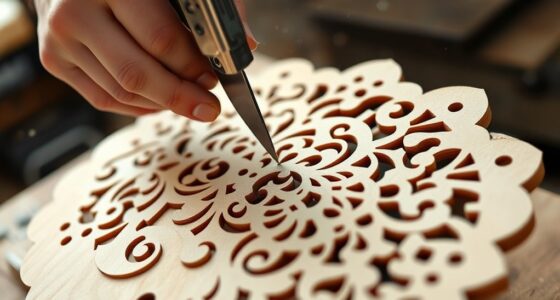
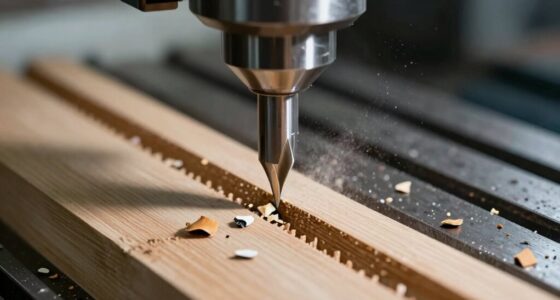
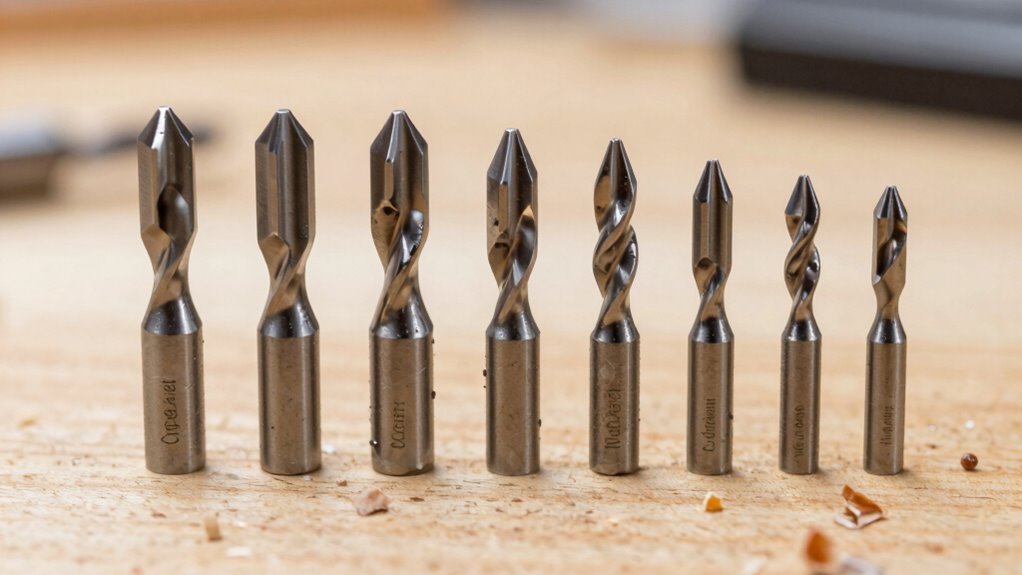
For wood projects, high-speed steel (HSS) bits often do the trick, but carbide bits provide durability and precision for tougher jobs. When you’re cutting acrylic, opt for bits designed specifically for that material; they have sharper edges to prevent melting. Detail work requires fine bits that can navigate tight curves and intricate designs, so don’t skimp on quality here. Reflect on the bit shapes, too. Straight bits, ball-nose bits, and V-bits each bring unique advantages depending on your cutting techniques.
Bit sizes also play an essential role in your project. Larger bits can remove material quickly but may not be suitable for detailed work. Smaller bits are great for finesse but may require slower feed rates to avoid breaking. You must balance size and speed, especially when switching between project types. Adjust your feed rates accordingly; faster isn’t always better, especially with delicate materials. Proper bit maintenance is crucial to ensure optimal performance and longevity. Regularly inspecting your bits for signs of wear and tear can prevent unexpected issues during your work.
Tool maintenance shouldn’t be overlooked, either. Keep your bits clean and sharp for peak performance. Dull bits can lead to poor cuts and increased wear on your machine. Regularly check for damage and replace bits as needed. This will not only prolong the life of your tools but also improve the quality of your projects. Understanding bit materials helps in selecting the most suitable bits for your specific needs and enhances your overall efficiency. Additionally, familiarizing yourself with bit types can help you tailor your tool selection even further to match your project requirements.
Design factors are equally important. Before you start, draft your designs with the bit types and sizes in mind. If you plan to use multiple bits for a project, make sure that your design accommodates the shifts smoothly. Knowing how each bit interacts with your material lets you anticipate issues before they arise, allowing for a smoother workflow. Planning ahead can also help you optimize your toolpath to reduce material waste and improve precision.
Ultimately, understanding how to select the right CNC router bits tailored to your specific materials and project types will elevate your craftsmanship. So, take the time to reflect on your choices, and you’ll see the difference in your results.
CNC router bits for wood and acrylic
As an affiliate, we earn on qualifying purchases.
As an affiliate, we earn on qualifying purchases.
Frequently Asked Questions
How Do I Choose the Right Bit for My Project?
To choose the right bit for your project, first consider the bit types available, like straight, spiral, or ball-nose, each suited for different tasks. Then, think about your cutting techniques; for intricate designs, a finer bit works best, while larger bits are great for heavy material removal. Match your bit to the material—wood, acrylic, or others—and verify it can handle the desired depth and speed for ideal results.
What Materials Can CNC Router Bits Cut Effectively?
CNC router bits are like the right tools in a chef’s kitchen; they excel with specific ingredients. You can effectively cut materials like wood, acrylic, and even softer metals. The cutting speed and material hardness are essential—harder materials need slower speeds to avoid burning or dulling your bits. For wood, you might choose a faster speed, while acrylic requires a more cautious approach to prevent melting. Choose wisely, and your projects will shine!
How Often Should I Replace My CNC Router Bits?
You should replace your CNC router bits when you notice significant wear, typically every few weeks to months, depending on usage. Keep an eye on wear indicators like dull edges or burning on your material. If your cuts start to lose precision or require more effort, it’s time for a change. Regularly inspecting your bits will help maintain quality and extend the life of your projects. Prioritize performance over lifespan!
Can I Use the Same Bit for Different Materials?
You can use the same bit for different materials, but it’s not always ideal. Bit compatibility depends on material characteristics like hardness and density. For instance, a bit designed for wood might struggle with acrylic or metal, leading to wear or poor results. It’s best to choose bits specifically suited for each material to guarantee clean cuts and longevity. Always consider the unique properties of what you’re working with before making a decision.
What Is the Best Way to Maintain CNC Router Bits?
To keep your CNC router bits in top shape, start with proper cleaning techniques. For example, after cutting acrylic, soak the bit in a solvent like acetone to remove residue. Regularly inspect for wear, and store your bits in a dedicated case with foam padding to prevent damage. This simple maintenance routine not only extends the life of your bits but also guarantees your projects stay precise and professional-looking.
Conclusion
In the world of CNC routing, choosing the right bit is like picking the perfect brush for a masterpiece. By understanding the nuances of bits for wood, acrylic, and detailed work, you can elevate your projects from ordinary to extraordinary. Don’t just settle for any bit; select the one that fits your needs best. With the right tools in hand, you’ll carve out not just shapes, but your own unique style in every creation. Happy routing!
Fall yard work Picks
leaf blowers
As an affiliate, we earn on qualifying purchases.