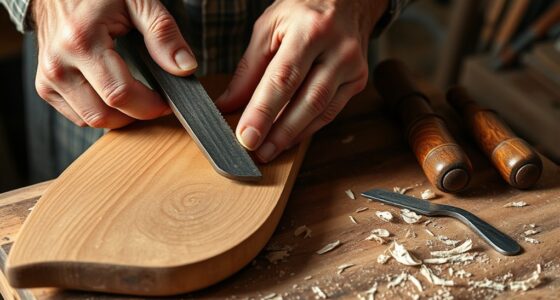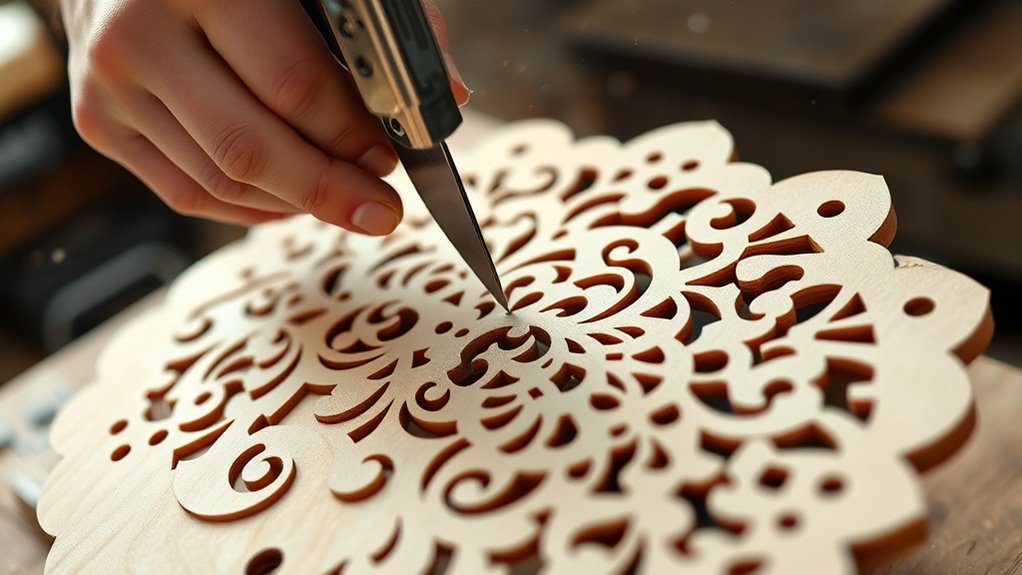

To carve intricate patterns and shapes with a scroll saw, control your saw’s speed and keep a steady hand for precise cuts. Choose the right blades designed for fine detail and plan your cuts carefully. Use safety gear, secure your workpiece, and work in a well-lit area. Patience and practice improve your skill, helping you create delicate and complex designs. Keep exploring to discover more tips for perfecting your scroll saw artistry.
Key Takeaways
- Use thin, sharp blades designed for fine details to achieve intricate patterns.
- Control saw speed and maintain a steady hand for precise, smooth cuts.
- Plan and mark patterns carefully before starting to ensure accuracy.
- Secure workpieces firmly and keep fingers at a safe distance during carving.
- Practice regularly to develop skill, control, and confidence in creating complex shapes.

Have you ever wondered how intricate wood designs are made with such precision? The secret lies in mastering the right tools and techniques, especially when working with a scroll saw. This versatile tool allows you to carve detailed patterns and shapes that would be nearly impossible to achieve by hand. To get the best results, you need to focus on precision techniques. These techniques involve carefully controlling the saw’s speed, keeping a steady hand, and making smooth, deliberate cuts. Precision is key to creating clean lines and intricate details, so you should always take your time and plan your cuts carefully before starting. Using thin, sharp blades designed specifically for fine work can also make a big difference. Remember, the more control you have, the more complex and delicate your designs can be. Additionally, understanding the different types of blades and their specific uses can significantly improve your carving results.
But as you work on your project, safety precautions should always be a priority. Scroll saws are powerful tools, and improper handling can lead to injuries. Before you begin, make sure you’re wearing safety glasses to protect your eyes from flying dust and small wood pieces. Keep your fingers a safe distance from the blade at all times, and avoid forcing the saw through tough or awkward areas. Instead, let the saw do the work at a comfortable pace. It’s also wise to secure your workpiece firmly to the table to prevent slipping, which could cause accidents or uneven cuts. Always unplug the saw when changing blades or making adjustments, and never leave it running unattended. Maintaining a clean workspace helps prevent dust buildup, which can impair your visibility and safety. Proper lighting is essential so you can see your pattern clearly and avoid mistakes.
Practicing these safety precautions, combined with honing your precision techniques, enables you to produce highly detailed and professional-looking wood carvings. It’s about blending skill with caution, allowing you to push the boundaries of your craftsmanship without risking injury. As you gain experience, you’ll notice how smoother, more accurate cuts lead to more refined designs. The key is patience—rushing can cause mistakes and compromise safety. Take your time to develop steady hand movements and to understand your scroll saw’s capabilities. The more comfortable you become with the tool, the more intricate and beautiful your wood carvings will be. Whether you’re creating delicate lace-like patterns or bold shapes, focusing on precision techniques and safety precautions ensures your projects are both stunning and safe to produce.
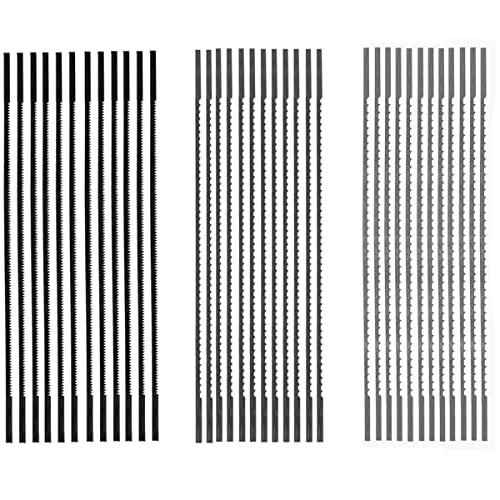
FOXBC 5 Inch Plain End Scroll Saw Blade Set, 36 Pack (28TPI, 12 TPI, 10TPI)
5 Inch Plain End Scroll Saw Blade Set
As an affiliate, we earn on qualifying purchases.
As an affiliate, we earn on qualifying purchases.
Frequently Asked Questions
What Safety Gear Is Recommended for Scroll Saw Carving?
When you’re scroll saw carving, you should always wear protective eyewear to shield your eyes from flying debris and dust. A dust mask is vital to prevent inhaling fine particles that can irritate your lungs. Additionally, consider using ear protection if the saw is loud. Staying safe ensures you can focus on creating intricate patterns and shapes without risking injury or health issues.
How Do I Choose the Right Blade for Intricate Designs?
You should choose blade types like fine-toothed blades for intricate designs, as they provide better control and detail. Opt for smaller blade sizes, such as 1/8 inch or 1/16 inch, which allow for tighter curves and precision cuts. Always consider the material you’re working with and the complexity of your pattern. Switching between different blade types and sizes helps you achieve the most accurate, detailed results in your scroll saw projects.
Can I Carve Soft and Hard Woods With the Same Saw?
Like a modern-day artisan wielding a laser sword, you can carve both soft and hard woods with the same scroll saw. Just remember, wood density impacts blade compatibility—soft woods demand finer blades, while harder woods need sturdier ones. Adjust your blade type accordingly, and you’ll craft intricate patterns effortlessly. Keep in mind, switching blades between different wood types guarantees clean cuts and extends your saw’s lifespan—no need to be a knight in shining armor!
What Are Common Mistakes to Avoid During Scroll Sawing?
To avoid mistakes while scroll sawing, make certain your blade tension is correct; too loose or tight can cause blade breakage or poor cuts. Always stabilize your workpiece with clamps or a jig to prevent shifting, which can ruin your pattern. Keep your blades sharp and use the appropriate blade for your material. Take your time, follow the pattern carefully, and don’t rush—patience leads to cleaner, more precise results.
How Do I Maintain and Clean My Scroll Saw Properly?
You might think your scroll saw is a self-cleaning marvel, but to keep it sharp, you need to maintain it properly. Regularly check blade alignment for precise cuts, and use dust collection to prevent buildup. Wipe down surfaces after each use, clean the dust port, and lubricate moving parts as recommended. This routine keeps your saw running smoothly, ensuring your intricate patterns stay perfect and your workspace stays tidy.
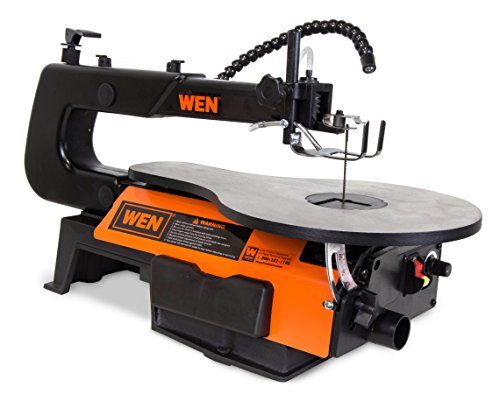
WEN Variable Speed Scroll Saw, 16-Inch with Work Light (3921)
Unique design accepts blades in two directions (standard and 90 degrees) to allow for infinite ripping capacity
As an affiliate, we earn on qualifying purchases.
As an affiliate, we earn on qualifying purchases.
Conclusion
With a scroll saw in hand, you hold the key to transforming simple wood into intricate works of art. As you carve each delicate pattern, you’ll find yourself weaving your own story into every cut—like a painter with a brush. Remember, patience and practice turn rough sketches into breathtaking masterpieces. So, keep your passion alive, and let your creativity flow freely—your next stunning piece is just a cut away.

DEWALT DPG82-11 Concealer Clear Anti-Fog Dual Mold Safety Goggle, Clear Lens, 1 Pair
DEWALT ToughCoat hard coated lens provides tough protection against scratches.
As an affiliate, we earn on qualifying purchases.
As an affiliate, we earn on qualifying purchases.

2Pcs Scroll Saw Blades Holders Conversion Kit, Universal Pin-Less Adapter Metal Upper/Lower Blade Clamp Holders Accessories Part, Suitable for Saw Blade Size 133 * 0.7 * 0.7 mm
Universal Compatibility: Designed to fit most scroll saws. Whether you're a professional carpenter or a DIY enthusiast, this…
As an affiliate, we earn on qualifying purchases.
As an affiliate, we earn on qualifying purchases.