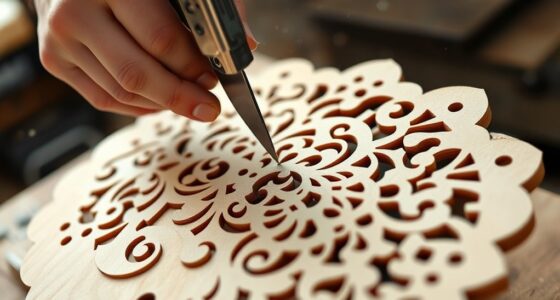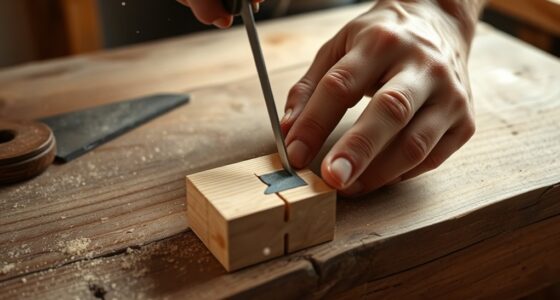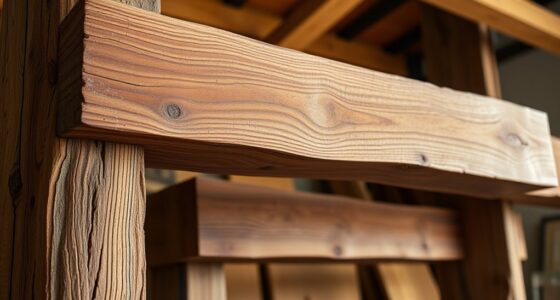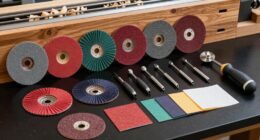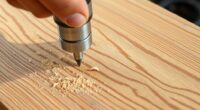
When choosing between bookmatching and slip-matching for panels, you control the visual impact of your woodwork. Bookmatching creates symmetrical, mirror-image patterns that emphasize natural grain and add a bold, dynamic look. Slip-matching presents a flowing, continuous grain for a more subtle, harmonious appearance. Your choice influences the overall style, whether dramatic or understated. Keep exploring these techniques to discover how you can master grain alignment and enhance your projects’ beauty.
Key Takeaways
- Bookmatching creates symmetrical, mirror-image patterns by opening veneer like a book, emphasizing natural grain features.
- Slip-matching involves laying veneer sheets in sequence without flipping, resulting in continuous, flowing grain patterns.
- Both techniques require precise veneer cutting and alignment to achieve desired visual effects and ensure consistency.
- Bookmatching highlights bold, symmetrical designs, while slip-matching emphasizes organic, harmonious grain flow.
- Choosing between methods depends on whether a dramatic, mirrored pattern or a subtle, natural look is desired for panels.
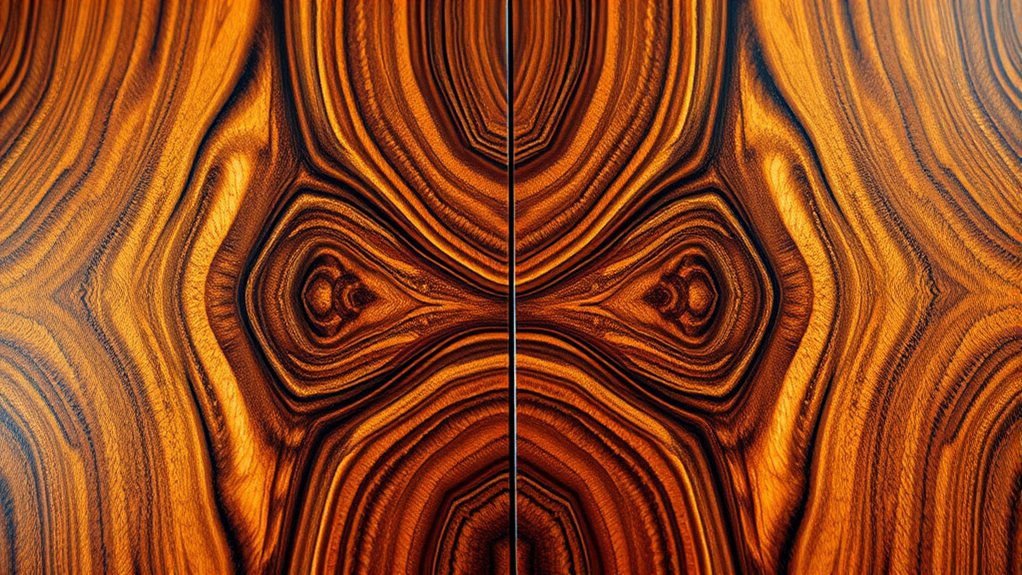
If you’re looking to enhance the visual appeal of your woodworking projects, understanding bookmatching and slip-matching panels is essential. These techniques are key to creating striking, symmetrical patterns that draw the eye and add a professional touch to your work. At the core of both methods lies the concept of grain alignment — how the natural lines and textures of the wood are arranged to produce a cohesive look. Proper grain alignment ensures that the panels appear harmonious, with patterns flowing naturally from one piece to the next. When you match panels correctly, the grain lines line up seamlessly or intentionally contrast, depending on your design goals. This alignment influences the aesthetic variation you see across the surface, allowing you to highlight certain features or create a uniform, continuous appearance.
Bookmatching involves opening a piece of veneer like a book, so the two adjoining sheets mirror each other. When you lay these sheets side by side, you create a symmetrical, butterfly-like pattern that accentuates the natural grain. The key to successful bookmatching is precise veneer cutting and careful placement, so the grain alignment creates a balanced visual effect. This technique can make a tabletop, door, or panel appear more dynamic, as the mirrored patterns enhance the sense of depth and movement. It’s especially effective with highly figured or patterned woods, where the natural beauty becomes a focal point. The aesthetic variation is controlled by how you position the matched sheets; slight adjustments can emphasize or minimize certain grain features, giving your project a custom, artistic touch. Additionally, understanding how to control these techniques can help you achieve consistent results across multiple panels, especially when working with high-quality or patterned wood.
Bookmatching mirrors veneer sheets for symmetrical, dynamic patterns that highlight natural grain and craftsmanship.
Slip-matching, on the other hand, involves laying veneer sheets in a continuous sequence without flipping or mirroring them. The resulting pattern showcases the natural grain, with each sheet’s unique markings visible and flowing into the next. This method emphasizes the organic beauty of the wood, highlighting aesthetic variation in a more subtle way compared to bookmatching. Slip-matching is ideal when you want a more uniform or understated look, as it maintains the natural flow of the grain across the panel. Here, grain alignment remains important but is less rigid; you aim for a consistent, harmonious flow rather than perfect symmetry. The aesthetic variation in slip-matched panels adds character and depth, making each project uniquely beautiful and showcasing the natural imperfections and features of the wood.
In essence, both techniques allow you to play with grain alignment to achieve different visual effects. Bookmatching creates bold, symmetrical patterns that captivate attention, while slip-matching celebrates the natural variation and flow of the wood’s grain. Knowing how to control these aspects gives you the power to craft panels that are not only functional but also visually stunning, elevating the overall quality of your woodworking projects. Mastering grain alignment can significantly enhance the aesthetic appeal and professionalism of your finished work.

Grizzly Industrial T25920-12" x 18" Variable-Speed Benchtop Wood Lathe
This Variable-Speed Wood Lathe provides 12" of turning radius and spindles up to 16-1/2"
As an affiliate, we earn on qualifying purchases.
Frequently Asked Questions
How Durable Are Bookmatched and Slip-Matched Panels Over Time?
You’ll find that bookmatched and slip-matched panels are quite durable over time if properly installed and maintained. Their panel aging is minimal, and they generally retain structural integrity for years. However, exposure to moisture, temperature changes, or UV rays can affect their longevity. Regular cleaning and sealing help preserve their appearance and strength, ensuring your panels stay beautiful and sturdy for the long haul.
Can These Panel Techniques Be Used With Any Type of Wood?
You can use bookmatching and slip-matching techniques with many types of wood, but the wood grain plays a big role in panel versatility. Hardwoods like oak, walnut, and cherry work well because they show off the grain pattern beautifully. However, softer woods or those with irregular grain may not produce the best visual effects. Always consider the wood’s grain and how it will look when matching panels for the most stunning results.
Are There Special Maintenance Requirements for Bookmatched Panels?
Caring for bookmatched panels is easier than you might think, but neglecting their maintenance can turn your stunning design into a nightmare. You should follow specific panel care and cleaning requirements to keep the wood’s beauty intact. Use gentle, damp cloths and avoid harsh chemicals. Regular dusting and avoiding excess moisture help preserve the pattern’s seamless look, ensuring your panels stay gorgeous and impressive for years to come.
How Do Costs Compare Between Bookmatching and Slip-Matching?
The cost comparison between bookmatching and slip-matching panels varies, but generally, bookmatching tends to be more expensive due to the precise alignment and additional processing involved. Slip-matching is more economical, making it a popular choice for budget-conscious projects. When considering economic considerations, weigh the visual impact against your budget, as the higher cost of bookmatching may be justified by its striking, continuous pattern that enhances your space’s aesthetic.
What Are the Environmental Impacts of Using These Matching Techniques?
Think of these matching techniques as eco-friendly dance partners. They promote sustainable sourcing by minimizing material waste and ensuring better use of each slab. This reduces environmental impact, as less waste ends up in landfills. By carefully planning the pattern, you can also lower the need for additional material, supporting waste reduction. Overall, these methods help you create stunning designs while being kinder to the planet.

WEN 3421 3.2-Amp 8" by 12" Variable Speed Mini Benchtop Wood Lathe
Perfect for pens, bowls, cups, chess pieces, and other small workpieces
As an affiliate, we earn on qualifying purchases.
Conclusion
Now that you understand bookmatching and slip-matching, you can confidently choose panels that enhance your space’s beauty. Think of it like creating a vintage vinyl record collection—each panel is a unique track, perfectly aligned to tell a story. Whether you prefer the dramatic symmetry of bookmatching or the seamless flow of slip-matching, you’re crafting a masterpiece. So, go ahead—design your room like a modern-day Da Vinci, blending style with timeless craft.

Wood Lathe, 14 in x 20 in Benchtop Wood Lathe Machine 0.5 HP Infinitely Variable Speed 1040-2980 RPM, Wood Turning Lathe Machine with Wrench & 2 Chisels for Woodworking, Woodturning
DIY Wood Lathe : Our benchtop wood lathe is expertly designed with a spacious 20 in workbench and...
As an affiliate, we earn on qualifying purchases.

Wood Lathe Machine, 12 x 18 inch, 550W 3/4HP, 5 Speed Settings 680-2770 RPM,Benchtop Lathe with MT2 Drive/Live Center
Powerful 3/4HP 550W Motor: The high-performance AC motor delivers consistent power for smooth wood turning. It prevents overheating...
As an affiliate, we earn on qualifying purchases.