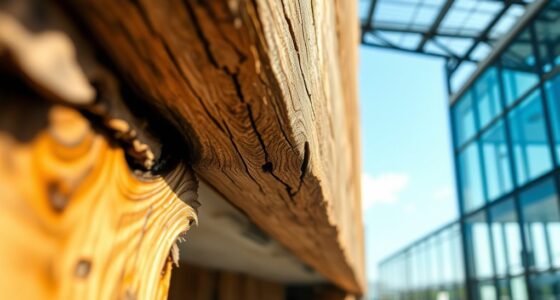
Working with poplar offers several paint-grade advantages that make it a great choice for your projects. Its uniform, fine grain guarantees a smooth surface that’s easy to sand and finish, resulting in clean, professional-looking paint jobs. Poplar is soft and easy to work with, which helps when shaping or carving. Plus, it resists warping if stored properly. If you keep exploring, you’ll discover how to maximize its benefits for your woodworking needs.
Key Takeaways
- Poplar’s fine, uniform grain creates a smooth, blemish-free surface ideal for painted finishes.
- Its softness makes cutting, shaping, and detailed work easier for both hobbyists and professionals.
- Poplar accepts paint evenly, providing a sleek, professional-looking finish with minimal grain imperfections.
- It resists warping and splitting when properly dried, ensuring stability for interior painted projects.
- Its lightweight and workability make it a practical choice for painted furniture, cabinetry, and trim.

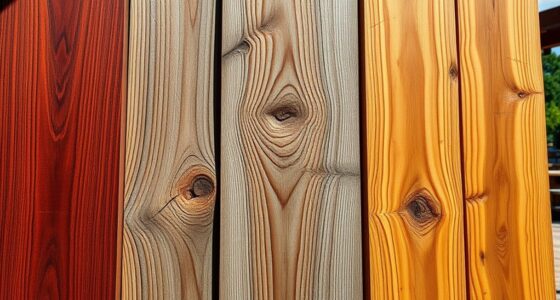
Have you ever considered working with poplar wood? If you’re exploring options for projects that require a smooth finish and ease of work, poplar might just be the perfect choice. One of the standout features of poplar is its relatively uniform grain pattern. Unlike woods with dramatic swirls or knots, poplar’s grain is fine and straight, making it easy to sand and finish smoothly. This consistent grain pattern is especially beneficial if you’re planning to paint your project, as it provides a sleek, even surface that accepts paint evenly without showing imperfections. With poplar, you won’t have to worry about distracting grain patterns interfering with your finished look, making it ideal for painted furniture, cabinetry, or decorative trim.
When it comes to wood durability, poplar offers a surprising balance. While it’s not as hard as oak or maple, it’s still durable enough for many interior applications. Its softness makes it easy to cut, shape, and carve, which appeals to hobbyists and professionals alike. You can work with it using standard woodworking tools without much fuss, and it holds nails and screws well when properly prepared. However, because of its moderate durability, it’s better suited for projects that won’t face heavy wear or exposure to the elements. For painted indoor furniture, poplar’s durability is more than sufficient, especially since the paint provides an extra layer of protection.
Another advantage related to its durability is that poplar resists warping and splitting better than some softer woods, especially when dried and stored correctly. This stability makes it a reliable choice for detailed work or pieces that require precise cuts. Since it’s lightweight and easy to handle, you can work on larger panels or intricate designs without excessive effort. Furthermore, poplar is less prone to cracking during finishing processes, which means your painted surfaces will come out cleaner and more professional-looking.
poplar wood sheets for furniture
As an affiliate, we earn on qualifying purchases.
As an affiliate, we earn on qualifying purchases.
Frequently Asked Questions
How Does Poplar Compare to Other Paint-Grade Woods in Cost?
Poplar generally costs less than many other paint-grade woods, making it a budget-friendly choice. When you compare the cost, you’ll find poplar offers excellent value without sacrificing quality. Its affordability helps you stay within your budget considerations, especially for large projects. If you’re looking for an economical option with good workability, poplar’s cost comparison to other woods makes it a smart, cost-effective decision for your painting needs.
What Are the Best Finishes to Enhance Poplar’s Appearance?
To enhance poplar’s appearance, you should use clear or water-based finishes that highlight its grain. Applying a stain or grain enhancement product can bring out texture, while choosing color options like light or tinted stains enhances its warm tones. Use a polyurethane or polycrylic topcoat for durability and a smooth finish. These finishes protect the wood and make its natural beauty stand out, giving your project a polished, professional look.
Can Poplar Be Used for Outdoor Projects?
Yes, you can use poplar for outdoor projects, but you need to focus on weatherproofing techniques to enhance its outdoor durability. Apply a high-quality exterior primer and paint or sealant to protect it from moisture and UV rays. Regular maintenance and reapplication of protective coatings will help maintain its appearance and longevity. With proper weatherproofing, poplar can withstand outdoor conditions and serve well in your projects.
How Resistant Is Poplar to Pests and Decay?
Did you know poplar has moderate pest resistance? While it’s not completely immune, it resists pests better than some hardwoods. However, its decay resistance is limited, especially outdoors, making it more prone to rot if not properly treated. You should consider applying sealants or preservatives to improve its durability. Overall, poplar offers decent pest resistance but requires care to prevent decay in environments exposed to moisture.
What Tools Are Recommended for Working With Poplar?
You should use sharp tools and equipment like saws, chisels, and planes for working with poplar. For prep and finishing, sandpaper and brushes are essential. Keep your tools clean to prevent tearing the wood, and use fine grit sandpaper to achieve a smooth surface. Properly preparing and finishing poplar guarantees a quality paint job and enhances its appearance, making your project look professional and polished.
paint-grade poplar lumber
As an affiliate, we earn on qualifying purchases.
As an affiliate, we earn on qualifying purchases.
Conclusion
Working with poplar is like sailing smoothly on calm waters—you’ll find it easy to work with, thanks to its paint-grade quality and versatile nature. Its smooth surface and affordability make it a favorite for many projects. When you choose poplar, you’re opting for a reliable partner that responds well to your craftsmanship. Embrace its advantages, and you’ll finish your projects with the same ease as a gentle breeze guiding you home.
poplar woodworking tools
As an affiliate, we earn on qualifying purchases.
As an affiliate, we earn on qualifying purchases.
poplar wood finishing supplies
As an affiliate, we earn on qualifying purchases.
As an affiliate, we earn on qualifying purchases.