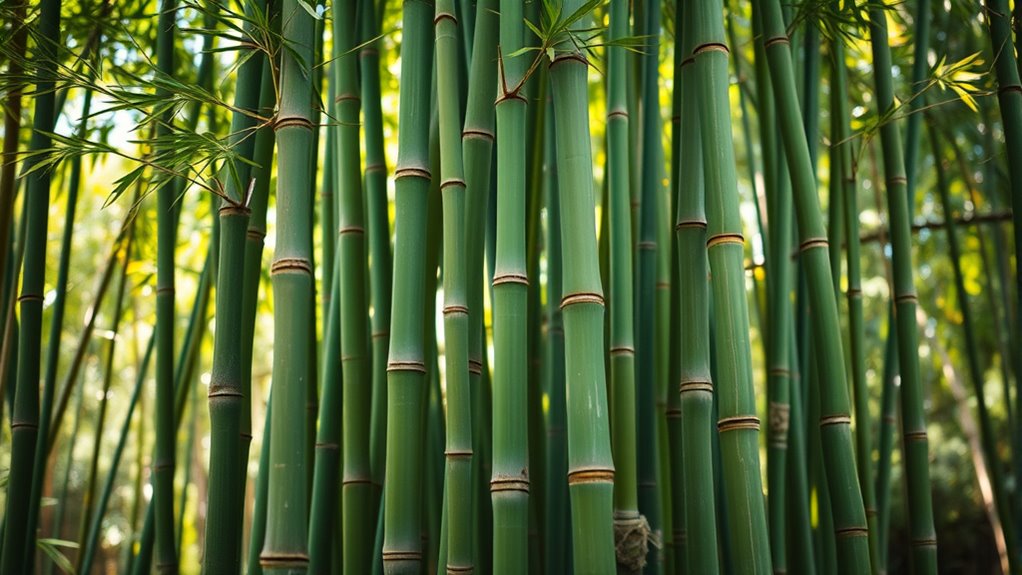

Bamboo is a highly sustainable, rapidly renewable resource that offers remarkable strength, making it ideal for construction, textiles, and more. Its quick growth cycle, every three to five years, allows you to harvest responsibly while keeping the plant healthy and supporting the environment. Plus, bamboo helps prevent soil erosion, absorbs more carbon dioxide than many trees, and requires minimal water. Discover how this versatile plant can benefit both ecosystems and economies as you explore further.

Get tools and workshop supplies delivered free — and shop member deals
- Fast, free delivery on millions of items
- Access to Prime Big Deal Days deals on October 6–7
- Prime Video, Amazon Music and more included
Key Takeaways
- Bamboo’s fast growth cycle allows harvest every 3-5 years, ensuring rapid renewal as a sustainable resource.
- Its natural strength rivals that of steel and hardwood, making it suitable for construction and industrial uses.
- Bamboo’s extensive root system stabilizes soil, preventing erosion and supporting land rehabilitation efforts.
- As a highly renewable plant, bamboo reduces deforestation pressure while providing valuable environmental benefits.
- Its low water and chemical requirements contribute to eco-friendly production and minimal environmental impact.

Bamboo is gaining recognition as a highly sustainable and fast-growing renewable resource. Its rapid growth cycle means you can harvest it much more frequently than traditional hardwoods, often every three to five years, without causing long-term damage to the environment. This makes bamboo an excellent choice when considering sustainable harvesting practices. When you harvest bamboo responsibly, you allow new shoots to emerge naturally, maintaining the health of the plant and the surrounding ecosystem. This sustainable approach ensures that bamboo can continuously provide a renewable supply of material while preserving its ecological benefits. Unlike trees that take decades to mature, bamboo’s quick regeneration cycle means you can meet demand without depleting natural forests, reducing deforestation pressures and supporting biodiversity. Rich cultural heritage of bamboo in many regions emphasizes its importance beyond just its environmental advantages.
The ecological benefits of bamboo extend beyond its fast growth. As a plant that can thrive in a variety of climates and soil conditions, bamboo helps prevent soil erosion and promotes land stability. Its extensive root system holds the soil firmly in place, making it an effective tool for land rehabilitation and conservation projects. When you choose bamboo, you’re also supporting a plant that absorbs large amounts of carbon dioxide—up to 35% more than many other trees—thus playing a significant role in combating climate change. This carbon sequestration capability helps improve air quality and contributes to the overall health of the environment. Moreover, bamboo requires minimal water during its growth cycle, especially compared to traditional crops or trees, which means you can favor its cultivation even in areas with limited water resources. Its low water and chemical input needs lessen environmental pollution and reduce the strain on local ecosystems.
You can appreciate how bamboo’s ecological benefits extend to supporting local communities and economies as well. By opting for sustainable harvesting methods, communities can harvest bamboo without harming the environment, ensuring a steady supply for construction, textiles, and other industries. This sustainable approach also encourages responsible land use and helps maintain biodiversity by preventing monoculture plantations. As you explore bamboo as a renewable resource, you’ll see how its rapid growth, combined with sustainable harvesting, offers a multifaceted ecological advantage. It’s a plant that truly supports environmental health, economic development, and resource renewal all at once. With its ability to regenerate quickly and its numerous ecological benefits, bamboo stands out as a sustainable solution that can meet modern demands while protecting the planet for future generations.
As an affiliate, we earn on qualifying purchases.
Frequently Asked Questions
How Does Bamboo Compare to Traditional Hardwood in Durability?
You’ll find that bamboo generally surpasses traditional hardwood in durability, thanks to extensive durability testing and material comparisons. It’s naturally strong, resilient, and resistant to pests and moisture, making it a reliable choice for flooring and furniture. Bamboo’s rapid growth also means it’s a sustainable option, while its durability holds up well over time. Overall, it’s an excellent, eco-friendly alternative that matches or exceeds the longevity of many hardwoods.
Are There Any Environmental Concerns With Large-Scale Bamboo Farming?
You should consider that large-scale bamboo farming can raise environmental concerns, especially regarding soil erosion and water usage. Dense bamboo plantations may deplete local water resources and disturb soil stability, leading to erosion if not managed properly. To minimize these impacts, implement sustainable practices like controlled watering and soil conservation methods. Responsible farming guarantees bamboo remains an eco-friendly alternative, balancing its rapid renewability with the health of surrounding ecosystems.
Can Bamboo Be Used for High-Rise Building Construction?
Yes, you can use bamboo for high-rise building construction. Its structural integrity is strong enough to support tall structures when properly treated and engineered. Bamboo offers excellent design flexibility, allowing for innovative architectural styles. However, you must guarantee that the bamboo meets safety standards and is reinforced appropriately. With proper engineering, bamboo can be a sustainable alternative for high-rise buildings, combining strength with eco-friendly benefits.
What Are the Best Treatments to Prevent Pest Infestation in Bamboo?
Don’t put all your eggs in one basket when it comes to pest prevention. You should apply pest-resistant coatings to bamboo, creating a protective barrier. Additionally, natural deterrents like neem oil or chili pepper sprays can keep pests at bay. Regular inspections and proper drying also help prevent infestations. Combining these methods guarantees your bamboo stays healthy and pest-free, giving you peace of mind and longer-lasting use.
How Does Bamboo’s Carbon Sequestration Capacity Compare to Other Plants?
You’ll find that bamboo’s carbon sequestration capacity surpasses many other plants, absorbing large amounts of carbon dioxide through rapid growth. This high rate of carbon absorption notably reduces greenhouse gases, making bamboo a powerful tool for positive climate impact. When you choose bamboo for products or planting, you’re actively helping to mitigate climate change by leveraging its efficient carbon sequestration abilities, which contribute to a more sustainable and healthier environment.
Conclusion
You might think bamboo’s rapid growth makes it the ultimate renewable resource, but some argue its environmental benefits depend on how it’s harvested and processed. While bamboo can outpace traditional wood in sustainability, overharvesting or poor practices could harm ecosystems. Still, if managed responsibly, bamboo can genuinely be a strong, eco-friendly choice that challenges the idea that only slow-growing trees are valuable. Embracing bamboo’s potential requires understanding and supporting sustainable cultivation methods.
Fall Picks
fall essentials
As an affiliate, we earn on qualifying purchases.