When working with birch, focus on its fine, uniform grain to achieve smooth finishes and avoid splintering. Always align cuts with the grain direction for cleaner, more precise results, especially in detailed work. Birch’s bark is stable when properly dried and acclimated, resisting warping or shrinking. Understanding these properties helps you craft stronger, longer-lasting pieces. Continuing to explore these tips will deepen your ability to work confidently with birch and maximize its natural beauty.
Key Takeaways
- Align the grain direction properly during cutting to reduce splintering and achieve a smooth finish.
- Select responsibly sourced, sustainably harvested birch to support eco-friendly woodworking practices.
- Properly dry and acclimate birch to prevent warping, shrinking, or cracking over time.
- Use gentle, consistent techniques to enhance grain appearance and maintain the wood’s natural stability.
- Recognize that birch’s fine, uniform grain and stability make it ideal for precise, durable projects.

Birch wood is prized for its versatility and attractive appearance, making it a popular choice for many woodworking projects. When working with birch, understanding its grain and stability is essential to achieving the best results. One of the key considerations is guaranteeing sustainable harvesting. By sourcing birch from responsible suppliers who prioritize sustainable practices, you not only protect the environment but also ensure the long-term availability of this beautiful wood. Sustainable harvesting involves selective cutting and careful forest management, which helps maintain healthy ecosystems and prevents overexploitation. This approach allows you to enjoy working with high-quality birch while supporting conservation efforts.
Choose sustainably harvested birch to ensure eco-friendly projects and long-term availability of this beautiful wood.
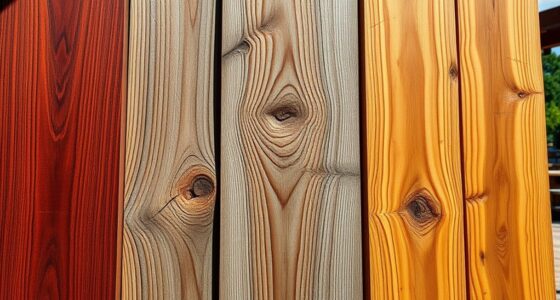
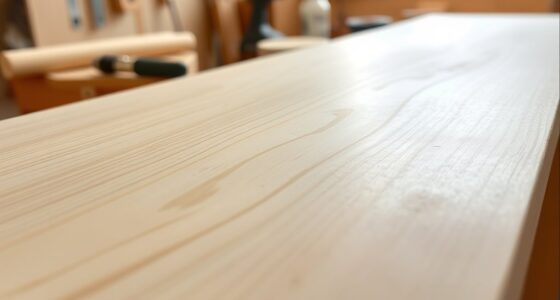
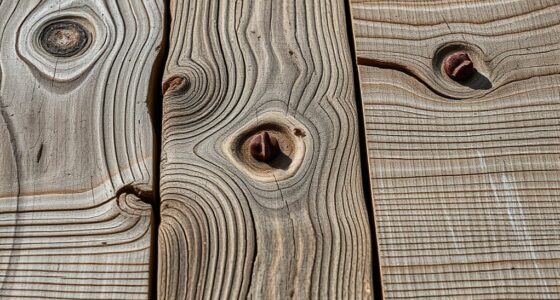
The grain of birch is generally fine and even, with a smooth texture that lends itself well to a variety of aesthetic applications. Its light, creamy color and subtle grain pattern make it ideal for projects where a clean, modern look is desired. The uniformity of birch’s grain allows for seamless finishes and straightforward staining or painting, giving your projects a polished appearance. When selecting birch, pay attention to the grain direction, as it influences how the wood will cut and how it will behave during shaping and finishing. Working with the grain reduces splintering and results in cleaner cuts, which is especially important for detailed or intricate work. Additionally, understanding the grain pattern can help you select the best orientation for your project to maximize beauty and durability.
Birch’s stability is another reason it’s favored in woodworking. It resists warping and shrinking when properly dried and stored, making it a reliable choice for furniture, cabinetry, and decorative items. Its stability also means you can apply various finishes without worrying about uneven movement that could crack or peel. To maximize stability, always acclimate the wood to your workshop environment before starting your project. Proper storage and handling prevent moisture imbalance, which can compromise the wood’s integrity over time.
When you consider both the grain and stability of birch, you’ll find that it’s a forgiving material that produces excellent results across a range of applications. Its aesthetic appeal, combined with sustainable sourcing, ensures that your projects not only look great but also align with environmentally responsible practices. Whether you’re creating furniture, decorative panels, or intricate inlay work, understanding these aspects of birch helps you make the most of this versatile wood. With proper techniques, you’ll enjoy working with birch’s predictable behavior and stunning appearance, bringing your creative visions to life with confidence and care.
Frequently Asked Questions
How Does Birch Compare to Other Hardwoods in Durability?
Birch is quite durable compared to many other hardwoods due to its high wood density, which enhances its strength and resistance properties. You’ll find that it withstands wear and tear better, making it suitable for furniture and flooring. While not as resistant to moisture as some species like oak or maple, birch’s overall durability makes it a reliable choice for projects requiring stability and longevity.
What Finishing Techniques Best Enhance Birch’s Natural Grain?
To enhance birch’s natural grain highlighting, start with a light sanding and apply a clear finish like polyurethane or lacquer. These finishes protect the wood while showcasing its subtle, fine grain details. Using a clear finish benefits you by maintaining the authentic look of birch, giving it a smooth, polished appearance. For added depth, consider a slight stain or oil, but keep it subtle to preserve the natural beauty.
Can Birch Be Used Outdoors Without Special Treatment?
Yes, you can use birch outdoors, but it needs special treatment for weather resistance. Apply a high-quality sealant or outdoor finish to protect it from moisture and UV rays. Regular maintenance is essential; reapply sealant annually and clean the surface to maintain its appearance and durability. Without proper treatment and ongoing care, birch may warp or crack over time when exposed to outdoor elements.
How Does Birch Age and Change Over Time?
Birch ages gracefully, developing a beautiful patina over time, but you should watch out for discoloration risks. Exposure to sunlight and moisture accelerates the aging process, causing it to darken or develop uneven tones. To preserve its appearance, you might need to apply protective finishes periodically. With proper care, your birch will maintain its charm, but don’t neglect the aging process or it could show signs of wear sooner than expected.
Are There Common Pests That Target Birch Wood?
You should know that birch wood can attract pests like beetles and borers, which target its softer areas. To prevent pests, focus on pest prevention strategies such as sealing and treating the wood. While birch has some natural insect resistance, it’s not completely immune. Regular inspections and proper sealing are key to protecting your birch projects from common pests and ensuring long-term durability.
Conclusion
Working with birch is like harnessing a quiet river—steady, reliable, and full of hidden strength. Its grain guides your hand, offering stability through every cut and carve. When you choose birch, you’re trusting a versatile companion that stands firm against the currents of time and wear. Embrace its natural beauty and dependable nature, and you’ll find your craftsmanship flowing smoothly, like a gentle stream, shaping something both beautiful and enduring.