When choosing between hard and soft maple for furniture, consider their differences in hardness, grain, and finish. Hard maple is dense, durable, and has a fine, uniform grain, making it great for heavy-use pieces and detailed work. Soft maple is lighter, with more prominent grain variations, suitable for decorative items but less resistant to dents. Knowing these traits helps you select the right type for your project. Keep exploring to discover how to get the best finish and longevity.
Key Takeaways
- Hard maple is dense, durable, and ideal for heavy-use furniture, while soft maple is lighter and better suited for decorative pieces.
- Hard maple features a fine, uniform grain that finishes smoothly, unlike soft maple’s more pronounced grain variations.
- Hard maple responds well to finishing techniques like staining and polishing, whereas soft maple may require grain fillers or primers.
- Soft maple is more prone to dents and scratches, making it less suitable for high-stress or heavy-duty furniture applications.
- Choosing the right maple type depends on project needs—hard maple for durability, soft maple for character and ease of work.

When choosing maple for furniture making, understanding the differences between hard and soft varieties is essential. Maple is prized for its durability and attractive appearance, but not all maple is created equal. Hard maple, often called sugar maple, is dense and sturdy, making it an excellent choice for furniture that needs to withstand daily use. Soft maple, which includes several softer varieties, is lighter and easier to work with, but it may not hold up as well under heavy stress. Recognizing these differences helps you select the right type for your project, especially when considering grain patterns and finishing techniques.
Choosing between hard and soft maple depends on durability needs and desired grain patterns.
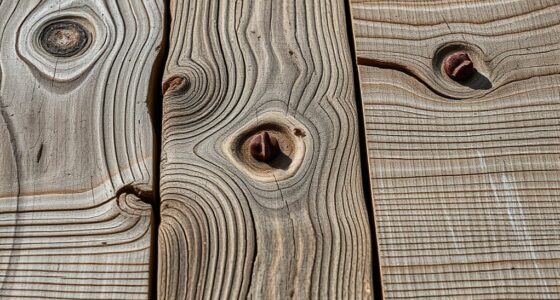
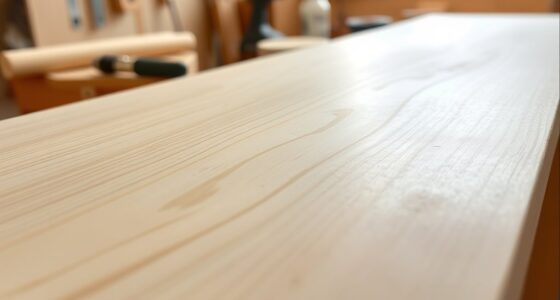
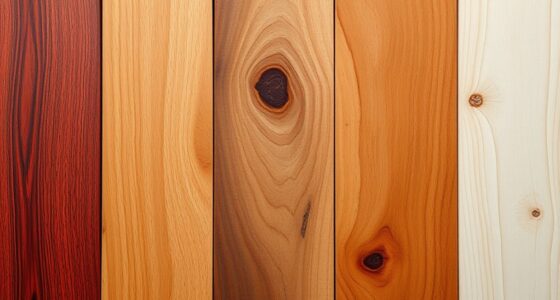
Hard maple typically features a fine, uniform grain pattern that lends a smooth, consistent surface. Its tight grain makes it ideal for detailed carving and intricate inlays. When finishing hard maple, you’ll find that sanding and sealing are more straightforward because the dense wood responds well to staining and polishing. Its smooth grain ensures that the finish appears even, highlighting the natural beauty of the wood. Conversely, soft maple often displays more pronounced grain variations, with a slightly more open texture. This can add character to your furniture, but it also means you need to pay closer attention during finishing to prevent blotchiness or uneven absorption of stains.
Your choice of finishing techniques will depend heavily on the maple variety you select. Hard maple benefits from a thorough sanding with fine grit papers, followed by a pre-stain conditioner to ensure even stain absorption. Its closed grain reduces the risk of blotches, allowing for a cleaner, more polished look. Soft maple, however, may require additional prep work, such as using a grain filler or applying a stain-blocking primer, to achieve a uniform finish. Because soft maple can absorb stain unevenly, testing your finish on a scrap piece is recommended before applying it to your project. Additionally, understanding wood hardness can help you anticipate how each type will perform under different conditions, ensuring your furniture remains durable over time.
In terms of durability, hard maple’s dense structure makes it resistant to dents and scratches, making it suitable for furniture that sees heavy use. Soft maple, while easier to work with, is more prone to dents and may be better suited for decorative pieces or furniture that isn’t subjected to constant wear. Understanding these traits helps you match the right maple type to your project’s needs, ensuring the finished piece not only looks great but also lasts over time. Whether you prioritize ease of work or longevity, knowing the grain patterns and finishing techniques for each variety guides your choices, resulting in furniture that meets your expectations.

Barrington Hardwoods Domestic Variety Pack 5 Walnut, 5 Maple and 5 Cherry Boards – 3/4" x 2" (15Pcs) (3/4" x 2" x 12")
💯 Included are 5 Black Walnut 5 Cherry and 5 Hard Maple 3/4" x 2" x 12"
As an affiliate, we earn on qualifying purchases.
As an affiliate, we earn on qualifying purchases.
Frequently Asked Questions
How Does Maple’s Durability Compare to Other Hardwoods?
Maple’s durability is quite high compared to many other hardwoods, making it a great choice for furniture. Its tight grain pattern adds strength, while the color variation ranges from creamy to light brown, giving your piece a unique look. You’ll find that maple resists dents and wear well over time, especially the hard variety, ensuring your furniture stays beautiful and functional longer than softer woods.
Can Soft Maple Be Stained Like Hard Maple?
Yes, soft maple can be stained like hard maple. You should use proper staining techniques, such as applying a pre-stain conditioner to guarantee even color absorption. Soft maple generally retains stain color well, but it might be slightly more prone to blotchiness. To achieve consistent color, sand the surface smoothly and test your stain on a small area first. Proper preparation helps enhance color retention and results in a beautiful finish.
What Environmental Factors Affect Maple Wood Quality?
Environmental factors like tree growth and soil nutrition markedly impact maple wood quality. When your maple trees grow in rich, well-balanced soil, they develop denser, more stable wood, ideal for furniture. Conversely, poor soil nutrition can lead to weaker, less durable wood. Consistent moisture levels and proper temperature also influence growth rate and grain quality. By ensuring ideal environmental conditions, you enhance the overall strength and appearance of your maple wood.
Is Maple Suitable for Outdoor Furniture Applications?
Maple can be used for outdoor furniture, but it’s not the best choice without proper treatment. You need to contemplate weather resistance and maintenance requirements. Applying a good sealant helps protect against moisture, UV rays, and temperature changes. Regular upkeep, like resealing and cleaning, is essential to prevent damage. If you’re willing to maintain it properly, maple can hold up outdoors, though it performs better in covered or protected settings.
How Does the Cost of Soft Maple Differ From Hard Maple?
You’ll find that soft maple generally costs less than hard maple, making it a budget-friendly choice for your projects. The cost comparison shows soft maple’s affordability due to its quicker growth rate and easier processing, while hard maple’s denser, durable qualities command a higher price. If you want a balance of quality and savings, soft maple offers good value, but for longevity and strength, hard maple’s worth the extra investment.

Soft Curly Maple by the Piece, 1/2" X 5" X 24"
Highly Figured Grain: Features stunning tiger-striped rays running perpendicular to the grain, creating a shimmering effect even when…
As an affiliate, we earn on qualifying purchases.
As an affiliate, we earn on qualifying purchases.
Conclusion
Ultimately, choosing between hard and soft maple depends on your project’s purpose and preferences. Hard maple boasts durability and a dense, dependable design, perfect for everyday use. Soft maple offers a softer, subtler character, ideal for delicate details or decorative touches. By balancing beauty with brawn, you’ll craft creations that captivate and endure. Whether you favor firm firmness or gentle grace, understanding maple’s varieties empowers you to produce furniture that’s both functional and fabulous.

HOWARD – Restor-A-Finish: Restore Your Maple-Pine Wood Finishes Repair Scratches, Eliminate Stains, White Heat or Water Rings and More. Safe on Furniture, Trim, and All Finished Wood. Size: 8 Fl oz
Restor-A-Finish is a unique finish-penetrating formula that restores wood finishes while blending out minor scratches, blemishes and abrasions
As an affiliate, we earn on qualifying purchases.
As an affiliate, we earn on qualifying purchases.

Goodfilla Maple/Beech/Pine, 8 oz, Wood and Grain Filler, Stainable, Sandable, Zero Waste, Non-Toxic, USA Made
⚒️ HIGH QUALITY & MONEY SAVING: Save time and money with this wood filler that does not shrink,…
As an affiliate, we earn on qualifying purchases.
As an affiliate, we earn on qualifying purchases.