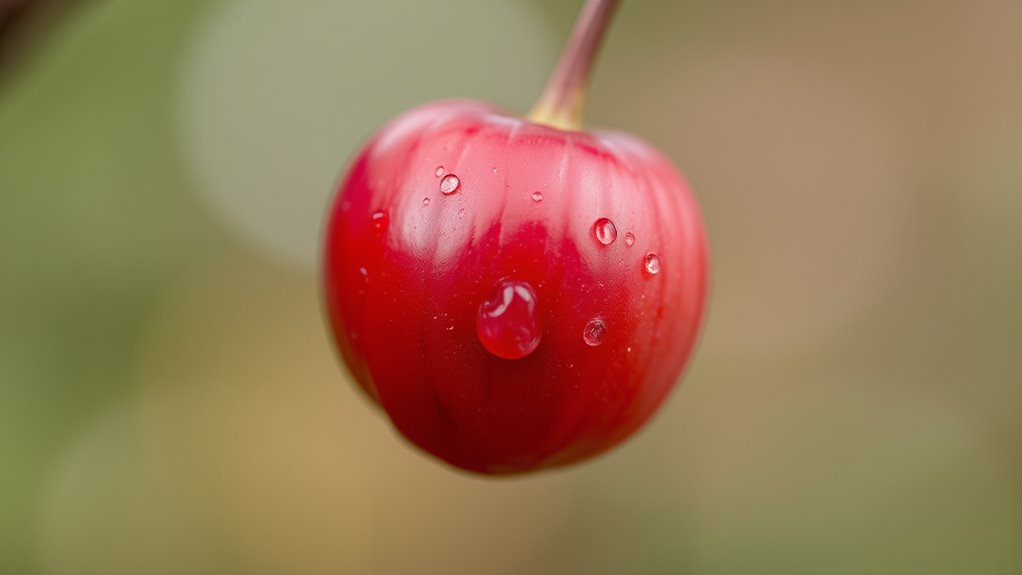

As cherries age, their color gradually fades from bright red to a muted shade due to pigment breakdown, and their texture softens from firm to mushy as cell walls weaken. Picking cherries at their peak ensures vibrant color and ideal flavor, but overripe fruit becomes dull and less crisp. Proper storage can slow these changes, but understanding how cherries evolve helps you enjoy them at their best and use them when the time is right. Keep exploring to learn more about this natural process.
Key Takeaways
- Color fading from bright red to muted shades indicates cherries are aging beyond optimal ripeness.
- Proper harvest timing ensures cherries are picked at peak color and flavor before over-ripening occurs.
- As cherries age, their texture softens from firm to mushy, signaling natural aging progression.
- Exposure to light, temperature, and air accelerates color loss and spoilage signs.
- Proper storage can slow aging, preserving vibrancy and firmness for longer.
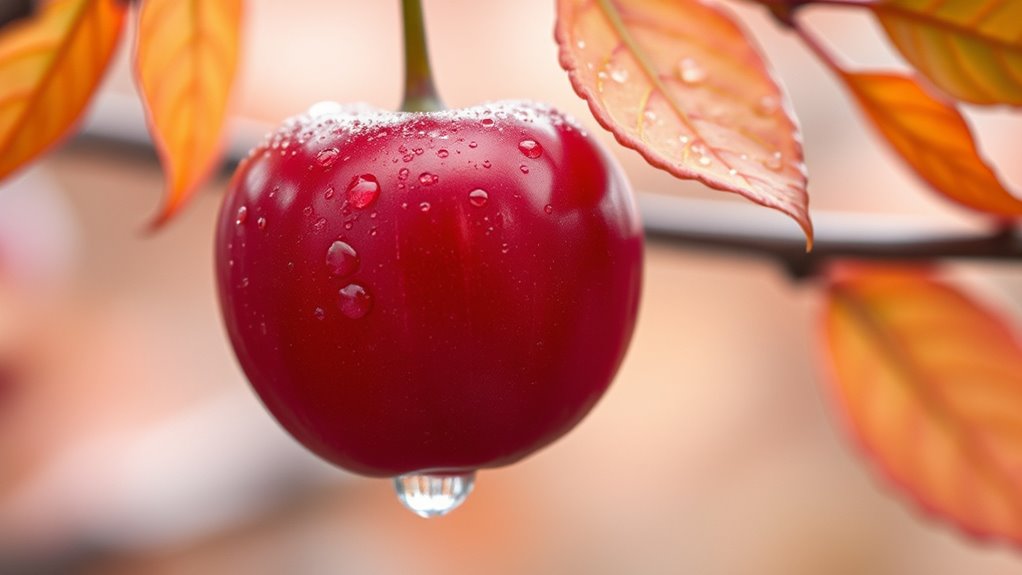
Cherries are renowned for their vibrant color and delicate flavor, but as they age, they undergo noticeable changes that reflect their natural aging process. When you think about fruit ripening, it’s the stage where cherries reach their peak sweetness and color. This process isn’t just about taste; it also influences their appearance and texture. During the seasonal harvesting period, cherries are picked at just the right moment to ensure they’re ripe and flavorful. If you pick them too early, they might be tart and pale, while waiting too long can lead to overripe fruit that’s soft and losing its color. Proper timing during seasonal harvesting is essential to capture that perfect balance of flavor, firmness, and vibrant hue.
Harvest cherries at their peak for optimal flavor, color, and texture.
As cherries age post-harvest, their color begins to fade. You might notice that the bright red or deep crimson starts to dull, turning toward a more muted shade. This color change is a natural part of aging, driven by the breakdown of pigments called anthocyanins. These pigments give cherries their vivid color and are sensitive to factors like exposure to light, temperature, and air. When cherries are stored beyond their prime, their color loss signals the beginning of spoilage, even if they’re still edible. Recognizing these subtle changes helps you determine the best time to enjoy cherries at their freshest and most flavorful.
Texture also shifts as cherries age. Fresh cherries are firm but juicy, with a slight give when you gently squeeze them. Over time, they become softer and sometimes mushy, especially if stored improperly. This softening occurs as the fruit’s cell walls break down, a natural process accelerated by temperature and humidity. You might find that older cherries lose their crispness and become less appealing for eating fresh, but they can still be useful in cooking or making jams, where texture isn’t as critical. Additionally, understanding storage conditions can help prolong the freshness of cherries and slow down their aging process.
The aging process is inevitable, but understanding how cherries change with time allows you to maximize their flavor and appearance. During seasonal harvesting, selecting cherries at their peak ensures you get the best quality and taste. Once harvested, proper storage can slow down aging and preserve their color and firmness for a few days. However, once the color begins to fade and the texture softens considerably, it’s best to use them quickly. Appreciating these natural changes helps you enjoy cherries at their finest and makes your fruit-eating experience more satisfying.
Cherry storage containers for freshness
As an affiliate, we earn on qualifying purchases.
As an affiliate, we earn on qualifying purchases.
Frequently Asked Questions
How Long Does a Cherry Tree Typically Live?
A cherry tree typically lives around 15 to 30 years, but its longevity depends on factors like soil quality, climate, and proper care. You can extend its lifespan by providing adequate water, pruning, and pest control. Some varieties, especially those in ideal conditions, may live longer, up to 40 years or more. Remember, healthy trees tend to flourish and produce better fruit throughout their lifespan.
Can Cherries Survive Winter Frosts?
Cherries can survive winter frosts if they have good winter hardiness and frost tolerance. For example, in a hypothetical case, a cherry variety bred for northern climates endures severe cold snaps with minimal damage. To protect your trees, choose cold-hardy varieties and implement measures like mulching or covering during unexpected frosts. Understanding your cherry’s frost tolerance helps guarantee a healthy, productive tree through cold winters.
What Pests Commonly Affect Cherry Trees?
You’ll often find pests like aphids, cherry fruit flies, and spider mites affecting cherry trees. To manage them, focus on pest identification early and use natural pest control methods like introducing beneficial insects or applying organic sprays. Regularly inspect your trees, remove affected leaves, and encourage healthy growth. Staying vigilant helps protect your cherries without relying heavily on chemicals, ensuring a healthy, fruitful tree season after season.
Are There Organic Methods to Prevent Cherry Diseases?
Yes, you can use organic pest control and natural disease prevention methods to protect your cherry trees. Regularly inspect your trees for pests, and use neem oil or insecticidal soap to keep pests at bay. Maintain good sanitation by removing fallen leaves and diseased wood, and encourage beneficial insects like ladybugs. Proper watering and pruning also strengthen your trees’ natural defenses, helping prevent diseases organically.
How Do Cherry Trees Adapt to Different Climates?
Did you know cherry trees thrive in over 20 different climates worldwide? You can help them adapt by selecting varieties suited to your area’s climate and understanding their growth habits. They adjust to temperature fluctuations and varying rainfall by modifying flowering times and root growth. By paying attention to these factors, you guarantee healthier trees that flourish, regardless of whether your climate is temperate, subtropical, or even slightly arid.
Cherry pitter with adjustable size
As an affiliate, we earn on qualifying purchases.
As an affiliate, we earn on qualifying purchases.
Conclusion
As you see, cherries age beautifully, with their vibrant color deepening and their flavor intensifying over time. Some might worry that aging means losing appeal, but in reality, it’s a sign of maturity and richness. Just like a cherry, you can embrace your own aging process, showcasing your unique character. So, don’t fear the changes—celebrate them. After all, aging gracefully adds depth and beauty to your life, just like those perfect cherries.
Cherry jam making kit
As an affiliate, we earn on qualifying purchases.
As an affiliate, we earn on qualifying purchases.
Refrigerated fruit storage bags
As an affiliate, we earn on qualifying purchases.
As an affiliate, we earn on qualifying purchases.