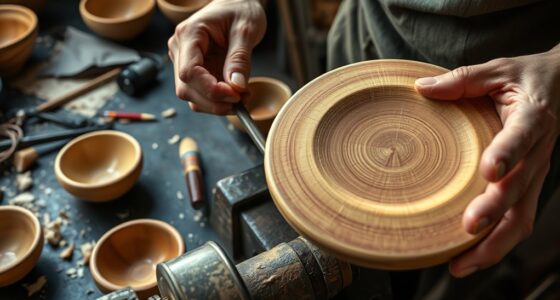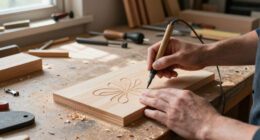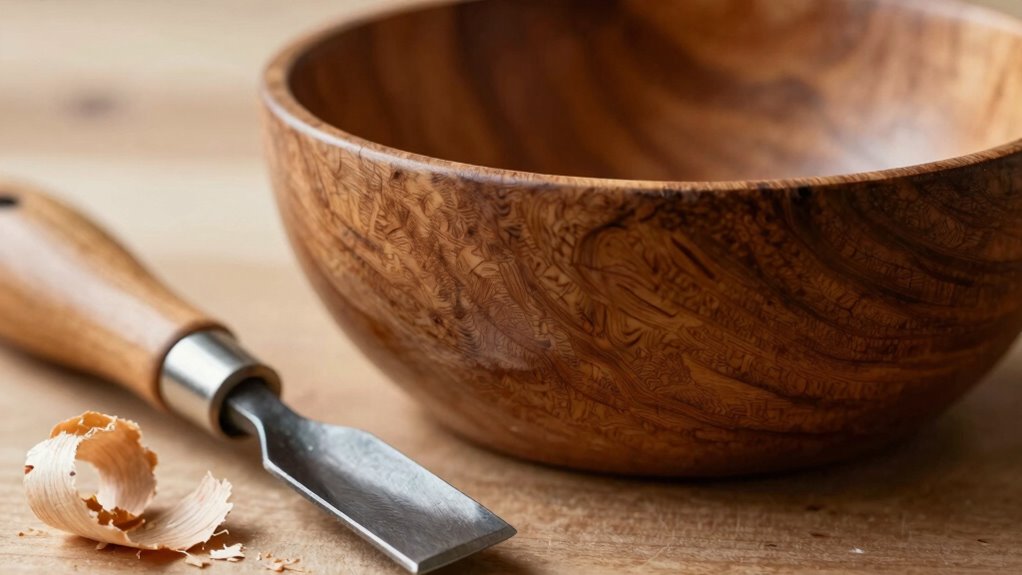

Bowl gouges outperform general turning tools in several ways. They offer better precision for intricate cuts, giving you control over shaping and hollowing bowls. Their unique design minimizes tear-out, providing a smoother surface that requires less sanding. With ergonomic handles, you’ll find them more comfortable during longer projects, reducing fatigue. Plus, their versatility allows you to switch between roughing and finishing cuts easily. There’s plenty more to discover about how to elevate your woodturning skills.

Get business pricing on tools and workshop supplies
- Business-only prices and quantity discounts
- Tax-exempt purchasing
- Multiple users, one account, clear invoices
Key Takeaways
- Bowl gouges provide smoother, more controlled cuts, minimizing tear-out and enhancing surface quality compared to general turning tools.
- Their unique design allows for versatile cuts, enabling efficient transitions from roughing to finishing tasks.
- Ergonomically designed handles reduce fatigue, allowing for longer, more comfortable turning sessions.
- Precision-ground edges of bowl gouges ensure cleaner cuts, requiring less effort and reducing the need for extensive sanding.
- Bowl gouges excel in intricate detailing, offering superior control for complex shaping that general tools struggle to achieve.
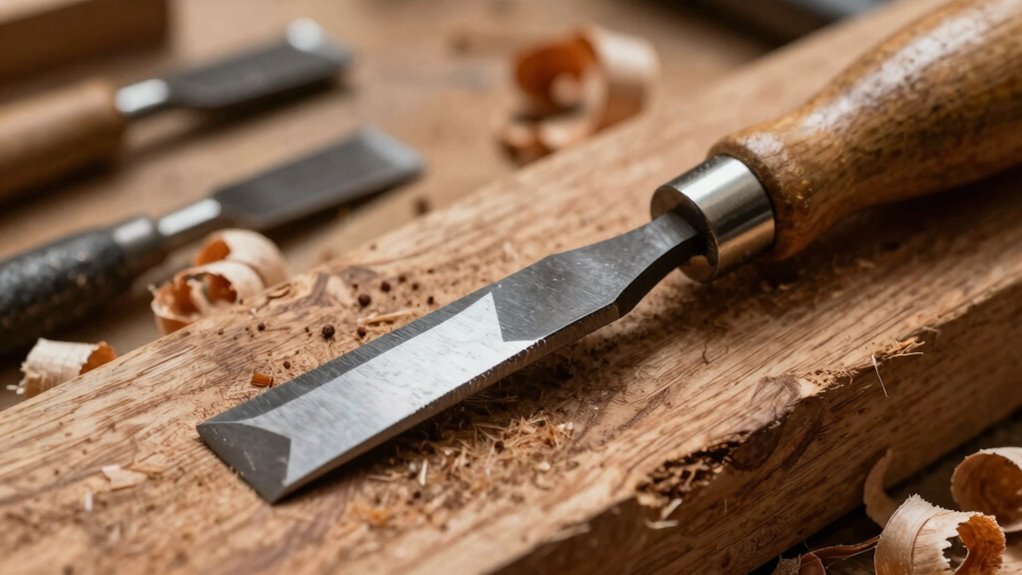
When you immerse yourself in the world of woodturning, understanding the difference between bowl gouges and general turning tools is vital. The two serve different purposes, and knowing what bowl gouges do better can greatly elevate your craftsmanship. Bowl gouges are specifically designed for shaping and hollowing out bowls, while general turning tools often lack the precision needed for intricate work.
Understanding the distinction between bowl gouges and general turning tools is essential for elevating your woodturning craftsmanship.
One of the primary bowl gouge advantages lies in its unique shape. The swept-back flutes allow for smooth cuts and delicate control, giving you the ability to create curves and contours that general turning tools struggle to achieve. This design helps reduce the risk of catching, which can lead to frustrating interruptions in your workflow. With a bowl gouge, you can peel away layers of wood with finesse, making it a favorite for those who aim for detailed craftsmanship.
You’ll also find that bowl gouges can handle a variety of cuts, from roughing to finishing. With a single tool, you can shift between different types of cuts, making your workflow more efficient. In contrast, general turning tools often have specific limitations. They may excel at certain tasks but fall short when you need versatility. If you want to tackle a project that involves intricate detailing, relying on a general turning tool might leave you unsatisfied with the results.
Another advantage of bowl gouges is their ability to create smooth surfaces. The design allows for a shearing cut, which minimizes tear-out and leaves a finish that often requires less sanding. This is a notable time-saver, especially when working on larger projects where surface quality is important. Proper tool design enhances cutting efficiency and surface finish, making bowl gouges more suitable for fine craftsmanship. Additionally, their versatile cutting capabilities enable more complex shaping that general turning tools might struggle to achieve, further highlighting their superiority for detailed work. Using ergonomic handles can also help reduce fatigue, as their design supports extended use and better control, which is especially beneficial during longer sessions. Incorporating specialized tools like bowl gouges can also help reduce fatigue, as their ergonomic handles are designed for extended use, providing greater control and comfort during prolonged sessions. Using a precision-ground edge ensures cleaner cuts and reduces the effort needed during carving, which is another reason bowl gouges are favored by skilled turners.
Finally, the comfort and ergonomics of bowl gouges can’t be overlooked. They often feature a handle that’s designed for sustained use, allowing you to work for longer periods without discomfort. General turning tools might not offer the same level of control or comfort, leading to fatigue as you work.
As an affiliate, we earn on qualifying purchases.
Frequently Asked Questions
What Materials Are Bowl Gouges Typically Made From?
Bowl gouges are typically made from high-speed steel (HSS) or carbon steel, each offering unique material properties. HSS is known for its durability and ability to retain sharp edges, while carbon steel is favored for its ease of sharpening. You’ll find various bowl gouge types, like traditional and swept-back, which cater to different turning styles. Choosing the right material can enhance your turning experience, making your projects smoother and more enjoyable.
Can I Use a Bowl Gouge for Spindle Turning?
Absolutely, you can use a bowl gouge for spindle turning! Think of it as a Swiss Army knife in your toolbox—its versatility shines. While bowl gouges excel at hollowing out shapes, they can also make quick work of spindle turning, giving you smooth finishes and clean cuts. Plus, the benefits of using a bowl gouge, like control and precision, can elevate your spindle projects to a whole new level of craftsmanship.
How Do I Sharpen a Bowl Gouge Effectively?
To sharpen a bowl gouge effectively, start with a sharpening jig to maintain the correct angle. Use a slow-speed grinder for initial shaping, applying light pressure. After achieving the desired bevel, switch to honing tools like diamond stones or ceramic rods for a finer edge. Regularly check the edge’s sharpness and touch it up as needed. With these sharpening techniques, you’ll keep your bowl gouge performing at its best for all your projects.
What Is the Ideal Angle for Bowl Gouge Cutting?
For the smoothest cuts, you’ll want to set your bowl gouge angles between 45 and 60 degrees. This isn’t just a suggestion; it’s like wielding a magic wand in the world of woodturning! Mastering these angles enhances your cutting techniques, making it easier to achieve those beautiful, flowing shapes. Experimenting within this range will help you find your sweet spot, so grab your gouge and start turning with confidence!
Are There Different Sizes of Bowl Gouges Available?
Yes, there are different sizes of bowl gouges available. You’ll find bowl gouge sizes ranging from 1/4 inch to 1 inch, each suited for specific tasks. Smaller sizes work well for detailed work, while larger gouges handle more material and rough shaping. Additionally, bowl gouge types vary, including traditional and swept-back versions, allowing you to choose based on your turning style and project needs. It’s all about finding the right fit for your work!
Conclusion
In the world of woodturning, bowl gouges are truly in a league of their own. They offer precision and control that general turning tools simply can’t match. When it comes to shaping and hollowing, they really take the cake. If you’re looking to elevate your turning game, investing in bowl gouges is a no-brainer. With the right tools in hand, you’ll be well on your way to crafting stunning pieces that leave a lasting impression.
Fall Picks
fall essentials
As an affiliate, we earn on qualifying purchases.