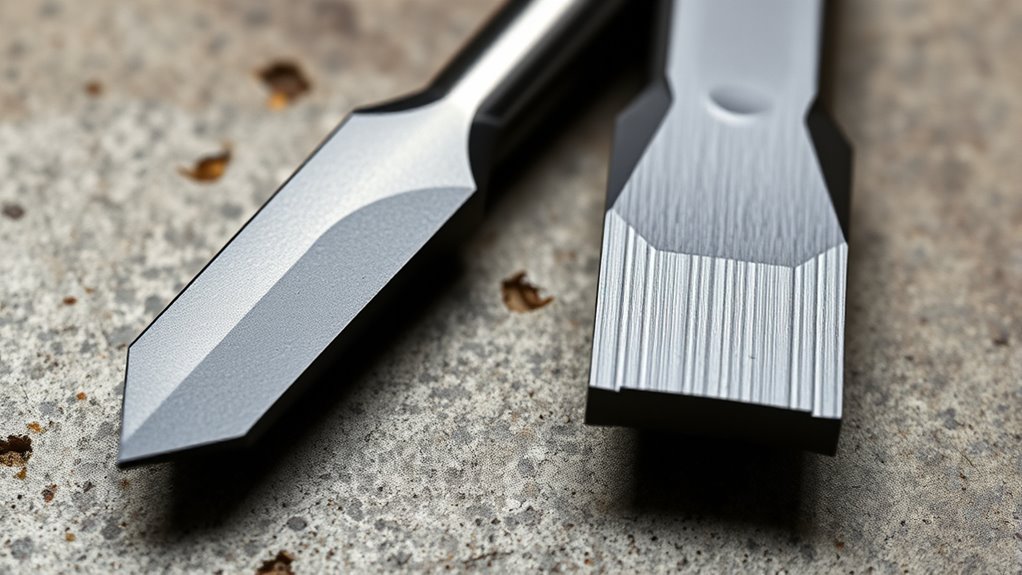

Carbide lathe tools last longer and perform better under demanding conditions compared to HSS tools. Their superior coatings resist wear and heat, making them ideal for tough, abrasive materials. While they cost more upfront, they require less frequent replacement and sharpening, saving you time and money in the long run. If you want to understand how each tool fits your needs and why carbide might be the better choice, keep exploring the details.
Key Takeaways
- Carbide tools generally last longer due to superior coating resistance and durability under demanding machining conditions.
- HSS tools have a shorter lifespan but are easier and cheaper to sharpen when worn.
- Carbide’s higher initial cost is offset by fewer replacements and longer tool life in tough applications.
- HSS is suitable for lighter, less aggressive tasks with a shorter overall lifespan.
- Overall, carbide tools tend to last longer than HSS in high-volume or abrasive machining environments.

When choosing lathe tools, understanding the differences between carbide and HSS options is essential for making the right investment. One of the key factors to contemplate is how long each type lasts during demanding machining tasks. Generally, carbide tools are known for their superior coating durability. The coatings on carbide blades are designed to resist wear and thermal degradation, which means they can handle high-speed operations and abrasive materials more effectively. This coating durability translates into longer tool life, especially when working with tough or hard materials that can quickly dull HSS tools. Additionally, carbide tools often support higher cutting speeds, which can improve overall machining efficiency.
Carbide tools offer superior coating durability, resisting wear and thermal degradation for longer-lasting performance.
However, durability isn’t the only consideration. Cost efficiency plays a significant role in your decision. Carbide tools tend to have a higher upfront cost because of the advanced manufacturing process and durable coatings involved. But in the long run, this investment can pay off because carbide tools often require fewer replacements and less frequent sharpening. They maintain their cutting edge longer, reducing downtime and labor costs associated with tool maintenance. This makes carbide a more cost-efficient choice for high-volume or industrial applications where frequent tool changes can be disruptive and expensive.
On the other hand, HSS (High-Speed Steel) tools are generally less costly initially and are easier to sharpen when they do wear out. While their coating durability isn’t as high as carbide, HSS tools can still be quite effective for lighter, less aggressive machining tasks. They tend to be more forgiving when it comes to precision adjustments and are suitable for small-scale or hobbyist projects. When weighing cost efficiency, HSS tools might seem attractive for short-term tasks or occasional use, but their shorter lifespan can lead to higher overall costs if you’re machining frequently or working with harder materials.
In terms of longevity, carbide tools usually outperform HSS in demanding conditions because their coatings provide an extra layer of protection, which helps them resist heat and wear longer. This means you won’t need to replace or sharpen them as often, boosting productivity and reducing operational costs over time. But if your projects involve softer materials or infrequent use, HSS can be a more economical option, despite their shorter lifespan. For optimal performance, selecting the right tool also depends on the material hardness you are working with and the specific machining requirements.
Ultimately, your choice hinges on balancing coating durability and cost efficiency. If you’re working on tough materials regularly and want longer-lasting tools that save you money in the long run, carbide is the smarter investment. If your work is lighter or less frequent, HSS offers a more budget-friendly solution that still gets the job done, albeit with more frequent replacements.
Frequently Asked Questions
Can Carbide Tools Be Sharpened Like HSS Tools?
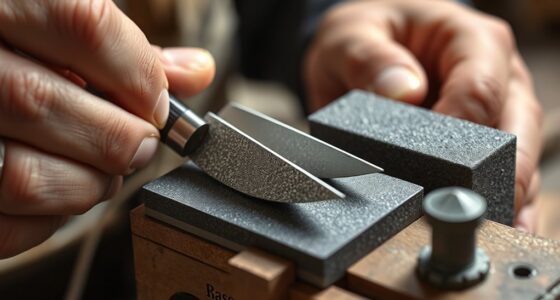
You might wonder if carbide tools can be sharpened like HSS tools. While HSS tools are easily sharpened through traditional tool sharpening, carbide requires different methods. You can’t sharpen carbide with standard tools; instead, you perform carbide reconditioning using diamond grinding wheels or specialized equipment. This process restores the cutting edge but isn’t as simple as HSS sharpening. So, yes, carbide tools can be sharpened, but it involves different techniques and equipment.
What Are the Cost Differences Between Carbide and HSS Tools?
Imagine walking into a shop with a pile of tools in hand. You notice carbide tools cost more upfront but offer greater tool lifespan and improved cost efficiency over time. HSS tools are cheaper initially but wear out faster, requiring frequent replacements. So, while carbide tools may seem pricey initially, their durability can save you money in the long run, making them a more cost-effective choice for demanding tasks.
How Do Temperature Tolerances Compare for Both Tools?
You’ll find that carbide tools have higher temperature tolerances due to their superior heat resistance, allowing them to handle thermal expansion better during cutting. HSS tools, while more resistant to thermal expansion at lower temperatures, tend to soften or deform when exposed to extreme heat. So, if you work with high-speed or aggressive cutting, carbide’s better thermal performance helps maintain precision and tool longevity.
Are Carbide Tools Suitable for All Types of Metals?
You might wonder if carbide tools suit all metals. While they excel in cutting harder metals like steel and cast iron, their metal compatibility isn’t universal. For softer or more delicate materials, HSS tools often offer better application versatility. Carbide’s strength is its durability and ability to handle high-speed machining, but for certain applications, especially with softer metals, you should consider the specific needs before choosing carbide.
What Safety Precautions Are Needed When Using Carbide Tools?
When using carbide tools, you need to prioritize safety to protect yourself. Always handle tools carefully, ensuring proper tool handling techniques to prevent accidents. Wear protective gear like safety glasses, gloves, and a dust mask to guard against flying chips and debris. Keep your workspace clean and well-lit, and never force tools beyond their limits. Following these safety precautions helps you work confidently while minimizing risks and injuries.
Conclusion
Ultimately, whether you choose carbide or HSS lathe tools depends on your needs. Carbide tools last longer, especially with tough materials, and resist wear better. But HSS tools can be sharper initially and are easier to sharpen, saving you time. Notably, the durability of carbide often coincides with higher costs, making it a longer-lasting investment in the long run. So, your choice might just reflect whether you value longevity or quick, affordable fixes most.