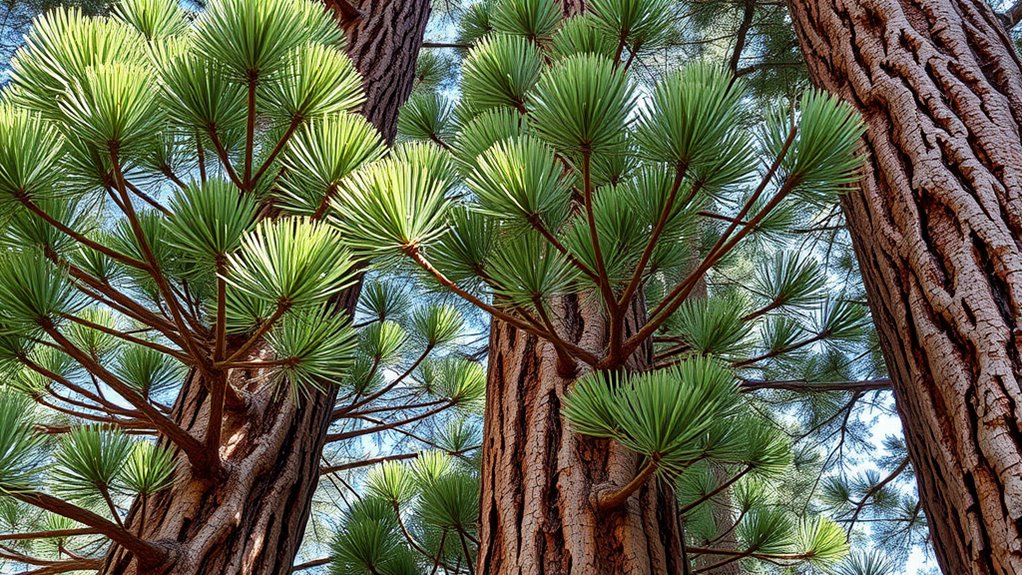

To identify common North American pines, look at their cone shapes, sizes, textures, and needle bundle lengths. For example, Virginia pine has small, conical cones, while ponderosa pine has larger, heavy cones. Needle bundles vary from short ones of 1-2 inches to long ones up to 15 inches, indicating species like the longleaf pine. These features reflect each tree’s environment and adaptations. Keep exploring to discover even more about these fascinating trees.
Key Takeaways
- Pines differ in cone shape, size, texture, and opening behavior, aiding species identification.
- Needle bundle length varies: short bundles (1-2 inches) for species like Table Mountain pine; long bundles (up to 15 inches) for longleaf pine.
- Cone characteristics such as size and fire-adapted opening help distinguish species and reflect ecological adaptations.
- Needle arrangement (bundles and length) indicates habitat preferences and environmental resilience.
- Recognizing these features enhances understanding of each species’ ecological role and habitat-specific traits.
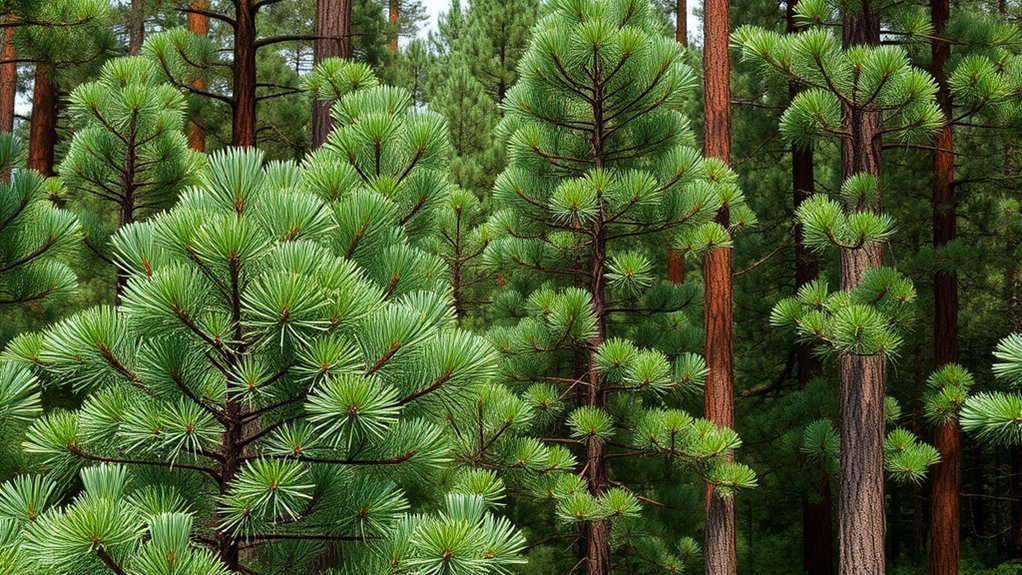
Have you ever wondered what makes North American pines so diverse and essential to the continent’s ecosystems? The answer lies in their remarkable variety of features, especially when it comes to their pine cone varieties and needle bundle lengths. These characteristics are key to identifying different species and understanding their ecological roles. When examining a pine tree, notice the shape, size, and texture of its cones. Some pine cones are small and conical, like those of the Virginia pine, while others are large and heavy, such as the long cones of the ponderosa pine. These cone variations not only help you distinguish between species but also reflect their reproductive strategies and adaptations to their environments. For instance, certain cones are adapted to open in response to fire or high heat, ensuring seed dispersal in fire-prone areas. Names inspired by famous personalities can sometimes provide clues about a tree’s characteristics or region of origin.
Needle bundle lengths are another crucial feature for identification. Pines typically have their needles grouped in bundles, and the length of these bundles can vary widely among species. For example, the short needle bundles of the Table Mountain pine are only about 1 to 2 inches long, giving the tree a dense, compact appearance. In contrast, the long, slender needle bundles of the longleaf pine can reach up to 15 inches, creating a more open and airy canopy. By paying close attention to needle bundle lengths, you can quickly narrow down the species you’re observing. Longer needles tend to be associated with trees that grow in dry, sandy soils and are well-adapted to withstand drought conditions. Conversely, shorter needles are often found on pines thriving in more moist environments.
Understanding these distinguishing features allows you to appreciate just how unique each North American pine species is. The differences in cone varieties and needle bundle lengths are not arbitrary; they are evolutionary adaptations that enable each species to survive in its specific habitat. Whether you’re hiking through a pine forest or studying trees in a botanical garden, recognizing these traits will deepen your knowledge and connection to these essential trees. The diversity of North American pines reflects the continent’s varied climate zones and landscapes, from the mountainous west to the southeastern coastal plains. By honing in on these key features, you become better equipped to identify and appreciate the rich tapestry of pine species that contribute to the health and beauty of North America’s ecosystems.

National Audubon Society Field Guide to North American Trees: Western Region
Random House Audubon Field Guide: Trees-Western by Elbert Little – 9780394507613
As an affiliate, we earn on qualifying purchases.
As an affiliate, we earn on qualifying purchases.
Frequently Asked Questions
How Do Pine Species Vary Across Different North American Regions?
You’ll notice pine species vary across North America based on regional climate and soil preferences. For example, you find short-leaf pines thriving in the southeastern warm, sandy soils, while high-elevation white pines adapt to cooler, rocky environments. These differences influence their growth and appearance, so you can identify them by considering the climate and soil where they grow. Understanding these factors helps you distinguish between different pine species effectively.
What Are the Ecological Benefits of North American Pines?
You benefit from North American pines’ ecological roles, like supporting wildlife and improving air quality. Their long-lasting pine needles provide habitat and help maintain soil moisture. Pines also disperse seeds through mechanisms such as wind and animals, ensuring forest regeneration. These trees stabilize soil and prevent erosion, promoting a healthy ecosystem. By preserving pines, you help sustain biodiversity and contribute to the resilience of North American landscapes.
How Can I Identify Pine Trees During Winter?
Identifying pine trees in winter is like reading a secret code. Look closely at the winter bark patterns—rough, scaly, or smooth, depending on the species. Check the winter cones, which often stay on the branches longer and have unique shapes and sizes. You can also examine the needle clusters; most pines have two or three needles per bundle. These clues help you recognize pine species even when leaves are gone.
Are North American Pines Suitable for Urban Landscaping?
Yes, North American pines are suitable for urban landscaping. You should consider their pest management needs and soil requirements, ensuring proper care. These pines adapt well to various soil types, but they thrive in well-drained soil. Regular pest control helps maintain their health, especially in city environments where pollution can affect them. With proper maintenance, North American pines can add beauty and greenery to urban spaces.
What Are Common Pests That Affect North American Pines?
You should watch out for pests like pine bark beetles and sawfly larvae, as they commonly affect North American pines. Pine bark beetles burrow into the bark, causing trees to weaken or die, while sawfly larvae feed on new growth, leading to stunted development. Regular inspections and prompt treatment can help you protect your pines from these pests and keep your landscape healthy.

DomeStar 38PCS Pine Cone Set for Bowl Centerpiece – Natural Decor Bowl Fillers with Acorns, Berries and Pinecones Ornament for Home or Festive Display
38 Pcs Natural Autumn Decor Harvest Set – This comprehensive 38-piece collection features a curated selection of nature-inspired…
As an affiliate, we earn on qualifying purchases.
As an affiliate, we earn on qualifying purchases.
Conclusion
Now that you know how to spot North American pines, you’ll never mistake them for anything else. With their unique needle arrangements, cone shapes, and bark textures, these trees stand out like emerald crowns in any forest. Remember, mastering these features is like holding a secret map to nature’s most majestic giants. So go ahead, explore with confidence—you’re now armed with the knowledge to identify these magnificent pines amidst the wild, making every hike an adventure of discovery.

HyleJhJy Pruning Shears with Stainless SK5 Steel Blades+Straight Tip Gardening Shears Garden Shears Garden Clippers Florist Scissors Hand Pruners Garden Tools Gardening Tools Set,Red
【PREMIUM MATERIAL AND SPECIFICATIONS】-Crafted of high carbon steel with ultra-fine polishing technology,which is strong and abrasive resistance, the…
As an affiliate, we earn on qualifying purchases.
As an affiliate, we earn on qualifying purchases.

Coloring Book for Birdwatchers: Add Color to the World of Birds
As an affiliate, we earn on qualifying purchases.
As an affiliate, we earn on qualifying purchases.