
To prevent dryness and cracking in winter, stay well-hydrated by drinking plenty of water and eating hydrating foods like fruits and vegetables. Protect your skin barrier with gentle cleansers and rich moisturizers containing ceramides, hyaluronic acid, or glycerin. Shield your skin from harsh weather with protective clothing and add humidity indoors using a humidifier. Regularly use nourishing lip balms and thick creams for your hands and feet. Keep exploring for more tips to keep your skin healthy through winter’s toughest months.
Key Takeaways
- Stay hydrated by drinking plenty of water and consuming hydrating foods like fruits and vegetables.
- Use gentle, moisturizing cleansers and apply rich moisturizers with ceramides, hyaluronic acid, or glycerin immediately after cleansing.
- Protect skin from harsh elements with clothing, indoor humidifiers, and by minimizing exposure to wind and cold air.
- Regularly apply nourishing lip balms and avoid licking lips to prevent chapping.
- Moisturize hands and feet frequently, especially after washing, and wear gloves and socks for added protection.

Winter’s cold, dry air can quickly strip moisture from your skin and lips, leading to dryness and cracking. To combat this, you need to focus on hydration tips that replenish moisture and bolster your skin’s defenses. Drinking plenty of water is essential, as it helps maintain your skin’s internal hydration. Keep a water bottle nearby and sip regularly throughout the day, even if you don’t feel thirsty. Incorporating hydrating foods like fruits and vegetables can also support your efforts.
Beyond hydration from the inside, protecting your skin barrier is *vital*. The skin barrier acts as your first line of defense against environmental stressors, preventing moisture loss and shielding you from harsh elements. To strengthen it, choose gentle, moisturizing cleansers that do not strip natural oils. After cleansing, apply a rich moisturizer immediately to lock in hydration. Look for products containing ingredients like ceramides, hyaluronic acid, and glycerin, which actively support and reinforce your skin barrier. These ingredients create a protective film that helps retain moisture and reduces susceptibility to cracking.
Another key aspect is to minimize exposure to harsh elements whenever possible. Wind, cold air, and indoor heating can all exacerbate dryness. When venturing outdoors, wear protective clothing, such as scarves, gloves, and hats, to shield your skin. Use a humidifier indoors to add moisture to dry air, especially if your heating system tends to dry out your environment. This simple step can make a noticeable difference in maintaining your skin’s hydration levels.
Lip care often gets overlooked, but lips are particularly vulnerable during winter. To prevent chapping, apply a nourishing lip balm frequently, especially before heading outside. Look for balms with natural oils, beeswax, or shea butter to create a barrier that seals in moisture. Avoid licking your lips, as saliva evaporates quickly and worsens dryness.
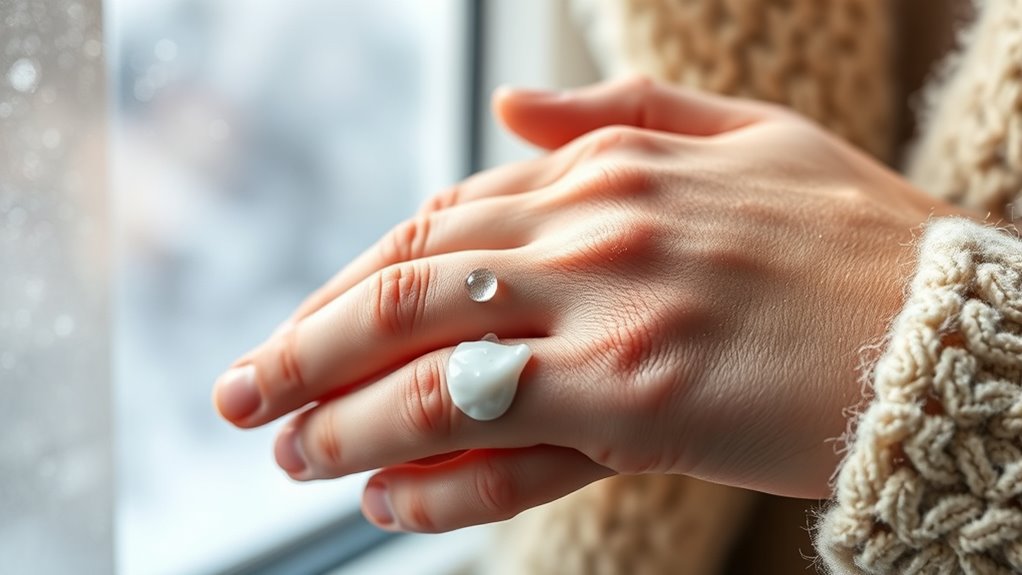
Finally, don’t neglect your hands and feet. These areas are prone to cracking because they’re constantly exposed and have thinner skin. Use thick, emollient creams or ointments regularly, especially after washing hands or bathing. Wearing gloves and socks can provide extra protection and help the moisturizer work more effectively.
winter skin moisturizer with ceramides
As an affiliate, we earn on qualifying purchases.
As an affiliate, we earn on qualifying purchases.
Frequently Asked Questions
How Can I Tell if My Skin Is Too Dry?
You can tell if your skin is too dry by noticing signs of dehydration, like tightness or rough patches. Check your skin texture—if it feels flaky, dull, or appears cracked, it’s a clear sign of dryness. You might also experience itching or redness. Pay attention to these changes, especially during winter months, as they indicate your skin needs extra hydration and care to stay healthy and comfortable.
Are There Natural Remedies for Winter Skin?
Yes, you can try natural remedies like herbal moisturizers and oil-based remedies to soothe winter skin. Herbal moisturizers, such as aloe vera or chamomile, hydrate and calm irritated skin. Oil-based remedies like coconut or jojoba oil deeply nourish and lock in moisture. Apply these after bathing or before bed to help prevent dryness and cracking. These natural options are gentle, effective, and can keep your skin healthy throughout the winter.
Should I Change My Skincare Routine in Winter?
Yes, you should adjust your skincare routine in winter. Switch to a richer winter moisturizer that provides extra hydration and forms a protective barrier. Incorporate gentle cleansers to avoid stripping your skin’s natural oils, and consider adding a hydrating serum. These skincare adjustments help combat dryness and keep your skin healthy. Pay attention to your skin’s needs and don’t hesitate to change products if your skin feels tight or flaky.
What Foods Help Improve Skin Hydration?
Think of your skin as a thirsty plant that needs watering from the inside out. You should include hydrating fruits like watermelon and oranges, which are packed with water, to boost your skin’s moisture. Omega-rich foods like salmon, walnuts, and chia seeds nourish your skin and help lock in hydration. Eating these foods regularly supports your skin’s natural barrier, keeping it supple and hydrated during winter’s harsh chill.
Can Indoor Humidity Levels Affect Skin Dryness?
Yes, indoor humidity levels can definitely affect your skin dryness. When indoor moisture is low, humidity control becomes essential because dry air strips moisture from your skin, leading to dryness and cracking. You should use a humidifier or place bowls of water around your space to maintain ideal humidity. Proper humidity control helps keep your skin hydrated, preventing discomfort and skin issues during the winter months.
hyaluronic acid hydrating serum
As an affiliate, we earn on qualifying purchases.
As an affiliate, we earn on qualifying purchases.
Conclusion
To keep your skin soft and smooth this winter, stay vigilant and follow these simple steps. Regularly moisturize, wear warm clothing, and avoid hot showers that strip your skin’s moisture. By balancing basics and bundling up, you’ll prevent painful cracks and dryness from developing. Remember, consistent care creates comfort, keeps your skin resilient, and ensures a radiant, relaxed winter wonderland for your skin. Stay proactive, protect passionately, and enjoy a cozy, crack-free season.
nourishing lip balm for chapped lips
As an affiliate, we earn on qualifying purchases.
As an affiliate, we earn on qualifying purchases.
humidifier for dry indoor air
As an affiliate, we earn on qualifying purchases.
As an affiliate, we earn on qualifying purchases.