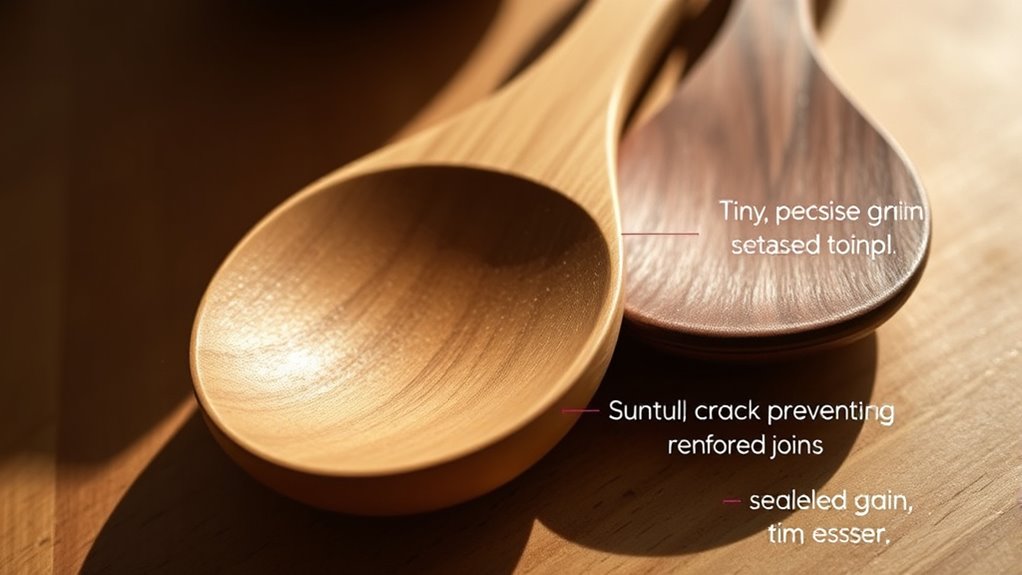

To prevent cracks in your wooden spoons and spatulas, clean them gently with warm water and dry immediately after each use. Regularly apply a food-safe oil like mineral or coconut oil to create a protective barrier and keep the wood hydrated. Store them in a dry, well-ventilated area away from direct sunlight and heat. Taking these simple steps helps preserve your tools’ durability and strength, so continue learning how to maintain them properly.

Get business pricing on tools and workshop supplies
- Business-only prices and quantity discounts
- Tax-exempt purchasing
- Multiple users, one account, clear invoices
Key Takeaways
- Regularly clean and dry utensils immediately after use to prevent moisture absorption and cracking.
- Apply a food-safe oil like mineral or beeswax regularly to create a protective, sealing layer.
- Store utensils in a dry, well-ventilated area away from direct sunlight and heat sources.
- Inspect for small cracks and reapply oil promptly to hydrate and seal the wood.
- Avoid soaking in water or exposing wooden utensils to extreme temperatures to maintain their integrity.
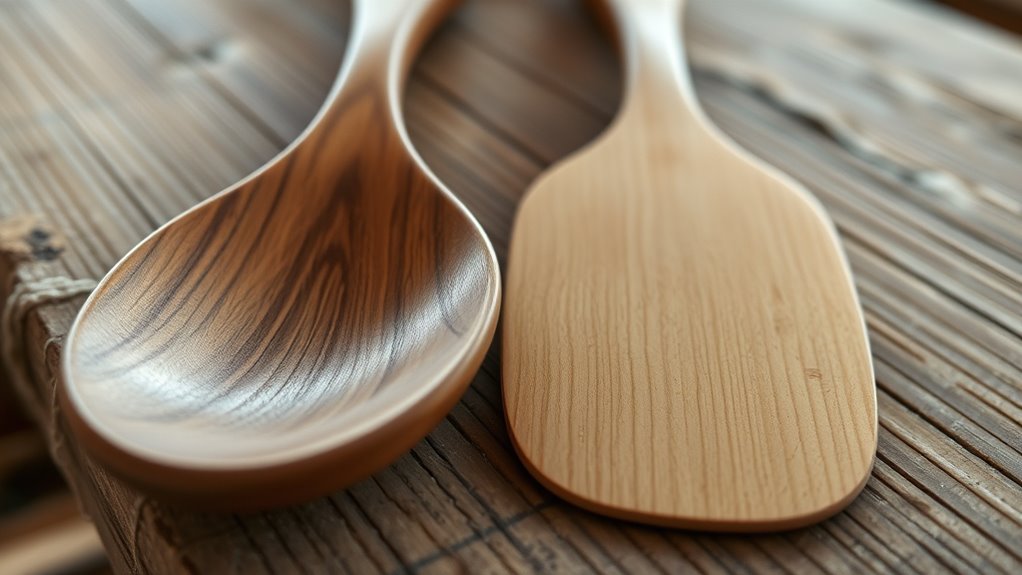
Wooden spoons and spatulas are popular kitchen tools, but they can develop cracks over time if not properly cared for. To keep your utensils in good shape, you need to focus on proper wooden utensil maintenance. This involves cleaning them gently after each use, avoiding soaking them in water for extended periods, and drying them thoroughly. When you neglect these basic steps, the wood can become dry and brittle, leading to cracks that compromise the tool’s integrity. Regularly inspecting your utensils helps catch early signs of damage, so you can address issues before they worsen.
One of the most effective ways to prevent cracks is by practicing safe seasoning techniques. Seasoning your wooden utensils isn’t just for flavor; it also creates a protective barrier that helps prevent the wood from absorbing excess moisture and drying out. When you season your utensils properly, you enhance their durability and resistance to cracking. To do this, apply a food-safe oil—such as mineral oil, beeswax, or coconut oil—thinly and evenly across the surface. Let it soak in for a few hours or overnight, then wipe off any excess. This process should be repeated regularly, especially if you notice the wood beginning to look dry or dull.
Always remember that the key to effective wooden utensil maintenance is consistency. After each use, give your tools a quick wash with warm water and mild soap, then dry them immediately with a towel. Avoid putting wooden utensils in the dishwasher, as the high heat and prolonged moisture can accelerate cracking and warping. When storing, keep them in a dry, well-ventilated area away from direct sunlight, which can dry out the wood unevenly and cause cracks. If you notice small cracks starting to form, don’t ignore them. Instead, reapply oil to hydrate the wood and help seal the surface. Additionally, using vetted wooden utensils can provide better durability and longevity.
food-safe mineral oil for wooden utensils
As an affiliate, we earn on qualifying purchases.
As an affiliate, we earn on qualifying purchases.
Frequently Asked Questions
Can I Repair Cracks Once They Appear on Wooden Utensils?
Yes, you can repair cracks on wooden utensils using simple wooden utensil repairs. First, clean the crack thoroughly and dry the utensil. Then, apply a food-safe wood glue, pressing the crack shut with clamps or rubber bands. Use crack sealing techniques by filling deeper cracks with wood filler if needed. Once dried, sand the area smoothly to restore its surface. This approach prolongs your utensil’s lifespan and keeps it safe for use.
What Are the Best Storage Practices to Prevent Cracking?
Think of your wooden utensils as delicate trees needing proper care. Store them in airtight containers away from excess moisture to keep their strength. Maintain humidity control in your kitchen, avoiding extreme dryness or dampness that causes cracks. By doing so, you protect their natural elasticity, ensuring your spoons and spatulas stay smooth and resilient for years. Proper storage isn’t just safety; it’s nurturing the life within your tools.
How Often Should I Re-Oil My Wooden Spoons and Spatulas?
You should re-oil your wooden spoons and spatulas every few weeks, especially if you notice they’re drying out or looking dull. For best maintenance tips, keep an eye on the oil frequency to prevent cracks and keep the wood hydrated. Regular re-oiling helps maintain their shape and prevents splitting. If you use them frequently, consider re-oiling more often to ensure they stay in good condition.
Are There Specific Types of Wood More Resistant to Cracking?
Imagine holding a timeless piece of craftsmanship—certain woods are more resilient against cracks. Opt for hardwoods like maple, cherry, or teak, known for their durability and moisture resistance. These woods act as your kitchen’s guardians, resisting the wear and tear that causes cracks. By choosing these resilient options, you extend the life of your utensils, ensuring they stay beautiful and functional, kitchen after kitchen.
Is It Safe to Use Cracked Wooden Utensils for Cooking?
It’s not safe to use cracked wooden utensils for cooking because cracks can harbor bacteria and compromise the utensil’s integrity. Proper wooden utensil maintenance, like sanding and oiling, helps prevent cracks and keeps your tools safe. To guarantee safe cooking practices, regularly inspect your utensils and replace any with significant cracks. Using intact utensils reduces the risk of contamination and keeps your food preparation safe and hygienic.
Conclusion
By taking care of your wooden spoons and spatulas, you’ll notice cracks rarely appear, just like how a gentle rain soaks into dry soil, preventing cracks from forming. When you regularly oil and avoid sudden temperature changes, your utensils stay smooth and sturdy, almost as if they’re growing stronger with each use. With consistent care, your favorite kitchen tools will remain crack-free, ready to serve you for years, like a well-loved family heirloom passing down through generations.
Halloween Picks
halloween
As an affiliate, we earn on qualifying purchases.